Highly Sensitive Person Empath Guide Workbook: Therapist-Written HSP Coping Skills
$7.99
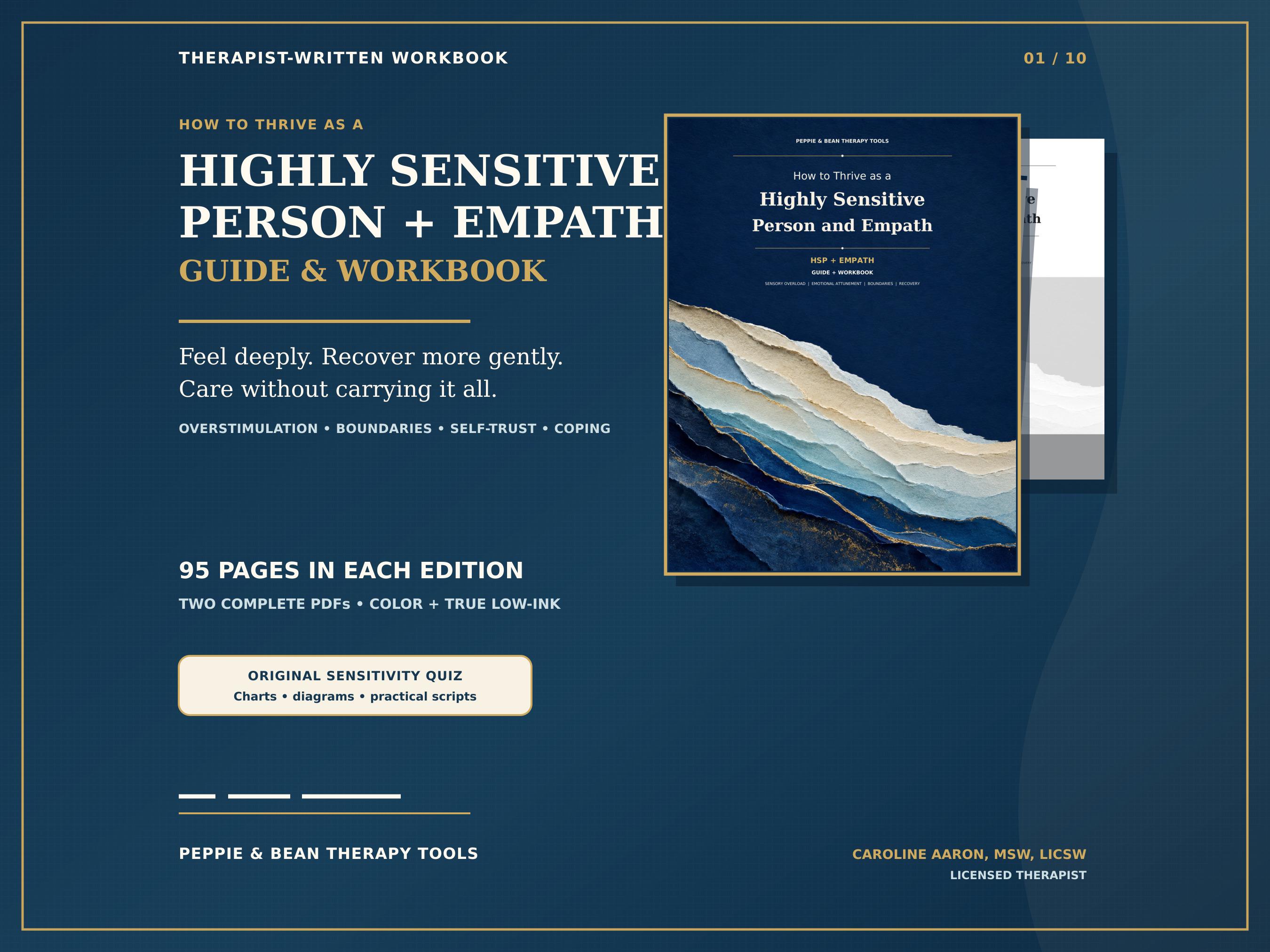
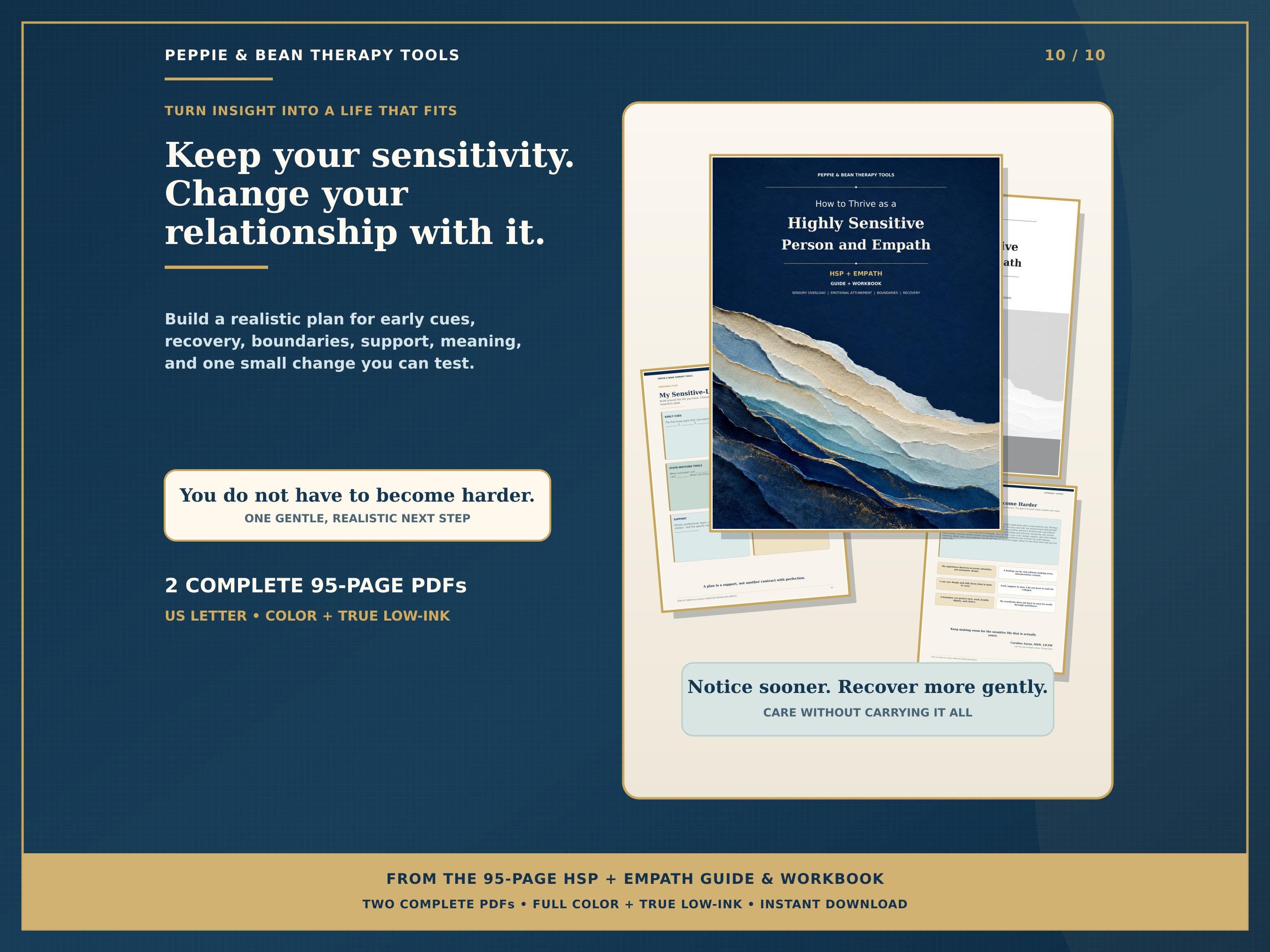
How to Thrive as a Highly Sensitive Person and Empath is a warm, practical, therapist-written guide and workbook for adults who want to understand their sensitivity, recognize overload earlier, protect their capacity, and build a life that fits them more gently.
This workbook does not treat sensitivity as something that needs to be fixed. It helps you separate your natural depth, awareness, compassion, and responsiveness from patterns that leave you depleted—such as chronic overstimulation, emotional carrying, overexplaining, people-pleasing, inadequate recovery, and environments that repeatedly exceed your capacity.
Here, thriving does not mean becoming less caring or less perceptive. It means learning how to notice sooner, recover more intentionally, communicate more clearly, and care without carrying everything.
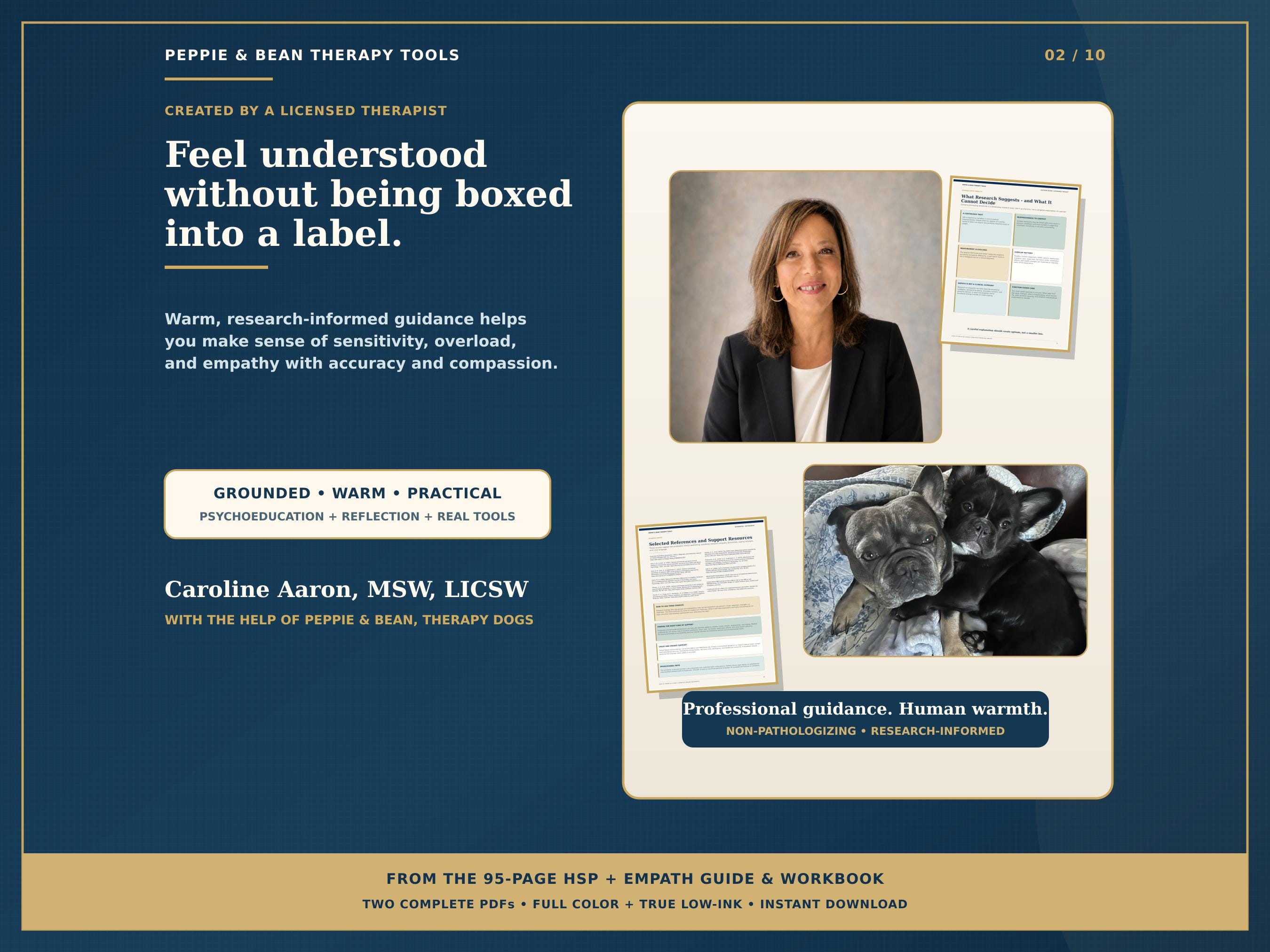
CREATED BY A LICENSED THERAPIST
Caroline Aaron, MSW, LICSW
Peppie & Bean Therapy Tools
With the help of Peppie & Bean, Therapy Dogs
As a licensed therapist, I created this workbook to offer compassionate psychoeducation and realistic tools without reducing you to a label. Highly sensitive person, or HSP, is used as a trait-based framework rather than a diagnosis. “Empath” is treated as personal, nonclinical language for strong emotional attunement—not as proof that someone can literally read minds or automatically know what another person feels.
INSIDE THE 95-PAGE GUIDE AND WORKBOOK
• Clear psychoeducation about sensitivity, attunement, overstimulation, recovery, and nervous-system capacity
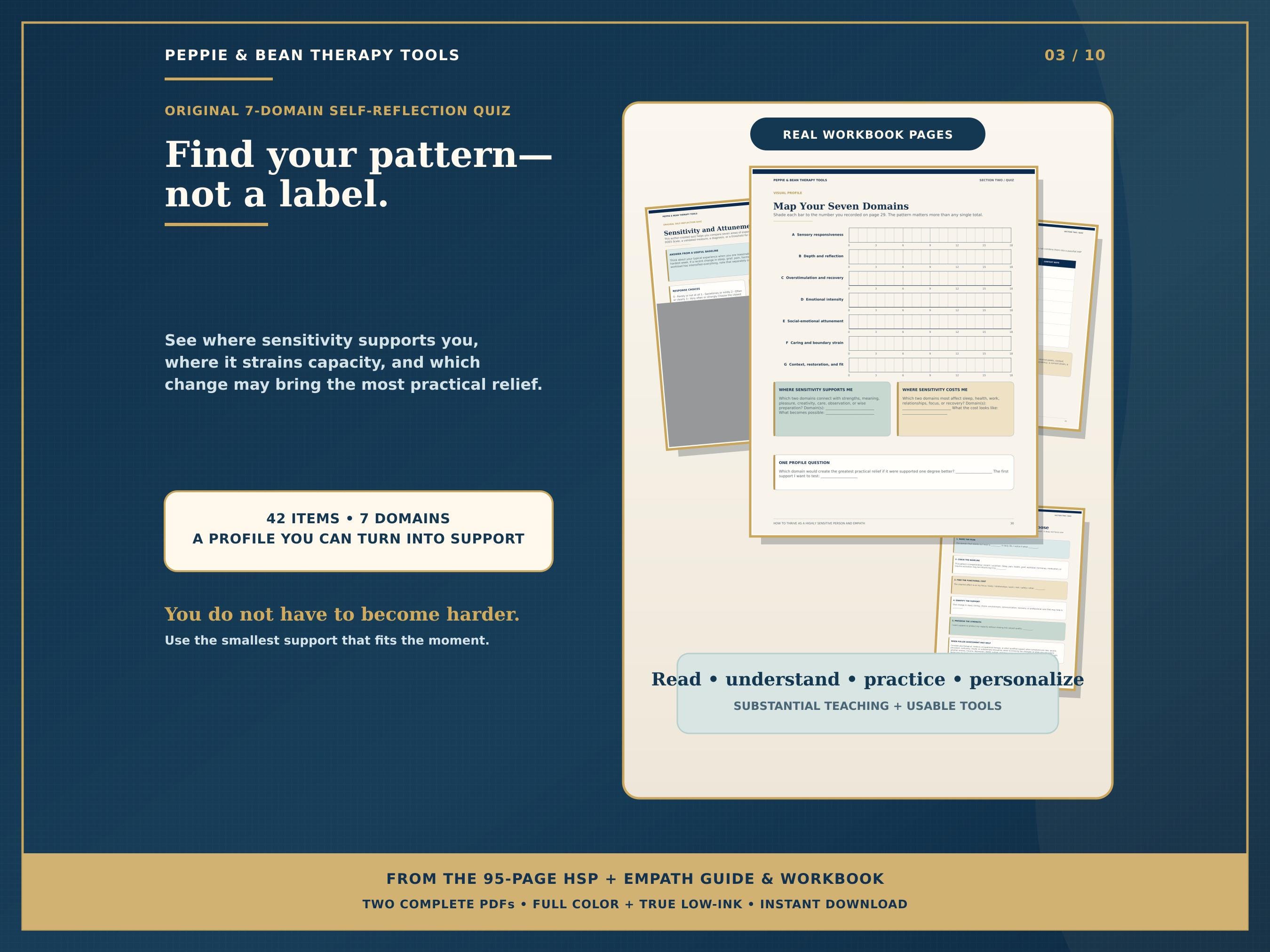
• An original 42-item, seven-domain Sensitivity and Attunement Pattern Quiz
• A personal visual profile that helps you identify where sensitivity supports you and where it may strain your capacity
• Guidance for distinguishing observation, interpretation, emotion, assumption, and uncertainty
• Charts and diagrams explaining input stacking, overload cycles, changing capacity, early cues, and recovery needs
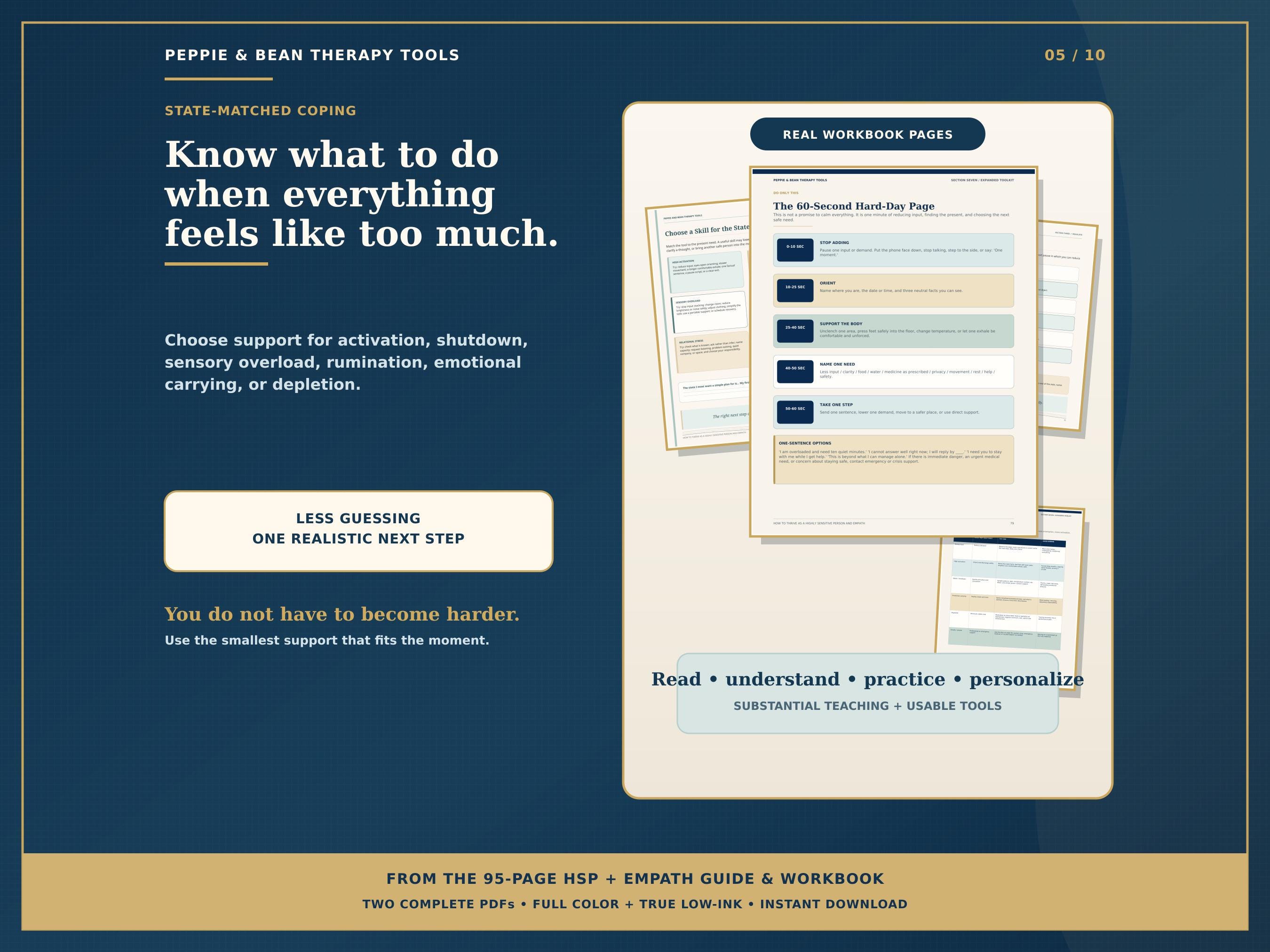
• Tools for recognizing activation, shutdown, rumination, sensory overload, emotional carrying, and depletion
• State-matched coping skills so you can choose support that fits what is happening now
• A 90-second overwhelm reset and reusable 60-Second Hard-Day Page
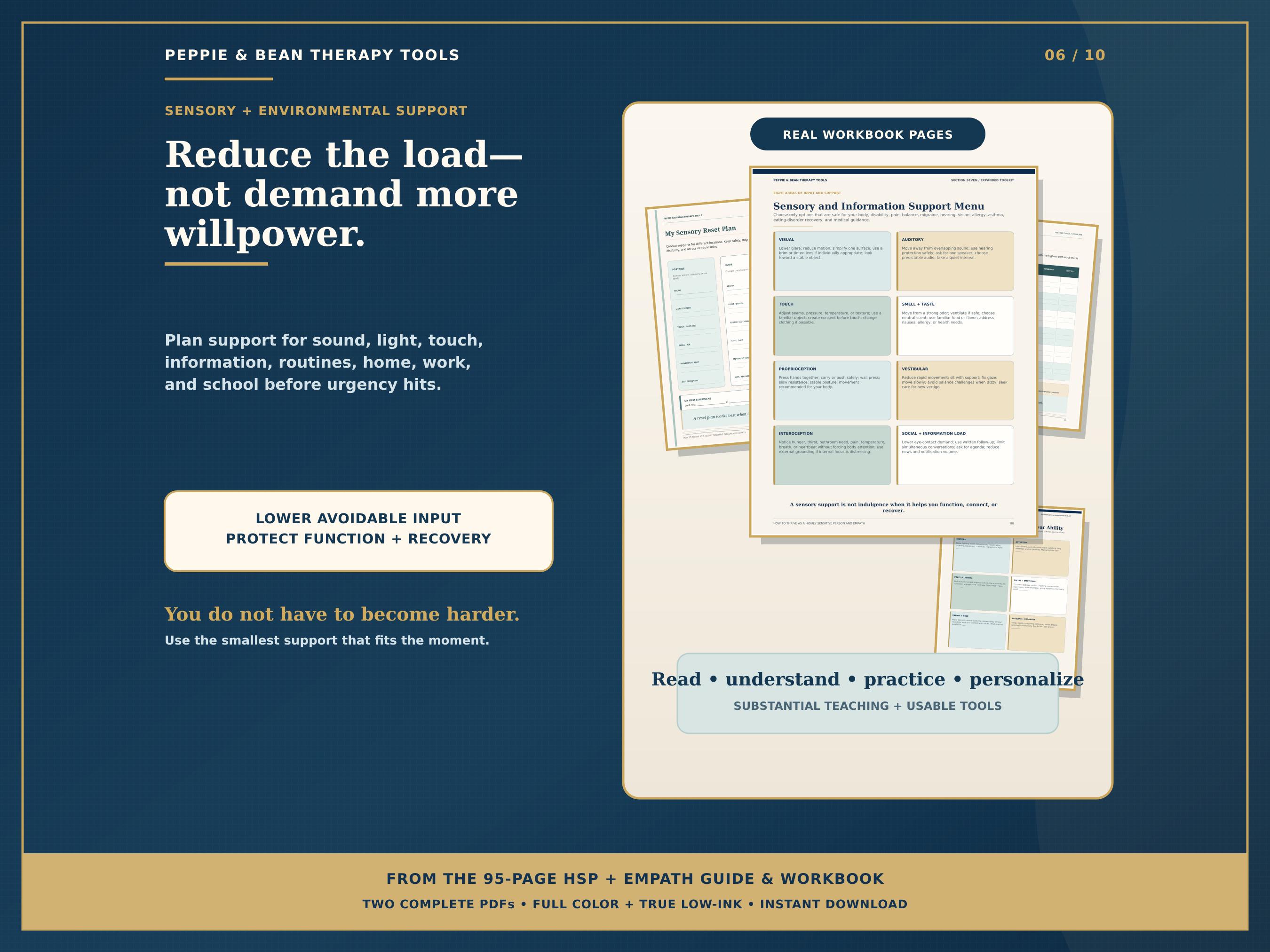
• Sensory supports for sound, light, touch, information, routines, home, work, and other demanding environments
• An environmental audit and practical plan for lowering avoidable input
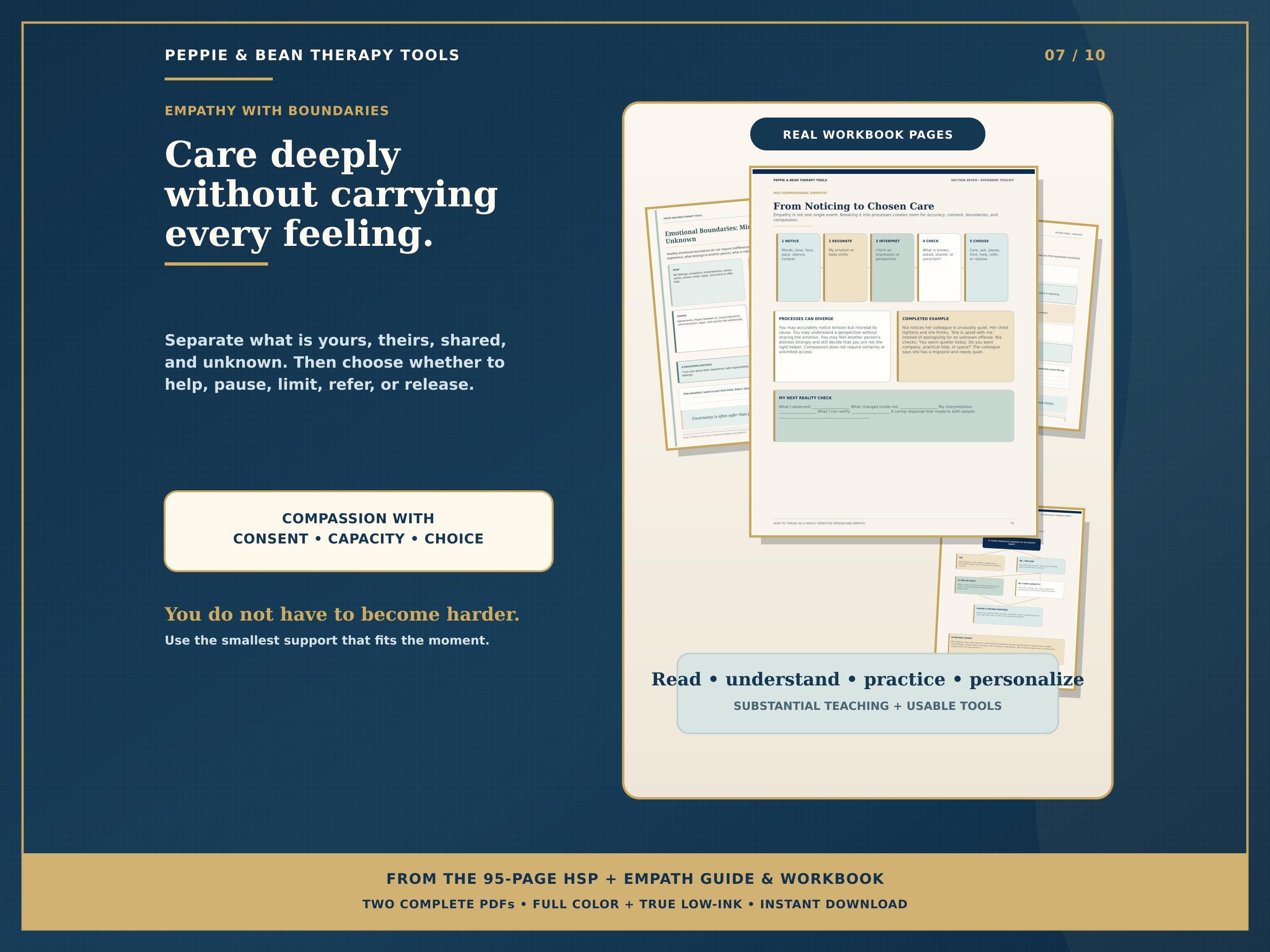
• Empathy tools for sorting what is yours, theirs, shared, and still unknown
• A reality-checking process for responding to what you sense without assuming responsibility for every feeling
• Decision support for choosing whether to help, pause, limit, refer, or release
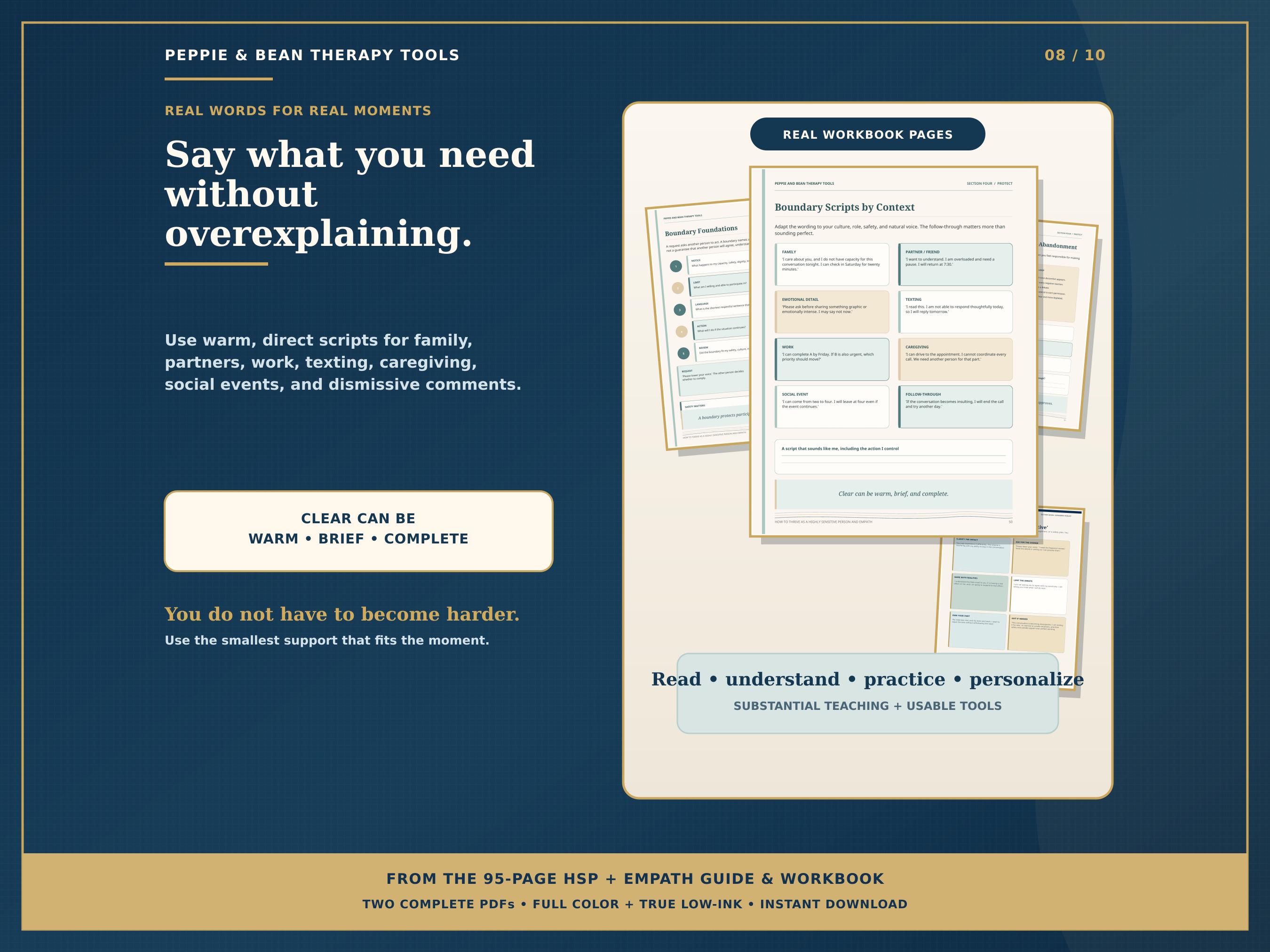
• Warm boundary scripts for family, partners, work, texting, caregiving, social events, and dismissive comments
• Support for responding when someone says, “You’re too sensitive”
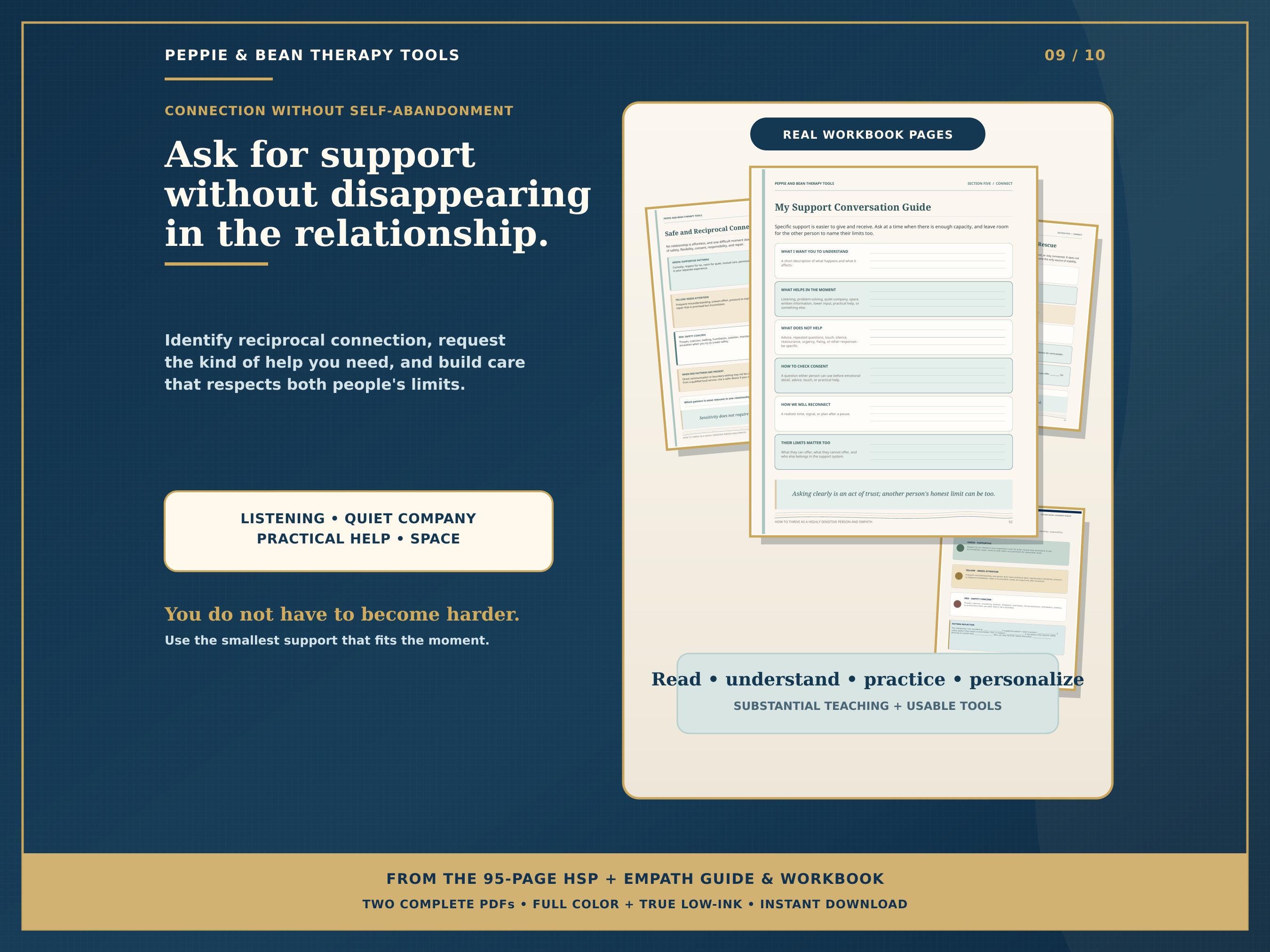
• Tools for asking for listening, quiet company, practical help, reassurance, or space
• Guidance for recognizing reciprocal connection, co-regulation, and relationship patterns that repeatedly drain you
• A Sensitive-Life Fit Plan for boundaries, work, relationships, rest, meaning, support, and recovery
• A realistic 30-day experiment focused on one small, supportive change
• Encouraging reminders throughout the workbook that you do not have to become harder
THE ORIGINAL SEVEN-DOMAIN REFLECTION QUIZ EXPLORES
• Sensory responsiveness
• Depth and reflection
• Overstimulation and recovery
• Emotional intensity
• Social-emotional attunement
• Caring and boundary strain
• Context, restoration, and fit
The quiz is author-created, unvalidated, and non-diagnostic. It does not provide a combined cutoff, pass-or-fail result, or clinical diagnosis. Its purpose is to help you notice patterns and identify practical support—not decide what is “wrong” with you.
THIS WORKBOOK MAY BE A GOOD FIT IF
• You identify as a highly sensitive person or empath
• Noise, light, crowds, conflict, interruptions, or competing demands can become overwhelming
• You notice other people’s moods quickly and have difficulty separating awareness from responsibility
• You need more recovery time than the people around you seem to need
• You care deeply but often end up emotionally depleted
• You struggle with guilt when setting boundaries or asking for space
• You overexplain your limits because you are afraid of disappointing others
• You want coping tools that feel gentle, practical, and realistic
• You want to preserve the strengths of sensitivity while reducing preventable strain
WHAT YOU WILL RECEIVE
• One complete 95-page full-color PDF
• One matching 95-page true low-ink black-and-white PDF
• Two complete printable workbook editions
• US Letter size: 8.5 × 11 inches
• Instant digital access after Etsy confirms payment
HOW TO USE THE WORKBOOK
Print the complete workbook or select only the pages that fit your current needs. You may work through it from beginning to end, begin with the quiz and personal profile, move directly to a coping or boundary section, revisit tools as your circumstances change, or use selected pages alongside a therapist or trusted support person.
The workbook is intentionally substantial, but you do not need to complete it all at once. One useful page, one honest observation, or one small change can be enough for today.
PLEASE NOTE
This is a digital product. No physical workbook will be mailed.
This guide is intended for education, personal reflection, and everyday coping support. It does not diagnose or treat any mental health or medical condition and is not a substitute for individualized therapy, medical care, occupational support, or crisis services.
Personal use only. Files may not be shared, redistributed, copied for clients or groups, altered for resale, or resold in any form.
Copyright 2026 Caroline Aaron, MSW, LICSW. All rights reserved.
Digital downloads
Your files will be available to download once payment is confirmed.
0 items in your cart