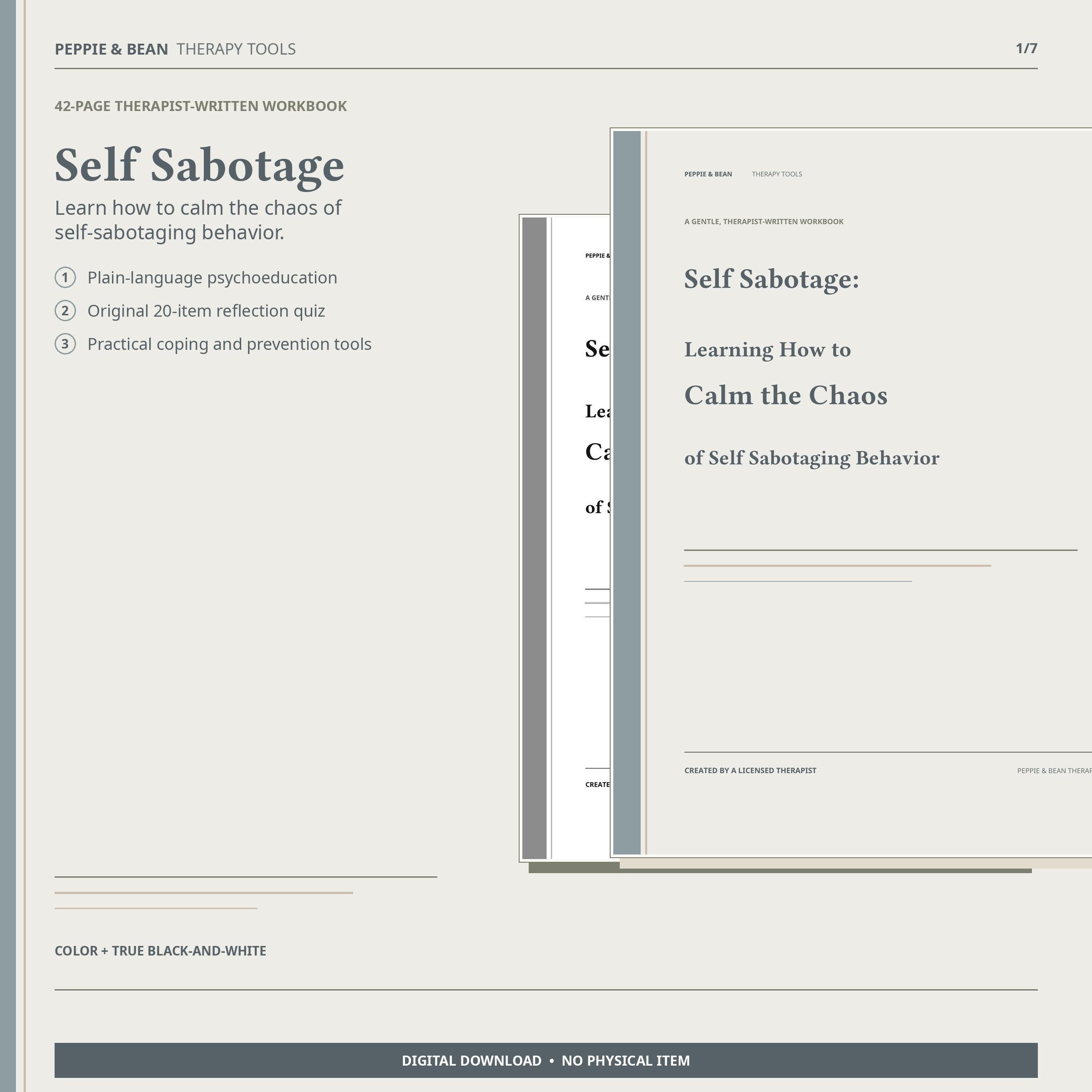
Self Sabotage Workbook: Calm the Chaos and Change Self-Sabotaging Behavior Digital Download PDF
$5.99
Have you ever known what you wanted to do, yet still found yourself avoiding it, putting it off, pulling away, over-
committing, or giving up when things became uncomfortable?
Self-sabotaging behavior can feel confusing and discouraging. It may look like procrastination, perfectionism, people-pleasing, avoiding a difficult conversation, choosing quick relief, or stepping away from something meaningful when fear or pressure rises. These patterns can create real problems, but they often begin as an attempt to protect you from discomfort, criticism, uncertainty, disappointment, or overwhelm.
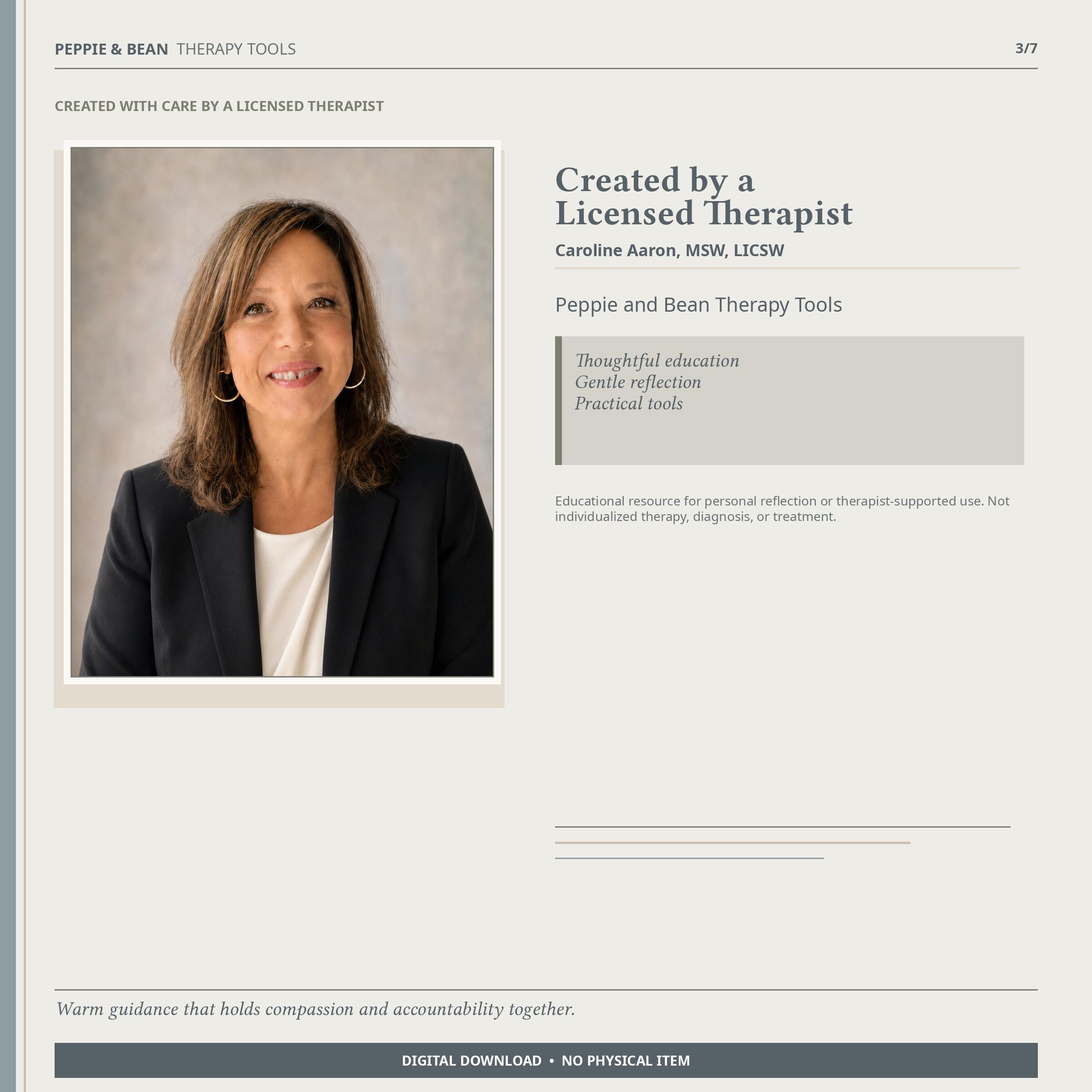
Self Sabotage: Learning How to Calm the Chaos of Self Sabotaging Behavior was created to help you understand these patterns without shaming yourself. Written in warm, everyday language by a licensed therapist, this workbook gently guides you through what may be happening before the behavior, what need may be underneath
it, and how to practice a healthier response.
This workbook does not treat self-sabotage as laziness or a character flaw. It helps you recognize the short-term
purpose a pattern may be serving while still making room for responsibility, repair, and meaningful change.
Inside the Workbook:
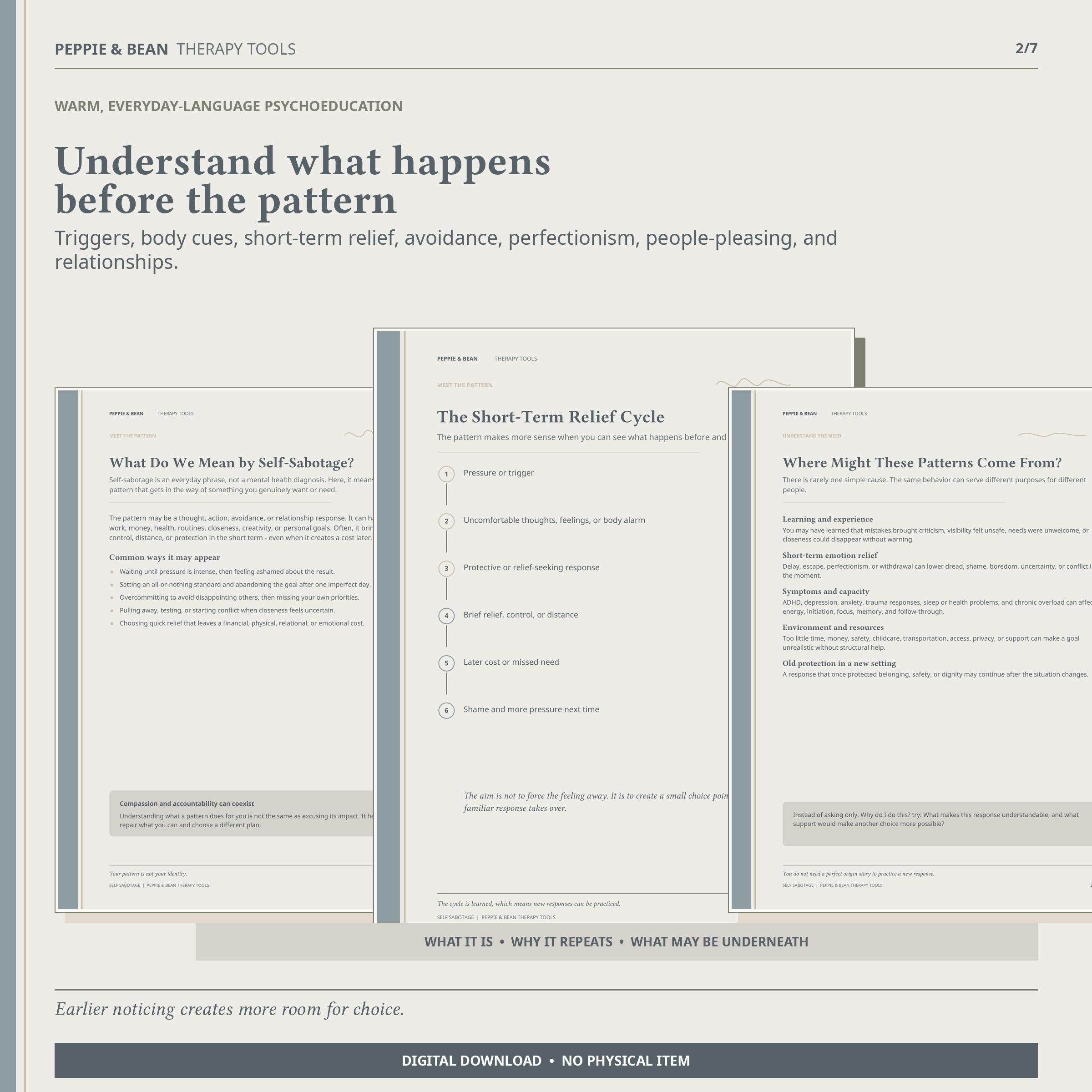
• Clear, plain-language psychoeducation about self-sabotaging behavior
• How patterns may appear in thoughts, feelings, the body, and everyday actions
• A clear short-term-relief cycle that helps readers understand why patterns repeat
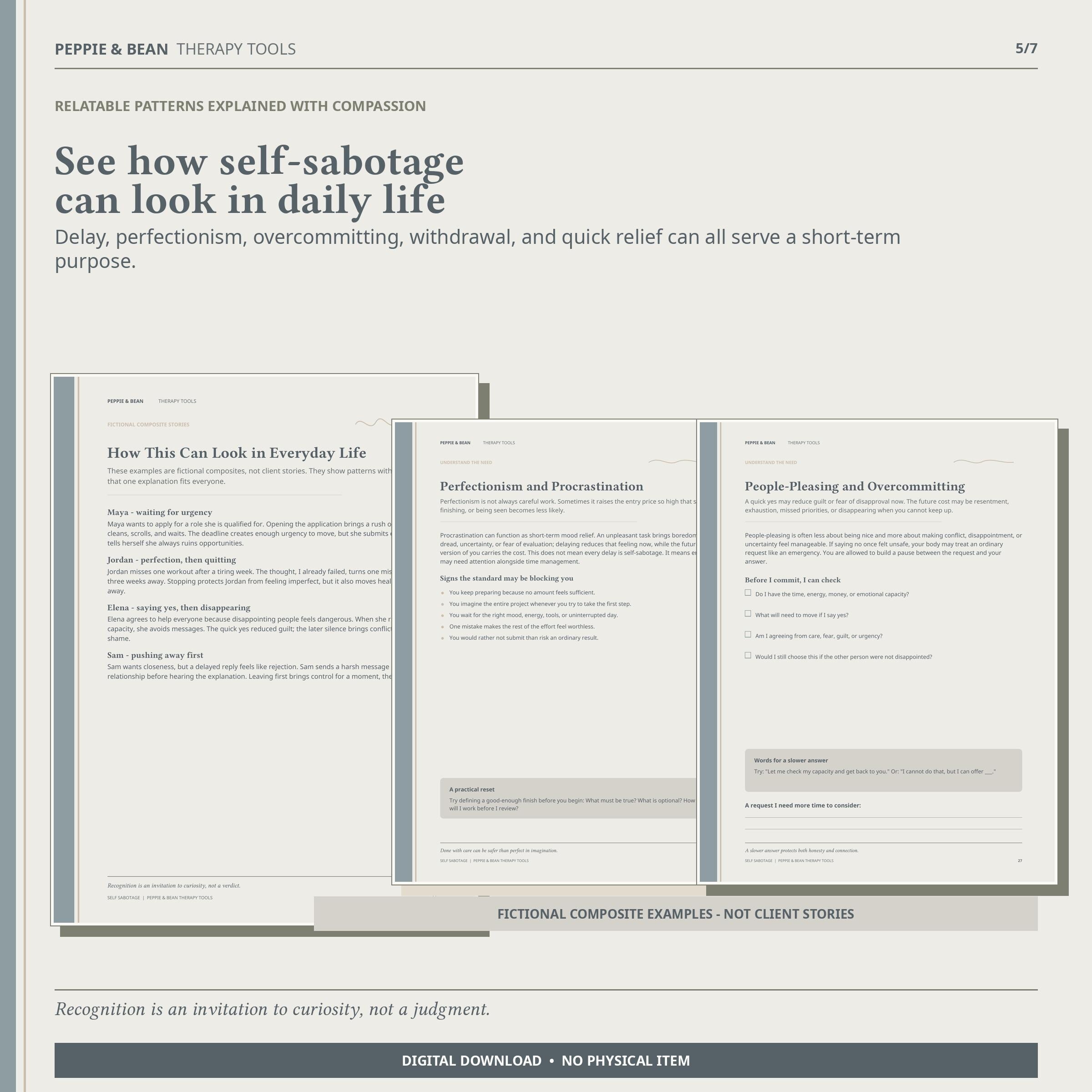
• Fictional composite examples showing how these struggles can look in ordinary life
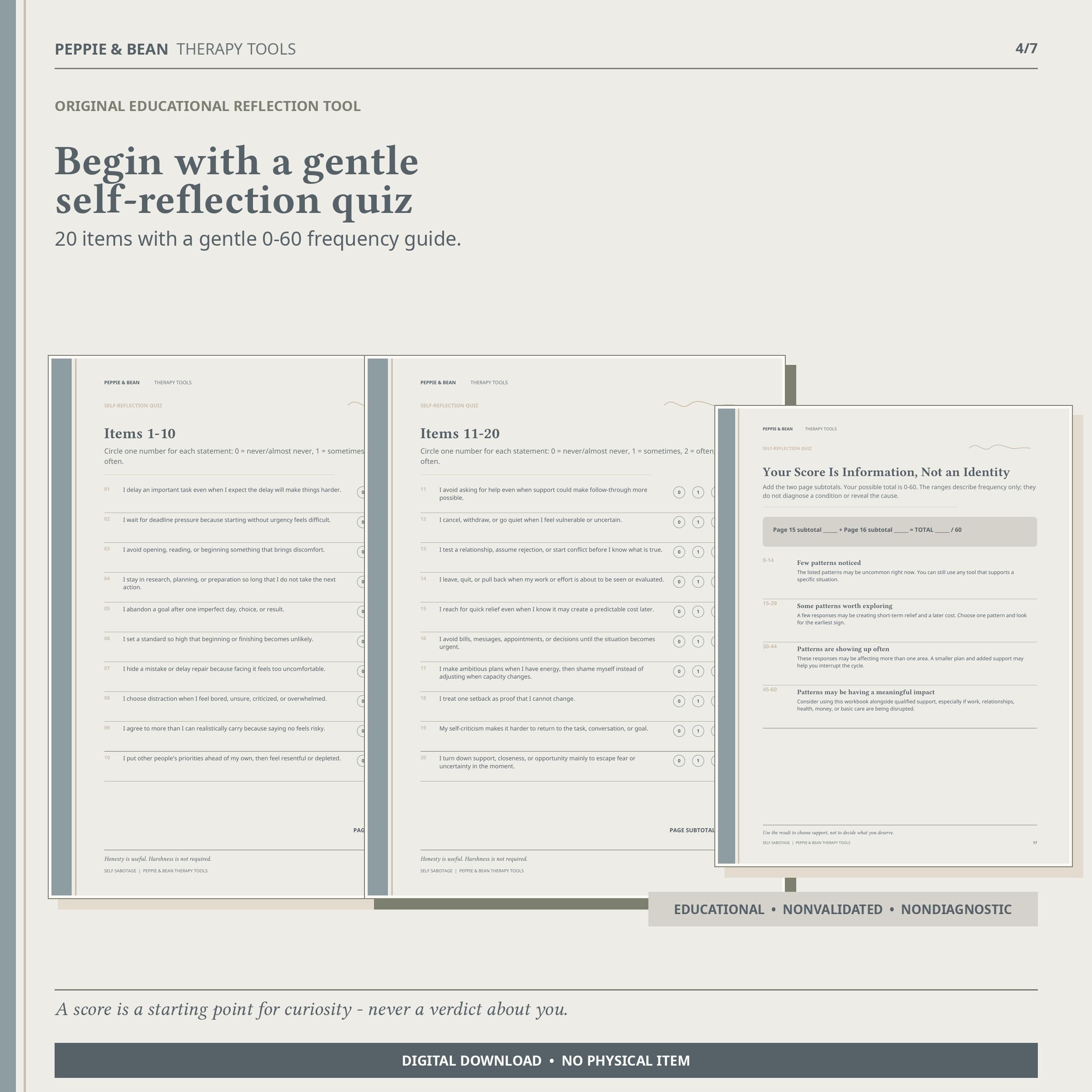
• An original 20-item self-reflection quiz with a gentle 0-60 frequency guide
• Common patterns including avoidance, procrastination, perfectionism, overcommitting, people-pleasing, with-
drawing, relationship testing, and quick relief
• Guidance for considering ADHD, depression, anxiety, trauma responses, sleep or health concerns, chronic over-
load, coercion, and limited resources before using a self-blaming label
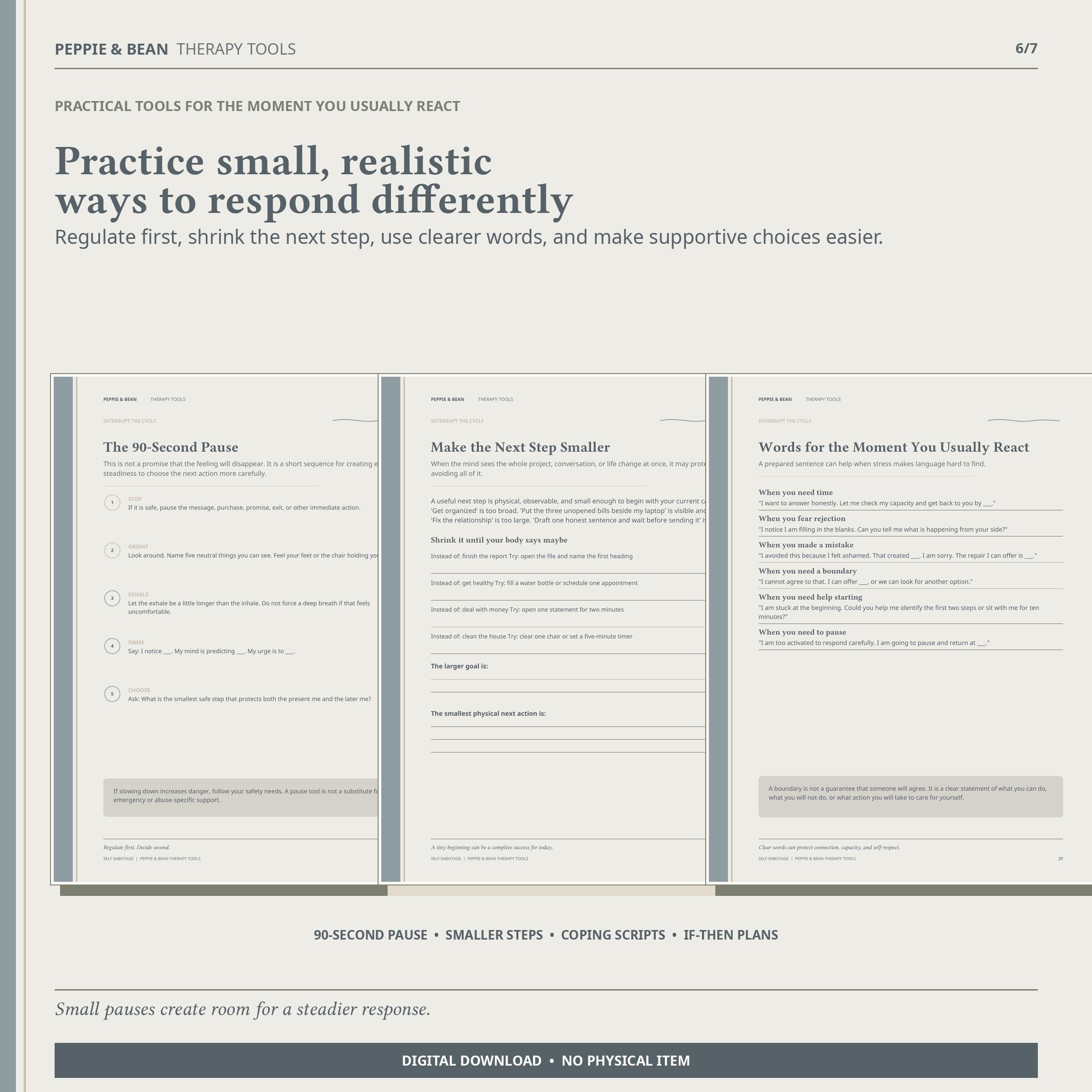
• A 90-second calming pause and grounding sequence
• Tiny-step strategies for beginning an avoided task
• Kinder, more accurate thought shifts
• An urge-riding exercise for delaying a reaction and choosing lower-cost relief
• A therapist-style self-compassion script
• Boundary, repair, reassurance, and help-seeking scripts
• Environmental supports and specific if-then plans
• A personal self-sabotage prevention plan
• Setback repair and a gentle seven-day practice experiment
• Encouraging statements throughout
The quiz is an original reflection activity. It is not a validated assessment, diagnosis, or measure of a mental-health
condition, and a score cannot explain why a pattern occurs.
This workbook does not ask you to change through criticism or force. It helps you slow the pattern down, understand
what it may be trying to do for you, and build realistic choices that feel possible in everyday life.
This workbook may be useful for adults who:
• Keep putting off something that matters to them
• Become overwhelmed and shut down
• Abandon goals when progress feels imperfect
• Say yes too quickly and later feel resentful or depleted
• Pull away when relationships begin to feel vulnerable
• Rely on quick relief that creates a later cost
• Struggle with a harsh inner critic after a setback
• Want practical, compassionate ways to interrupt a familiar pattern
What You Will Receive:
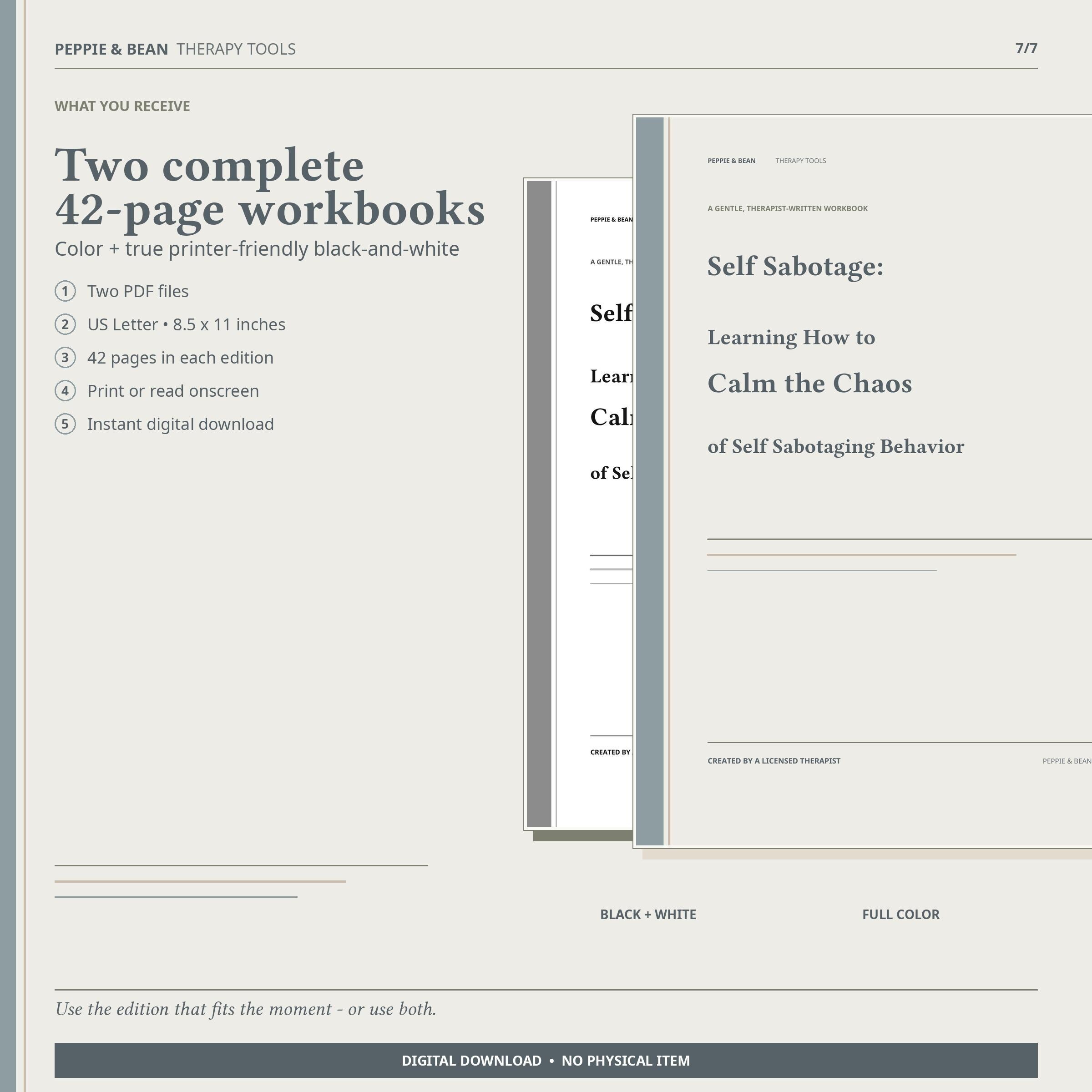
• One 42-page full-color PDF workbook
• One 42-page true black-and-white, printer-friendly PDF workbook
• US Letter size: 8.5 x 11 inches
• Static, ready-to-print PDF files that may also be read onscreen
• Instant digital download
• No physical product will be mailed
Important Note:
This workbook is for education and guided personal reflection. It is not therapy, medical advice, diagnosis, crisis care, or a replacement for individualized professional support.
Purchase includes a license for personal use or use by one helping professional with their direct clients. Files may not
be resold, shared, posted online, redistributed, or included in another product.
Digital downloads
Your files will be available to download once payment is confirmed.
0 items in your cart