INFJ Workbook for Self-Discovery | Strengths, Boundaries & Self-Worth | Therapist-Created 75-Page Printable PDF


$7.99
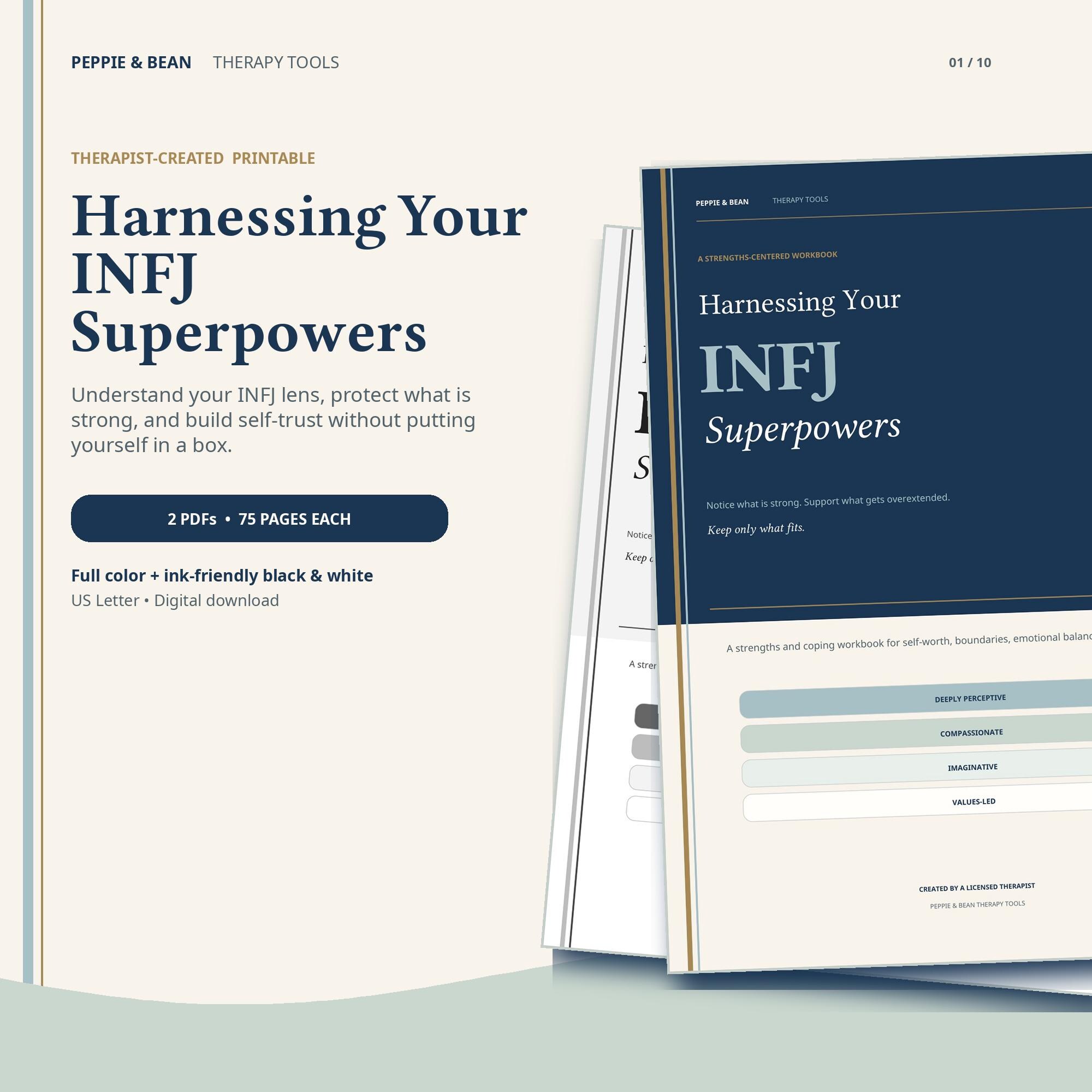
Have you ever felt deeply caring and observant, yet somehow out of step with the people around you? This 75-page printable INFJ workbook and self-discovery guide offers thoughtful education and guided exercises for exploring INFJ strengths, boundaries, relationships, work, self-worth, emotional balance, and belonging.
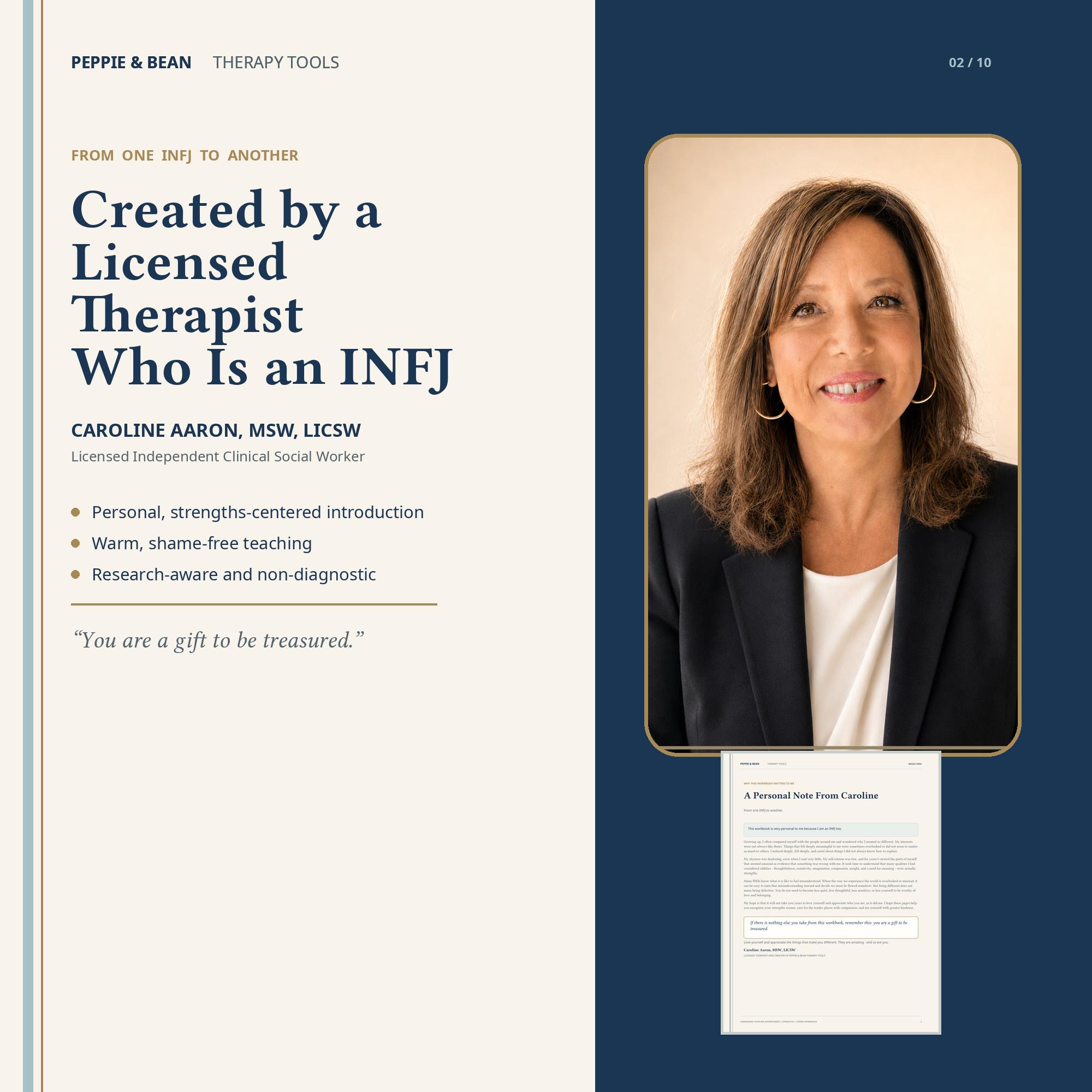
This workbook is especially personal to me because I am an INFJ too.
Growing up, I often compared myself with other people and wondered why my interests seemed so different from theirs or why things that mattered deeply to me were sometimes overlooked. My shyness was deafening, even when I said very little, and my self-esteem was low. It took years to recognize that many of the qualities I had once considered oddities - thoughtfulness, sensitivity, imagination, compassion, insight, and a need for meaning - could also be strengths.
As a licensed therapist, I created Harnessing Your INFJ Superpowers to offer the kind of grounded, encouraging resource I wish I had found sooner. My hope is that these pages help you understand yourself with greater kindness and appreciate what makes you different without feeling pressured to fit a perfect INFJ description.
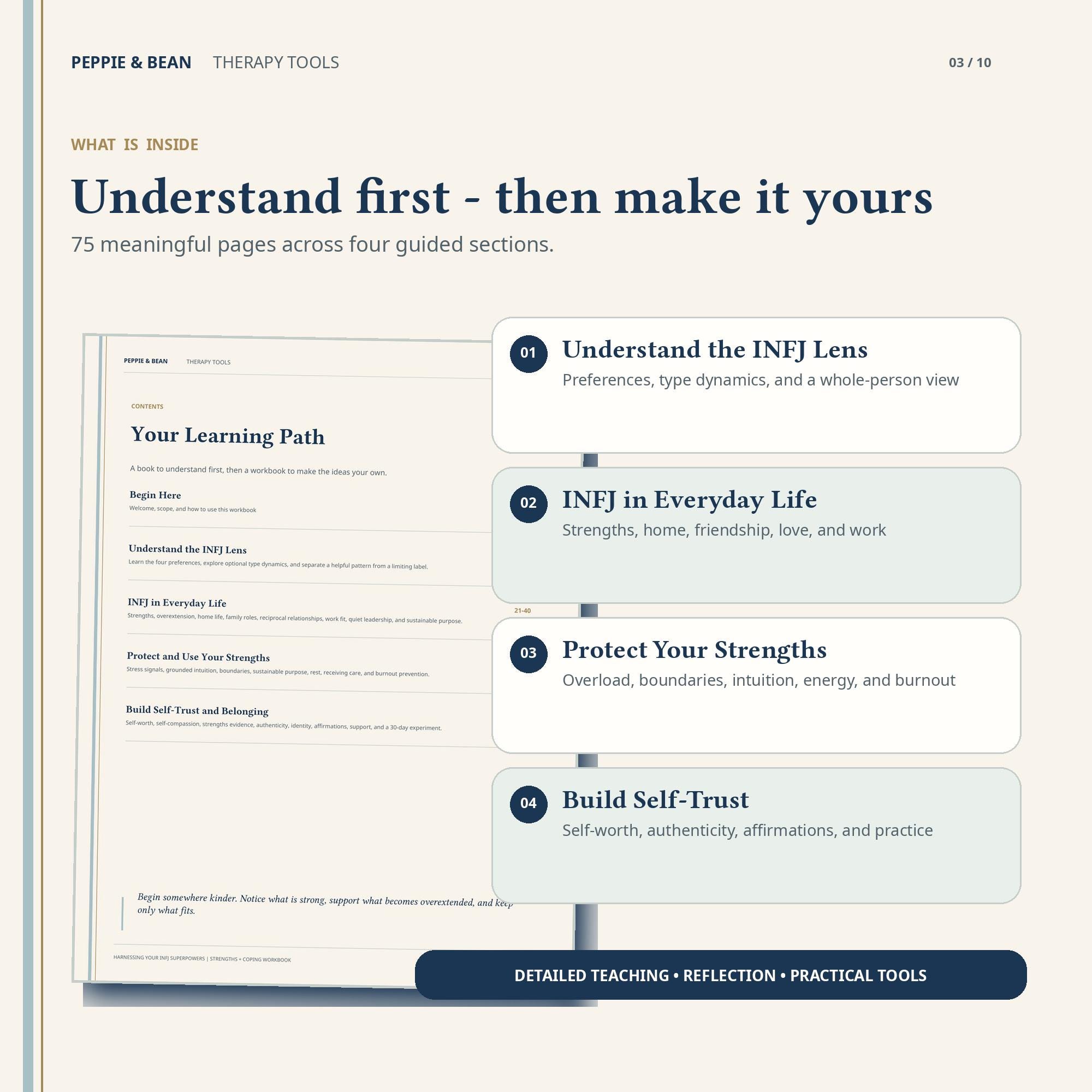
A detailed guide - not simply a collection of worksheets
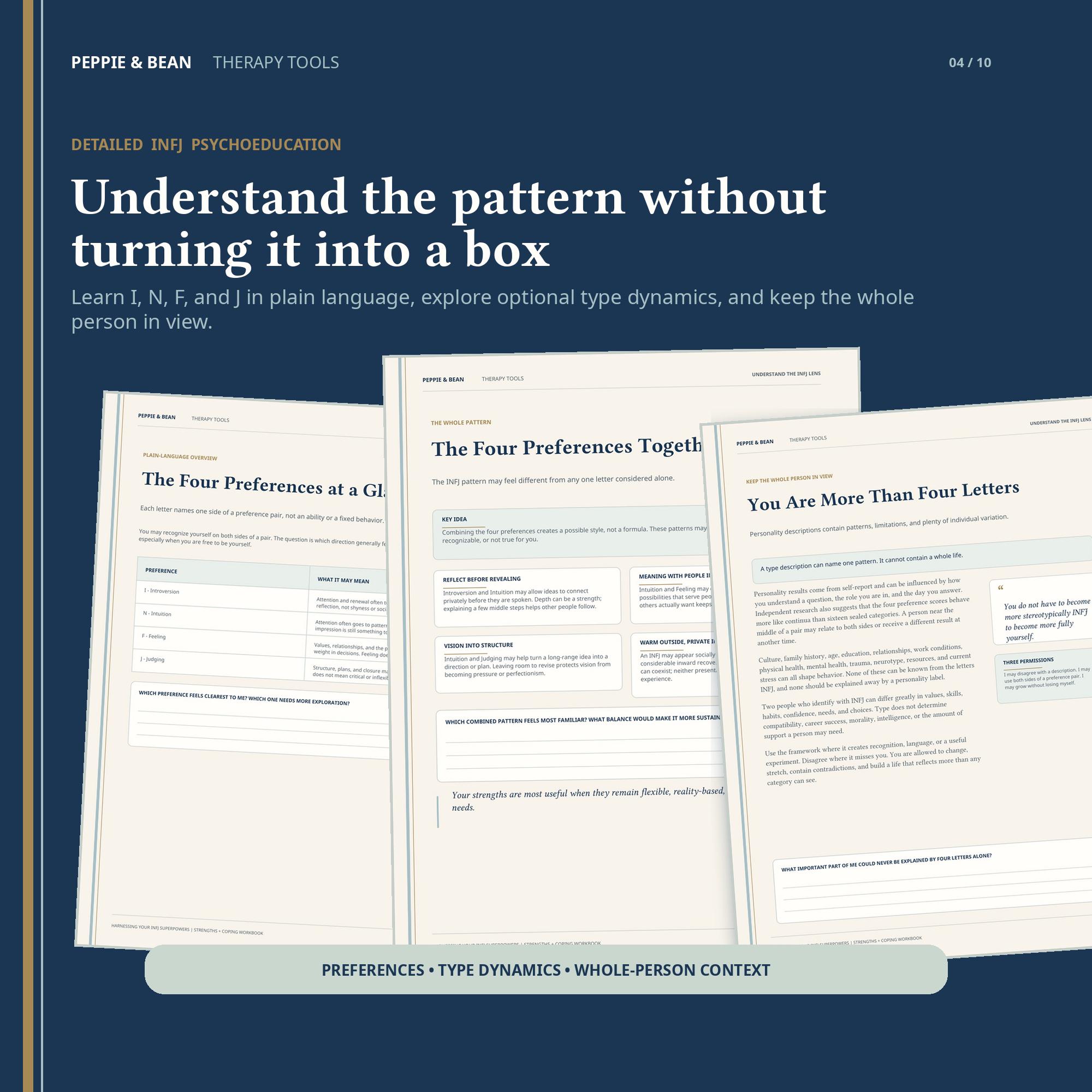
The opening section begins at the beginning. It explains what each INFJ preference means in clear, everyday language and shows how the four preferences may work together. It also explains what an INFJ result cannot tell you.
Inside, you will explore:
- Introversion as a preference for inward processing and restoration - not a synonym for shyness
- Intuition as attention to patterns, meaning, and possibilities - not mind reading
- Feeling as a values-and-people starting point for decisions - not a lack of logic
- Judging as a preference for structure and closure - not being judgmental
- The optional Ni, Fe, Ti, and Se type-dynamics framework, presented carefully as theory rather than neuroscience
- Common INFJ characteristics without assuming every INFJ is alike
- Four Quiet Strengths: being deeply perceptive, compassionate, imaginative, and values-led
- How a genuine strength can become overextended through timing, intensity, pressure, or exhaustion
INFJs in everyday life;
The workbook goes beyond a general personality description to consider how INFJ patterns may appear in real situations, including:
- Rest, care, privacy, sensory needs, and shared responsibilities at home
- Family roles, invisible labor, guilt, and the pressure to be the dependable person
- Friendship, one-to-one depth, reciprocity, and the difference between being trusted and being truly known
- Romantic relationships, attunement, earned trust, direct requests, conflict, repair, and the often-discussed "door slam"
- Meaningful work, work-environment fit, visibility, quiet leadership, burnout, and sustainable purpose
Maya, Marcus, Elena, Jordan, and Priya appear throughout the book to show what these patterns can look like in ordinary life. They are clearly labeled fictional composites, not clients or accounts of any one person's therapy.
Practical support for strengths that feel overextended
Teaching pages, reflection prompts, scripts, and planning pages offer support for:
- Recognizing early signs of emotional, mental, and sensory overload
- Returning to the present with a simple two-minute grounding practice
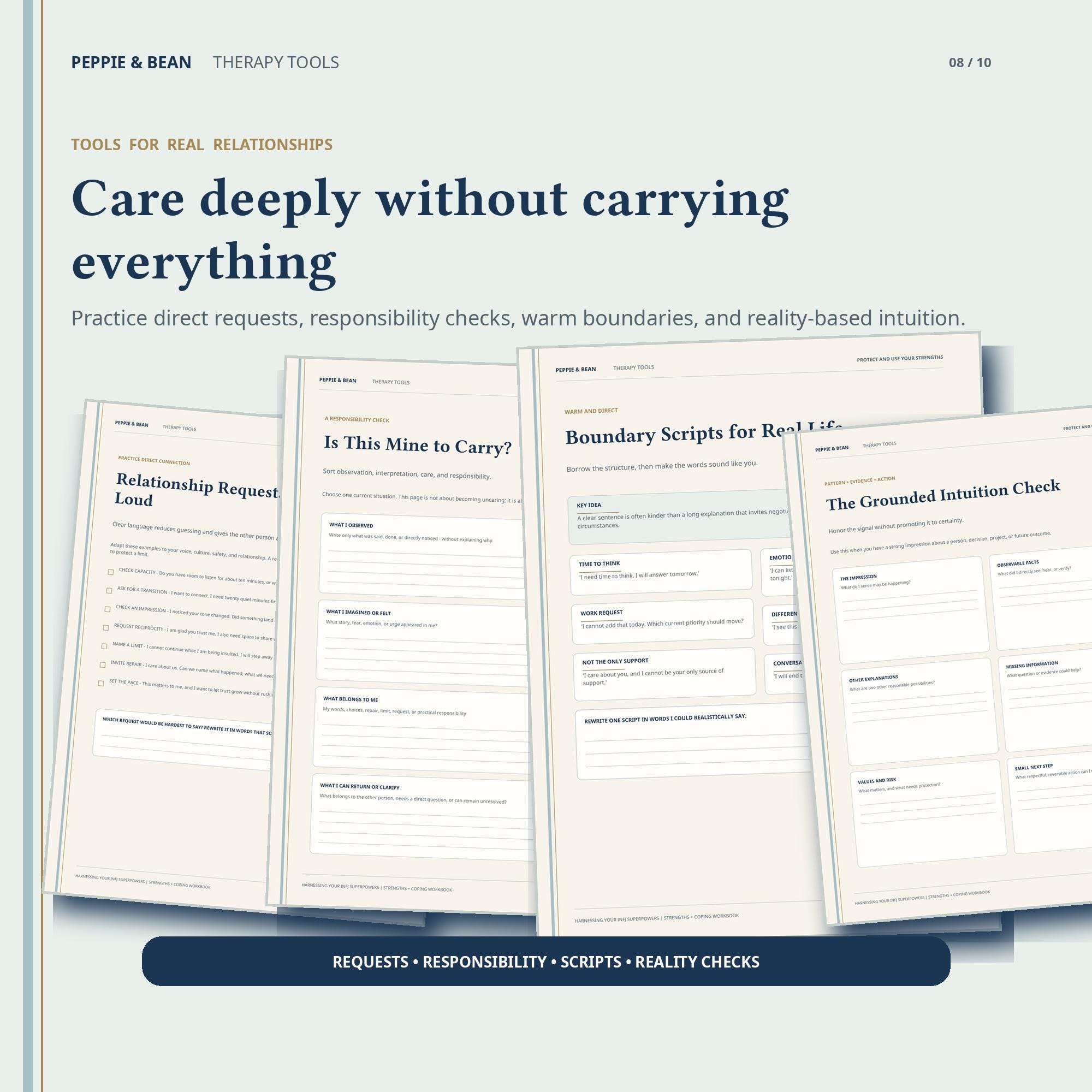
- Caring about another person's feelings without absorbing full responsibility for them
- Sorting what is yours to carry, what is shared, and what belongs to someone else
- Setting smaller, earlier boundaries before resentment builds
- Using realistic boundary and relationship scripts
- Responding to guilt after a boundary
- Separating grounded intuition from certainty, mind reading, or overthinking
- Pursuing purpose without making every choice carry the weight of perfection
- Creating an honest energy budget and making rest part of sustainable care
- Receiving care instead of always remaining in the listener or helper role
- Recognizing burnout warning signs and creating a prevention plan
Self-worth, self-compassion, and belonging:
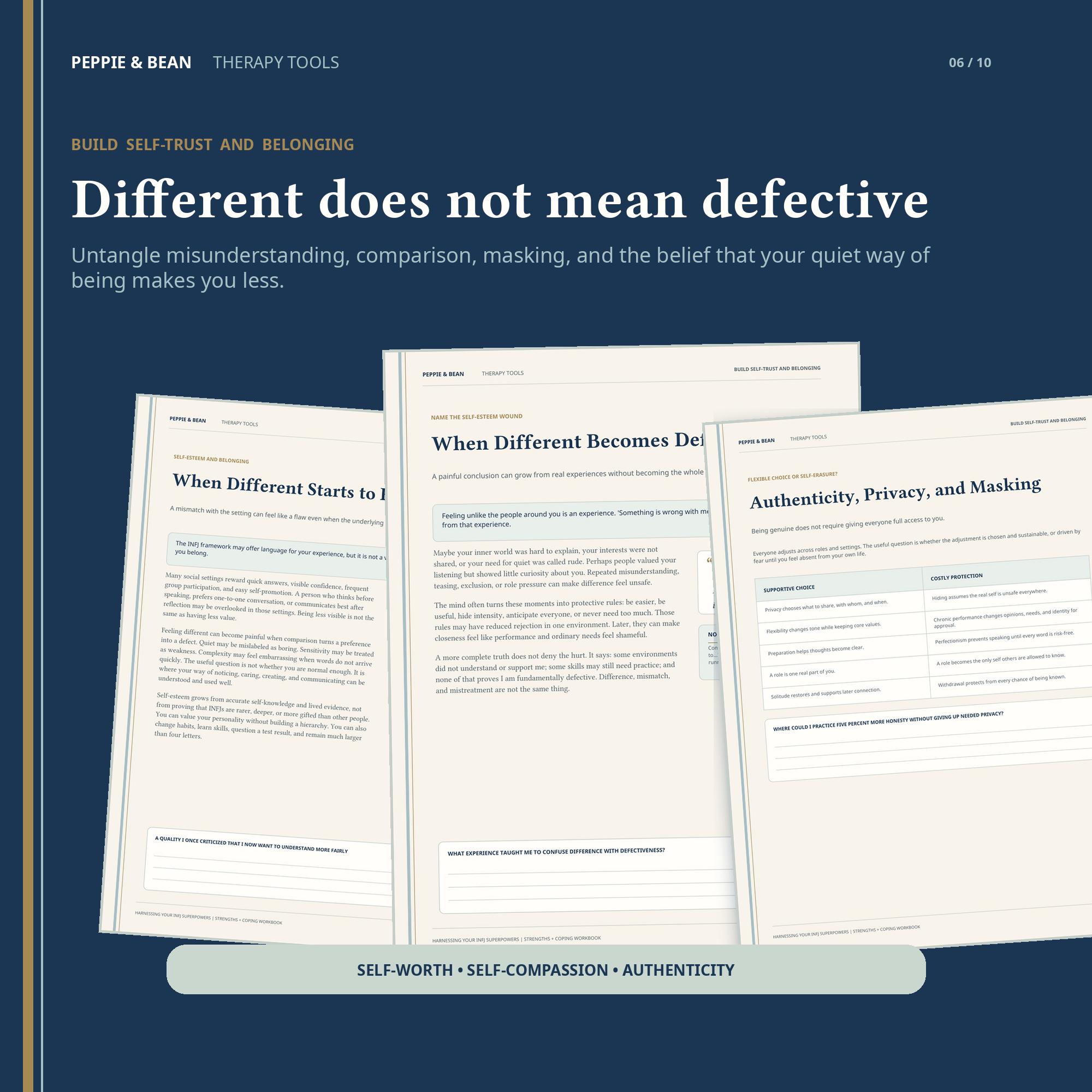
Many people who identify as INFJ describe feeling different, misunderstood, too quiet, too intense, or difficult to explain. This workbook does not turn those community experiences into universal facts. Instead, it helps you examine what fits and offers compassionate ways to challenge the painful conclusion that different must mean defective.
The final section includes:
- Self-worth that does not depend on being rare, exceptional, useful, or endlessly giving
- A self-compassion pause for difficult moments
- Support for understanding the inner critic
- A Strength Evidence Log based on real actions rather than flattering labels
- Belonging without performing or earning your place through usefulness
- Reflection on authenticity, privacy, and masking
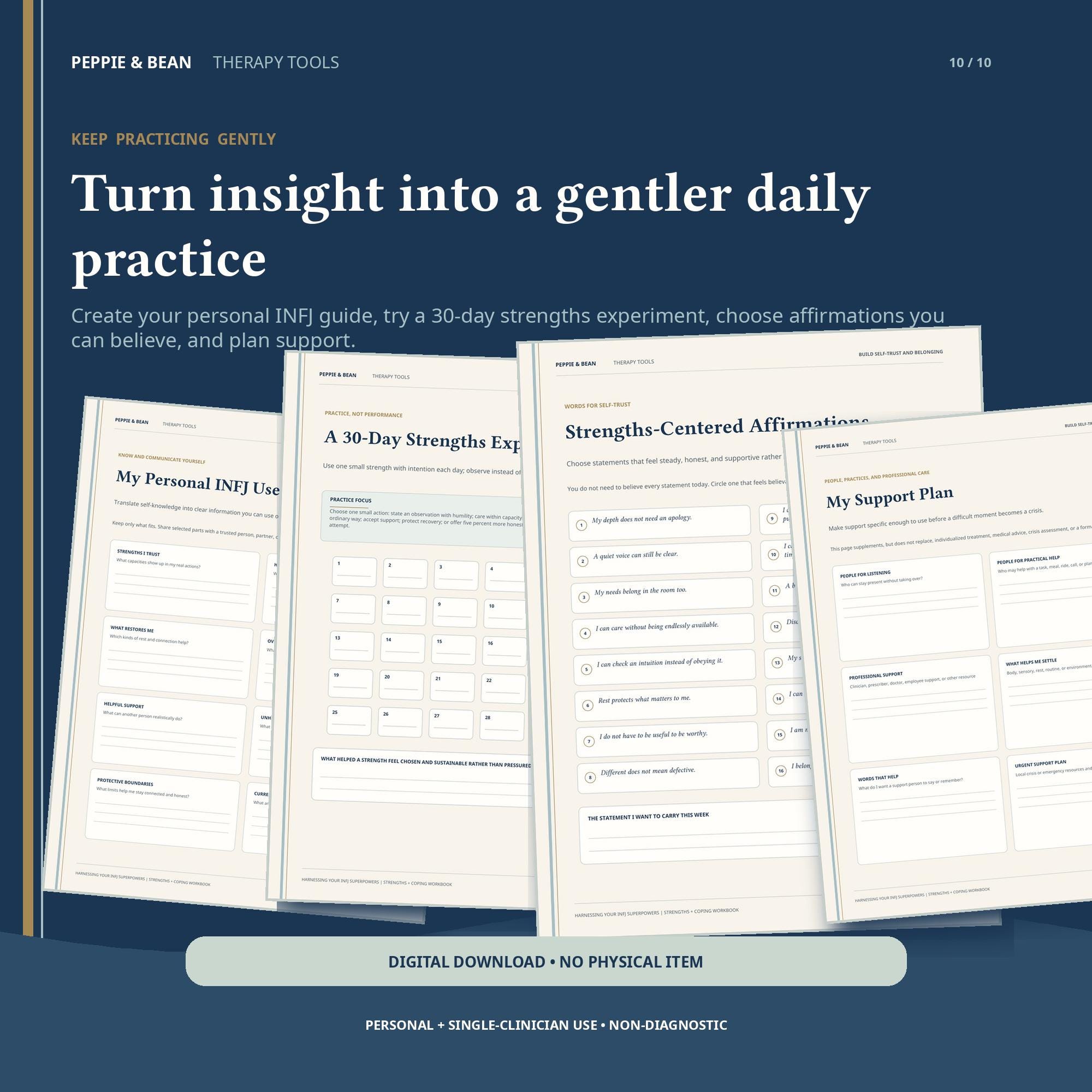
- A personal INFJ user guide
- A 30-day strengths experiment
- Strengths-centered affirmations and a page for writing affirmations you can believe
- A personal support plan and encouraging closing message
This workbook may be a good fit if you:
- Identify as INFJ or are exploring whether INFJ language helps you understand yourself
- Have often felt different, overlooked, misunderstood, or difficult to explain
- Want to appreciate your strengths without romanticizing exhaustion, perfectionism, people-pleasing, or isolation
- Want practical support for boundaries, relationships, work, rest, and self-trust
- Prefer warm psychoeducation in everyday language alongside guided reflection
- Want a resource you can use privately or bring into your own therapy sessions
You do not need to relate to every page. Circle what fits, leave what does not, and return to the exercises that feel most useful. A personality framework should create curiosity and choice - not another role you have to perform.
What you will receive:
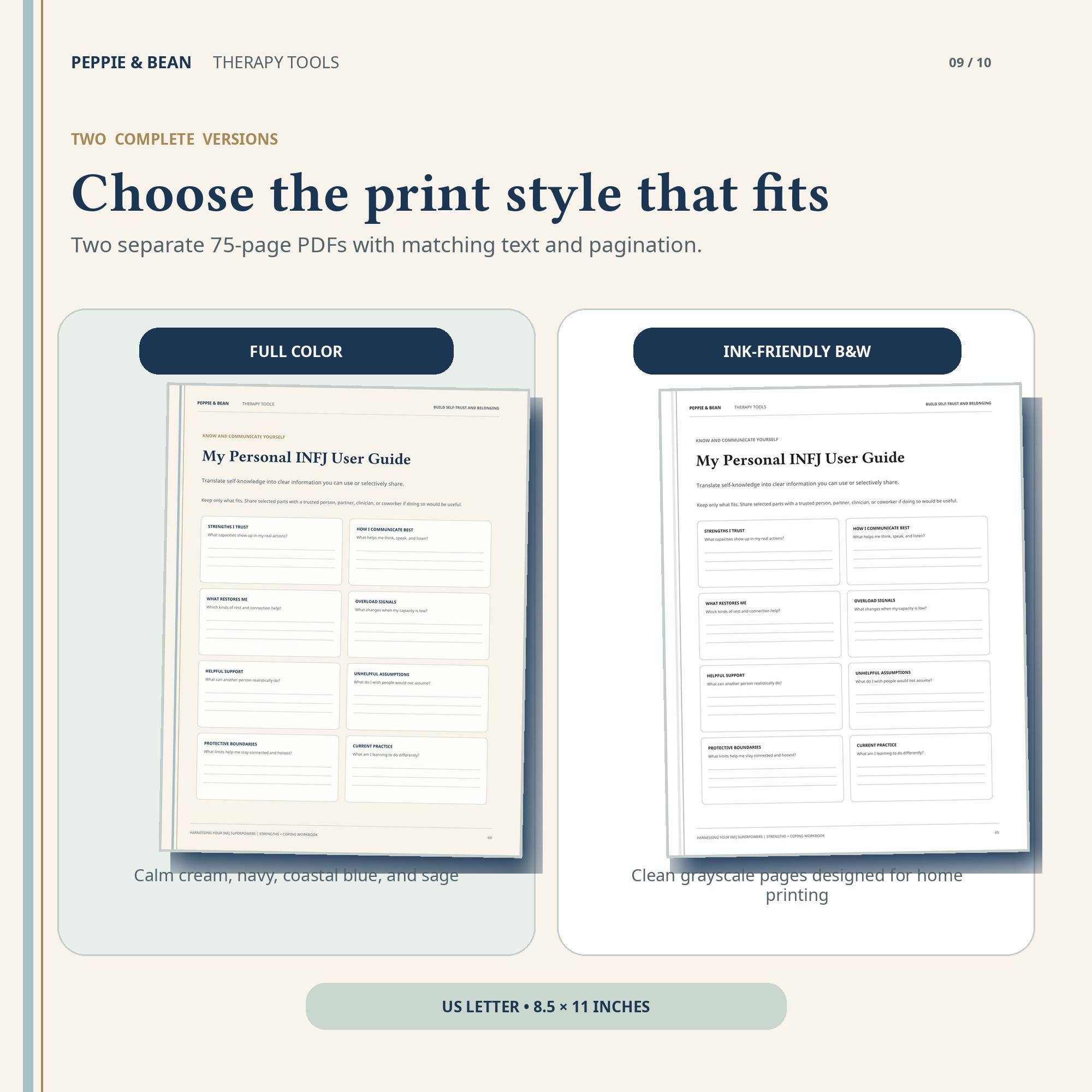
- One complete 75-page full-color PDF
- One complete 75-page printer-friendly black-and-white PDF
- The same full content and pagination in both editions
- US Letter size: 8.5 x 11 inches
- Printable digital files; no physical item will be mailed
Print the complete book-workbook or begin with the pages most relevant to you. The PDFs are not editable templates or personality tests.
Created by Caroline Aaron, MSW, LICSW, Licensed Independent Clinical Social Worker, for Peppie & Bean Therapy Tools.
INFJ is used as a personality-preference lens, not a diagnosis, complete identity, or guarantee about behavior. This resource does not determine personality type and does not administer or replace an official MBTI assessment. It is an independent educational resource and is not affiliated with or endorsed by The Myers-Briggs Company or the Myers & Briggs Foundation.
This workbook provides general education, reflection, and skill practice. It is not psychotherapy, counseling, diagnosis, medical or psychiatric treatment, emergency care, or a substitute for individualized support from a qualified professional. No particular outcome is promised.
Use license:
The original purchaser may print this workbook for personal use. An individual clinician purchaser may print copies reasonably needed for direct work with that clinician's own clients or personally facilitated therapy groups. Each clinician requires a separate purchase.
The digital files may not be forwarded, uploaded, posted, shared through a drive, redistributed, resold, rebranded, altered for resale, or represented as another person's work. This purchase does not include a practice-wide, agency-wide, school-wide, course, workshop, or organizational license.
If there is nothing else you take from this workbook, remember this: you are a gift to be treasured.
Digital downloads
Your files will be available to download once payment is confirmed.
0 items in your cart