Shopping Addiction Workbook | Compulsive Buying, Emotional Spending (Therapist-Written PDF)
$7.99
Shopping can be enjoyable, practical, comforting, exciting, or a temporary escape from something difficult. But when buying begins to feel automatic, emotionally driven, secretive, or hard to interrupt, it may leave behind regret, debt, clutter, conflict, lost time, or shame.
I created this workbook to offer a compassionate place to understand that pattern and begin building more room for choice.
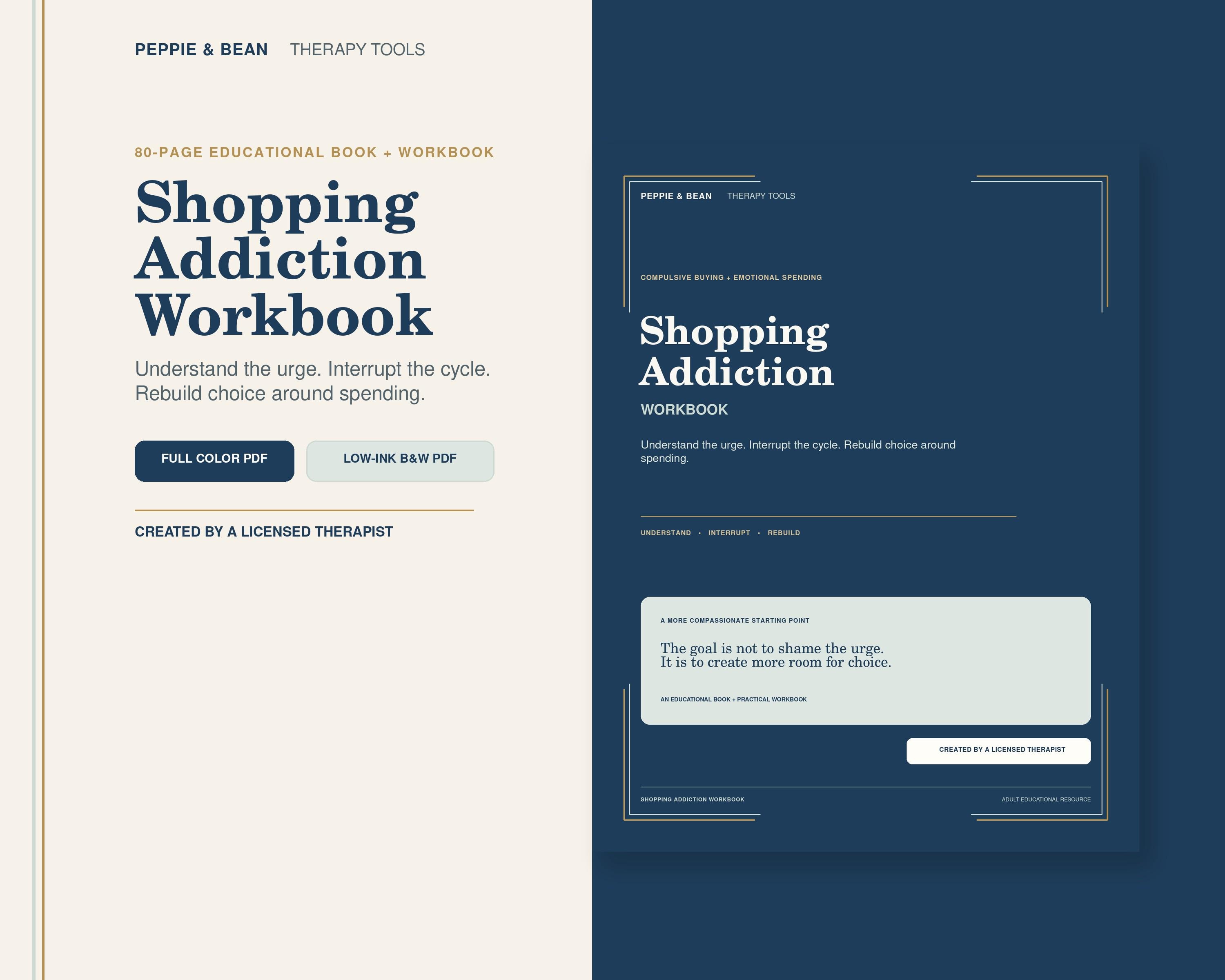
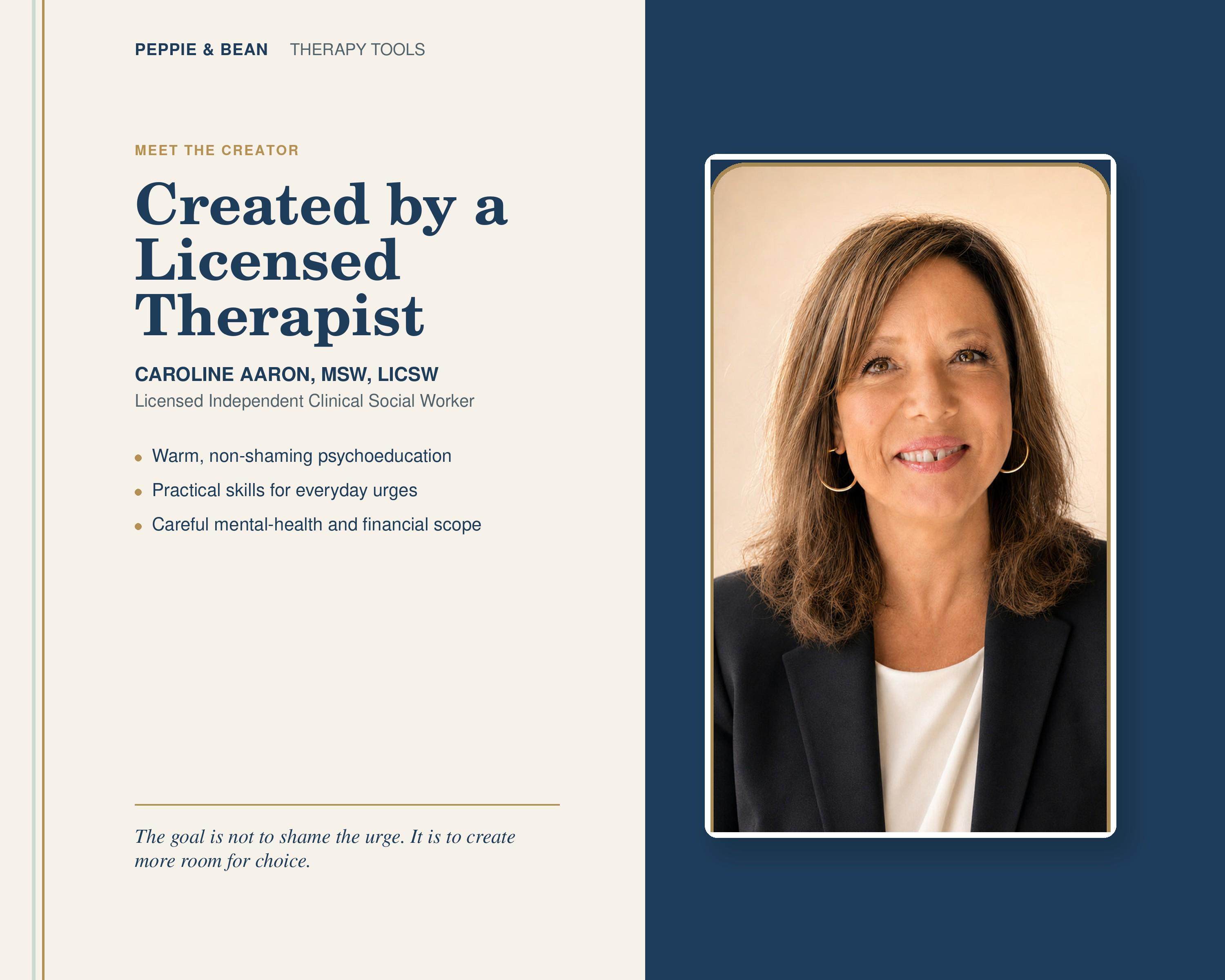
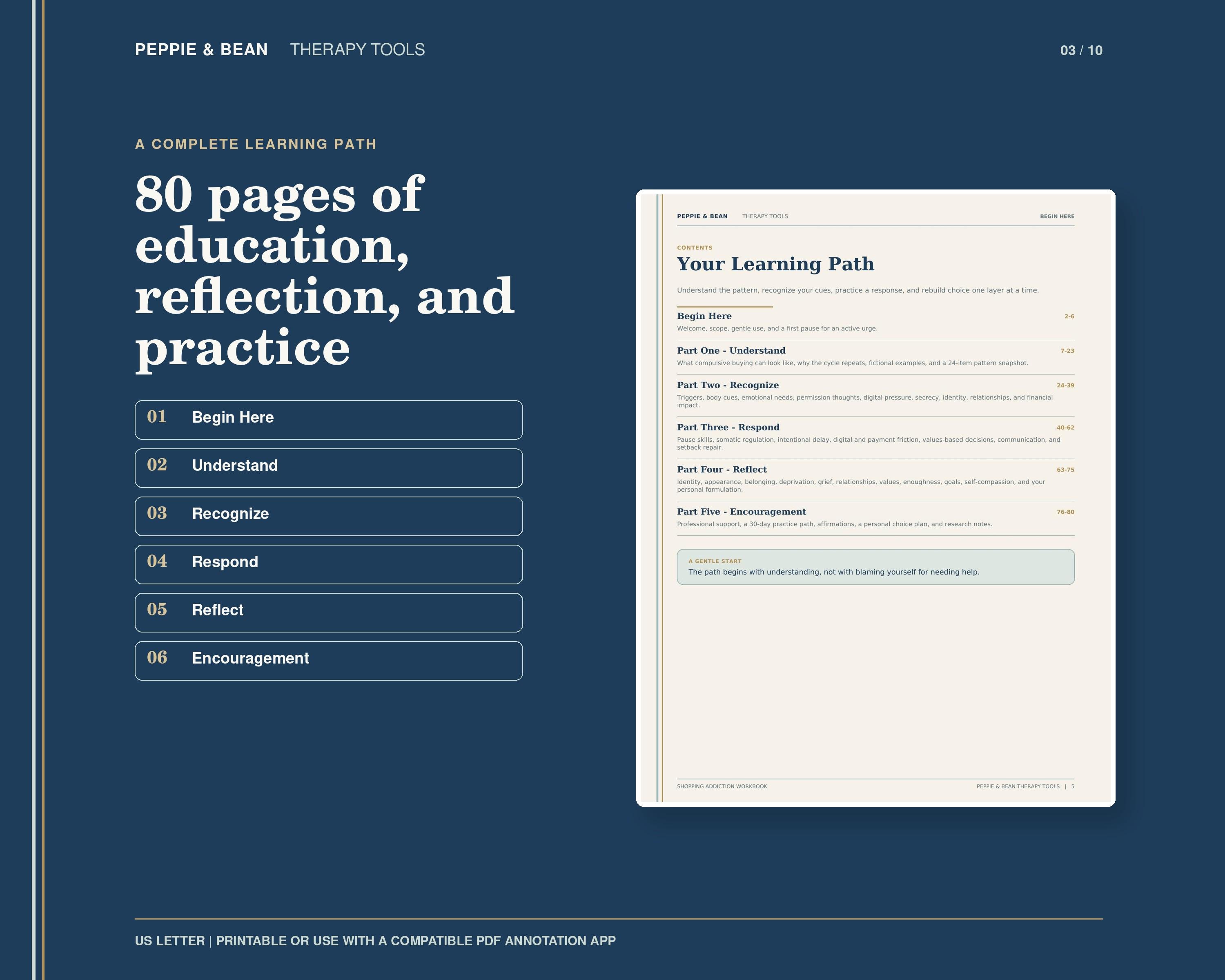
The Shopping Addiction Workbook is an 80-page educational book and practical workbook written by Caroline Aaron, MSW, LICSW, a licensed therapist and creator of Peppie & Bean Therapy Tools.
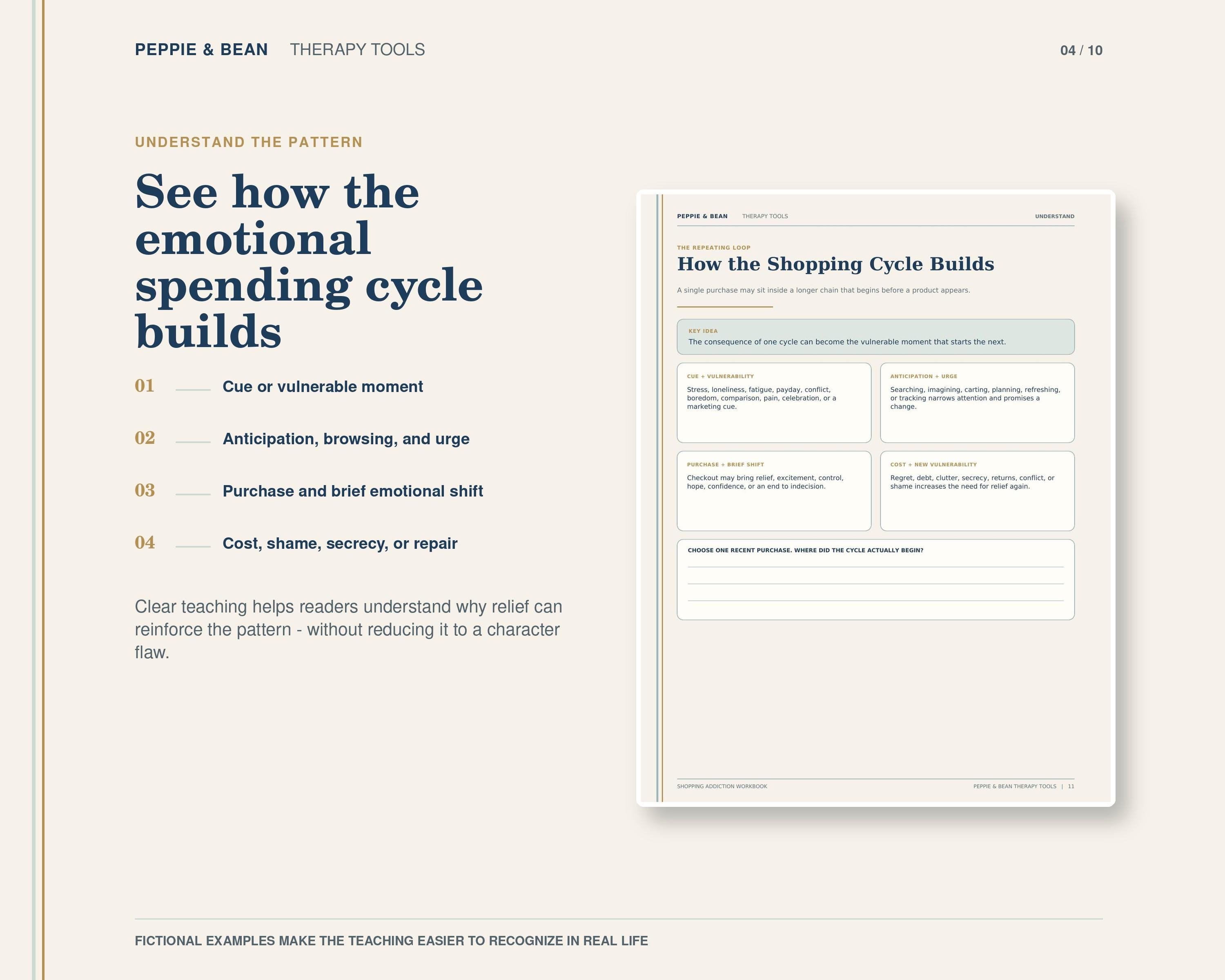
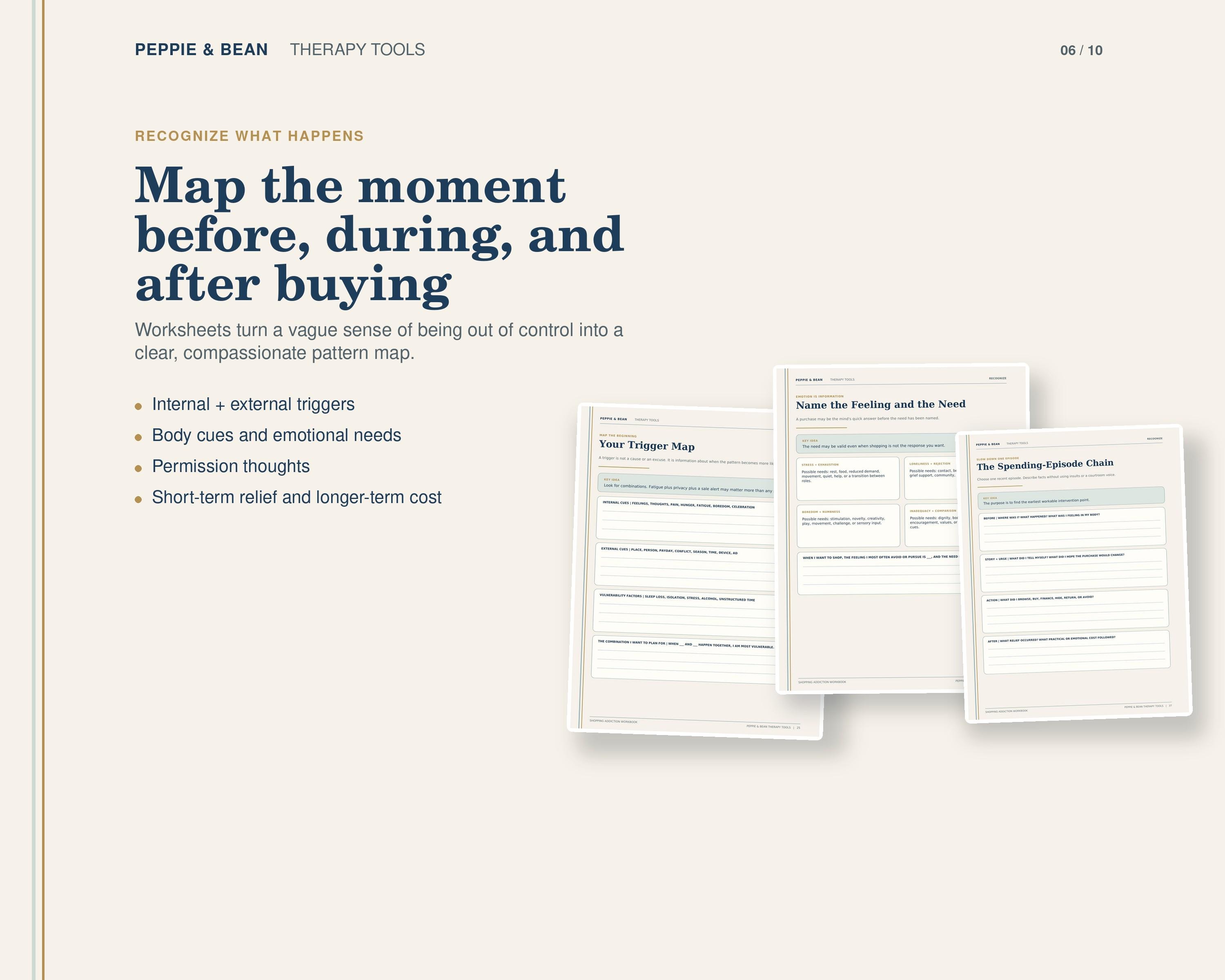
This resource does not assume that every impulse purchase is a problem or that enjoying shopping is wrong. Instead, it helps readers look at what happens before, during, and after the urge to buy: the cue, the anticipation, the need beneath the urge, the brief emotional shift, and the longer-term consequences.
The goal is not to shame the urge. It is to create more room for choice.
WHAT IS INSIDE:
- Clear, accessible education about compulsive buying-shopping and emotional spending
- The difference between planned buying, an everyday impulse, and a repeated harmful pattern
- Careful information about the term "shopping addiction" and its current diagnostic status
- A complete explanation of the shopping cycle
- Education about anticipation, browsing, carts, wish lists, delivery tracking, and returns
- The emotional lift and temporary escape that can reinforce repeated buying
- Digital-shopping cues, scarcity messages, saved payment methods, and one-click checkout
- Buy-now-pay-later education and tools for making future obligations visible
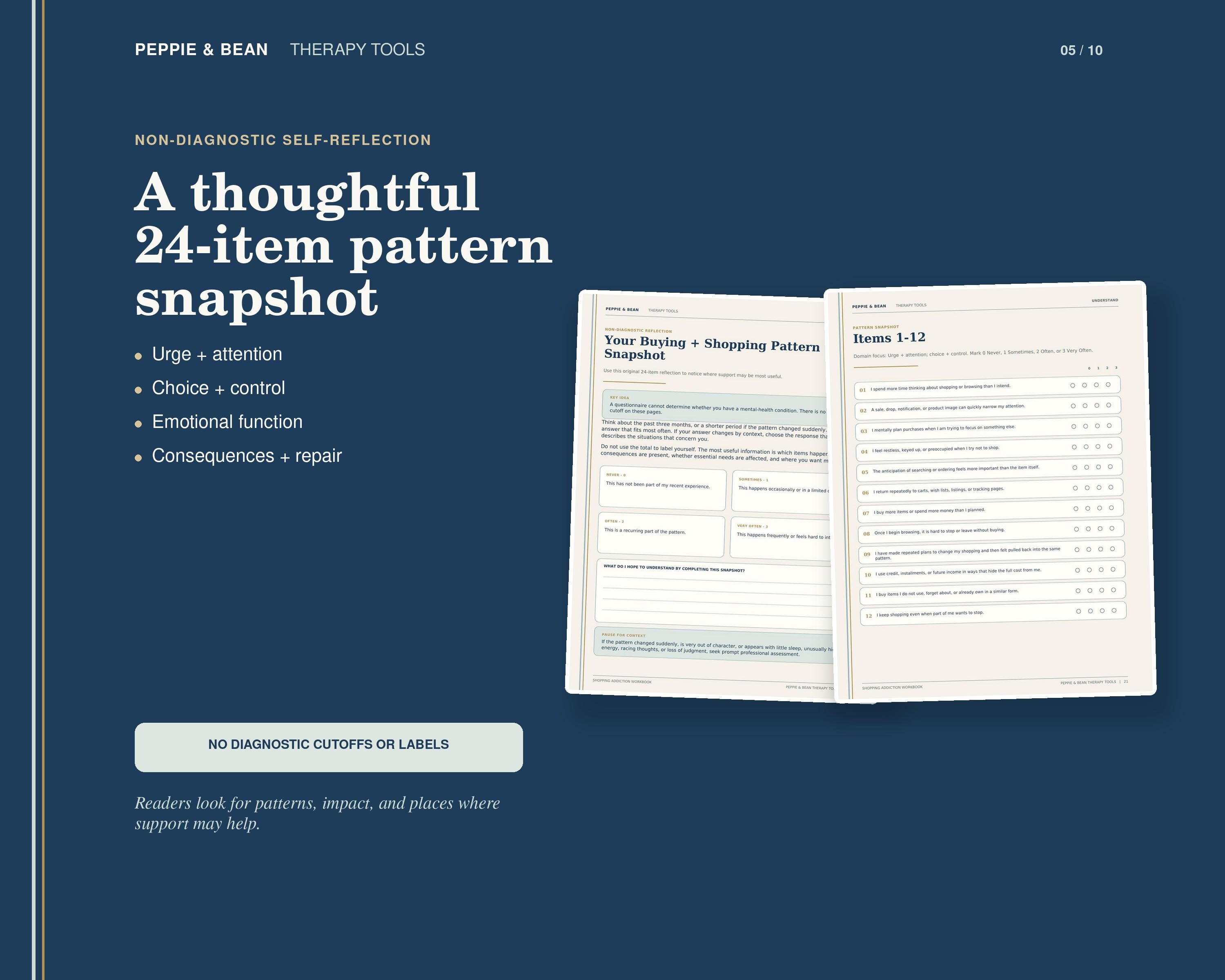
- An original 24-item Buying + Shopping Pattern Snapshot
- Four reflection domains: urge and attention, choice and control, emotional function, and consequences and repair
- No diagnostic cutoff, severity label, or promise that a questionnaire can diagnose a condition
- Fictional examples showing how shopping patterns may appear in everyday life
- Internal and external trigger maps
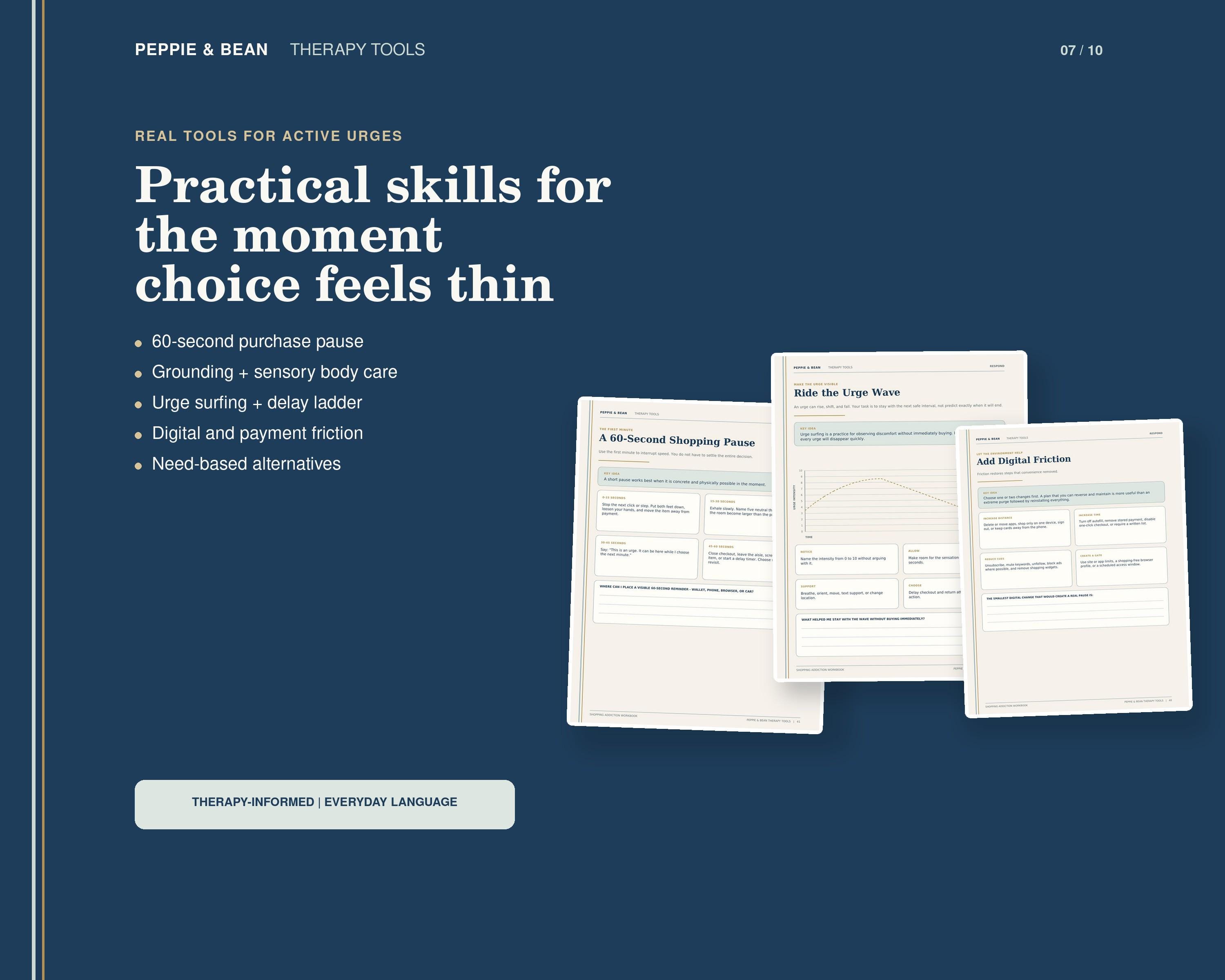
- Body-cue and urge-wave exercises
- A spending-episode chain and one-week pattern tracker
- A factual financial-reality map that protects essential needs
- A 60-second purchase pause
- Notice, Name, Allow, and Choose practice
- Grounding, sensory care, and everyday body-based regulation ideas
- A delay ladder for 10 minutes, the end of the day, 24 hours, or 72 hours
- An intentional buying list and full purchase-decision worksheet
- Digital and payment-friction strategies
- Need-based alternatives for soothing, stimulation, confidence, and connection
- A practical everyday coping menu
- Compassionate, firm self-talk and balanced reframing
- A calm return, cancellation, or repair process
- A 20-minute money-meeting worksheet
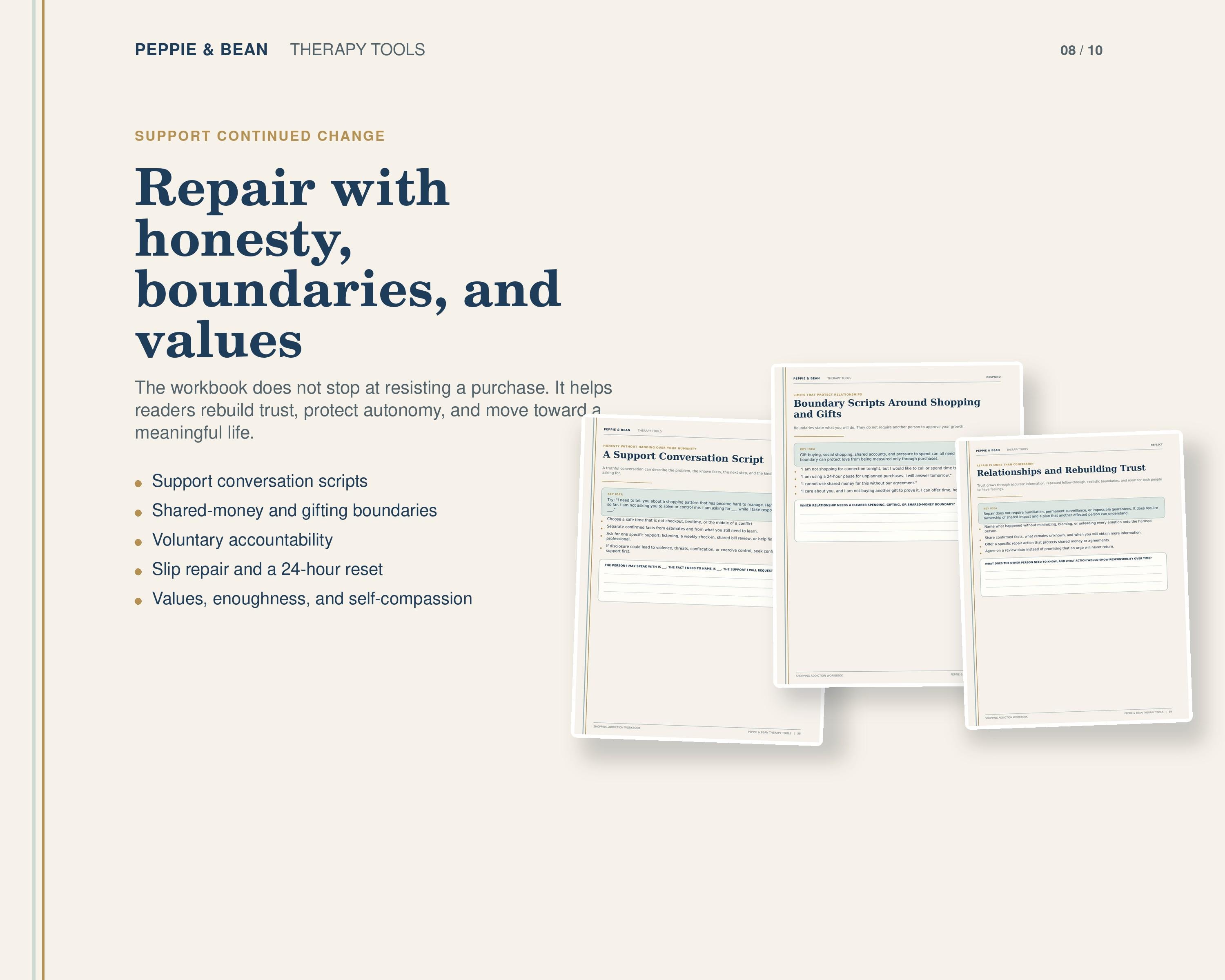
- Support-conversation and boundary scripts
- Voluntary accountability that preserves autonomy
- Slip repair and a 24-hour reset
- Reflection on identity, possessions, appearance, self-worth, comfort, status, and belonging
- Money memories, scarcity, deprivation, grief, loneliness, and trauma context
- Relationship trust and repair
- Values, enoughness, possession and space reflection, and meaningful financial goals
- A self-compassion letter and personal pattern formulation
- Guidance for knowing when self-help may not be enough
- A structured 30-day practice path
- 12 affirmations for rebuilding choice
- A final Personal Choice Plan
- Selected research and consumer-resource notes
All examples are fictional composites created for education and reflection.
WHAT YOU WILL RECEIVE:
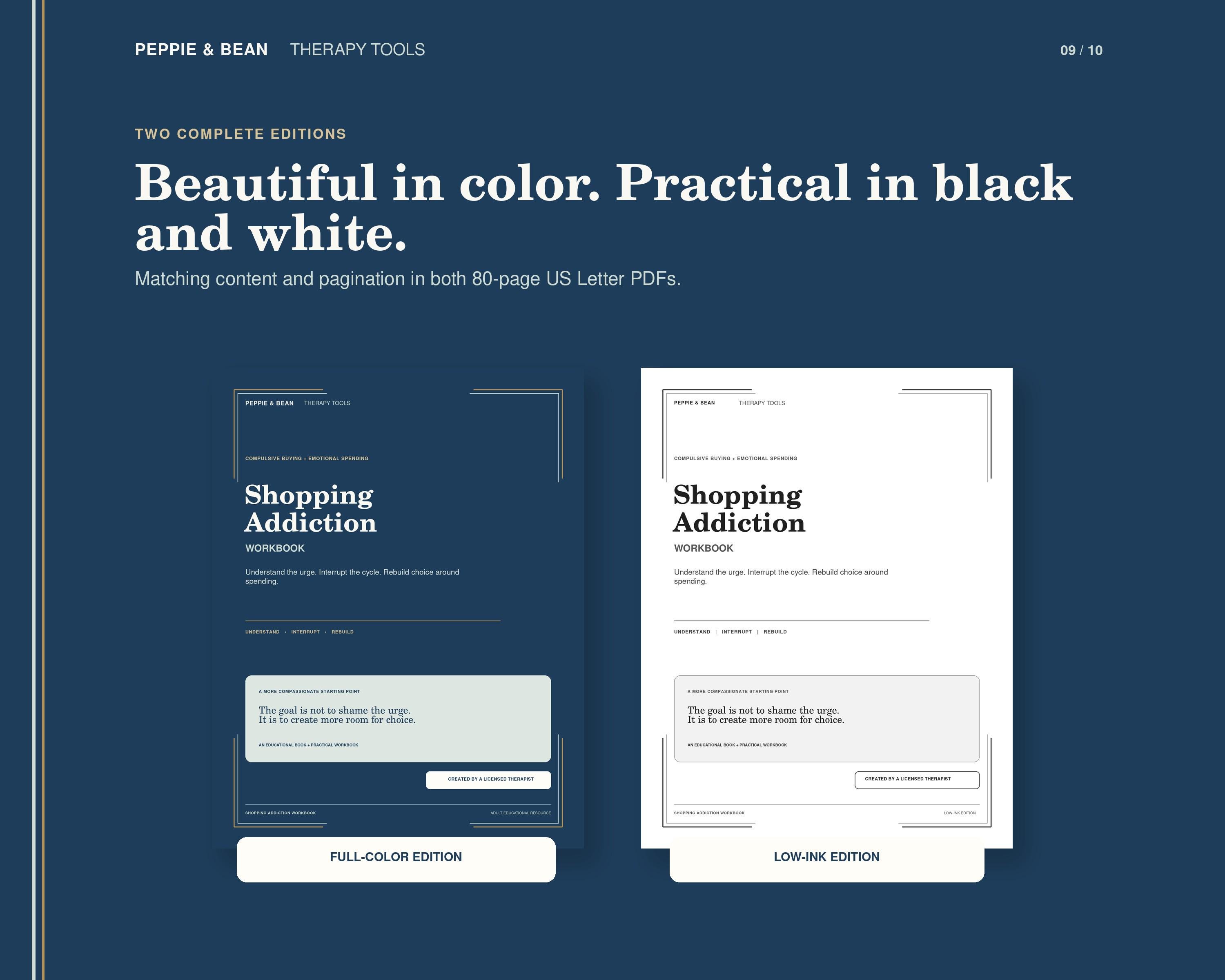
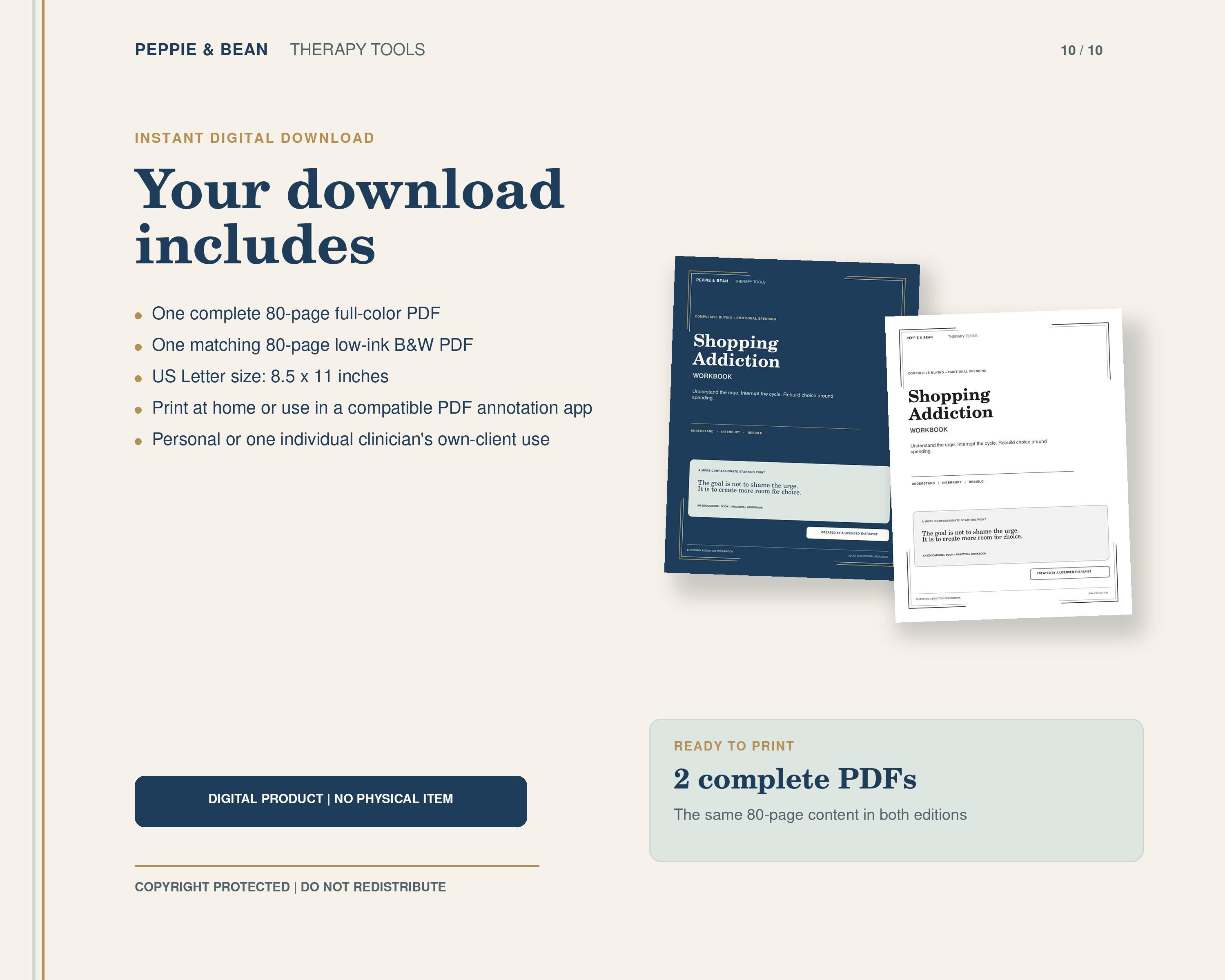
You will receive two complete PDF editions of the same 80-page educational book and workbook:
- One full-color PDF featuring the premium Midnight Frame design
- One matching low-ink black-and-white PDF
- US Letter size: 8.5 x 11 inches
- Static printable PDFs available as an immediate digital download
- No physical product will be mailed
WHO THIS WORKBOOK IS FOR:
This adult resource was created for people who want to better understand:
- Compulsive or difficult-to-control shopping
- Emotional spending
- Repeated impulse purchases
- Shopping for comfort, escape, identity, confidence, or validation
- Secrecy, guilt, regret, or conflict connected with spending
- Frequent online browsing, carts, wish lists, or buying
- Difficulty pausing once an urge begins
- Buy-now-pay-later or future-payment patterns
- Repeated attempts to change shopping behavior
- The connection among emotions, self-worth, relationships, and purchasing
- How to develop a more intentional relationship with shopping
Readers may use the workbook independently for education and reflection or alongside a licensed mental-health professional or appropriately qualified financial professional.
There is no expectation that every page must be completed. Readers may move slowly, skip exercises that do not fit, and return to the sections that feel most useful.
CREATED BY A LICENSED THERAPIST
Written by Caroline Aaron, MSW, LICSW
Licensed Independent Clinical Social Worker
Peppie & Bean Therapy Tools
IMPORTANT INFORMATION
"Shopping addiction" is a familiar phrase used in the title, while the educational text uses careful terms such as compulsive buying-shopping and problematic buying-shopping. Classification remains an area of ongoing research.
This workbook is an adult educational self-help resource. It is not a validated assessment, diagnosis, psychotherapy, individualized treatment plan, medical or psychiatric care, financial plan, debt-management service, legal advice, safety assessment, crisis service, or substitute for individualized professional care.
The included 24-item snapshot is intended only for personal reflection. It cannot diagnose a mental-health condition or determine whether a person is safe. Purchasing or using this resource does not establish a therapist-client relationship with the author.
Seek individualized help when spending is causing significant distress, loss of essential resources, debt, relationship danger, or difficulty functioning.
Sudden, out-of-character spending accompanied by very little need for sleep, unusually high or irritable mood, racing thoughts, rapid speech, inflated confidence, psychosis, or several risky behaviors deserves prompt medical or mental-health assessment. A new shopping pattern following a medication change should be discussed promptly with the prescriber; do not stop prescribed medication without medical guidance.
If you are in suicidal crisis or emotional distress in the United States, call or text 988. If there is immediate danger, call 911. Outside the United States, contact the appropriate local crisis or emergency service.
LICENSE
Copyright 2026 Sylacauga Counseling Services, LLC. All rights reserved. Published under the Peppie & Bean Therapy Tools brand.
The original purchaser may print this resource for personal use. One individual clinician purchaser may also print the pages reasonably needed for that clinician's own clients or personally facilitated groups. Each clinician requires a separate purchase.
The files may not be shared with other professionals, resold, redistributed, uploaded, rebranded, altered for resale, or represented as another person's work.
Digital downloads
Your files will be available to download once payment is confirmed.
0 items in your cart