Overstimulation Workbook for Adults | Finding Your Quiet Again | Sensory Overload & Nervous System Regulation | Therapist-Created
$7.99
I wrote this to help people who feel overstimulated in a variety of situations to find helpful, everyday ideas to help try to find more peace. As someone who needs a lot of quiet time to function, I hope it helps you prioritize and keep more peace in your day to day life.
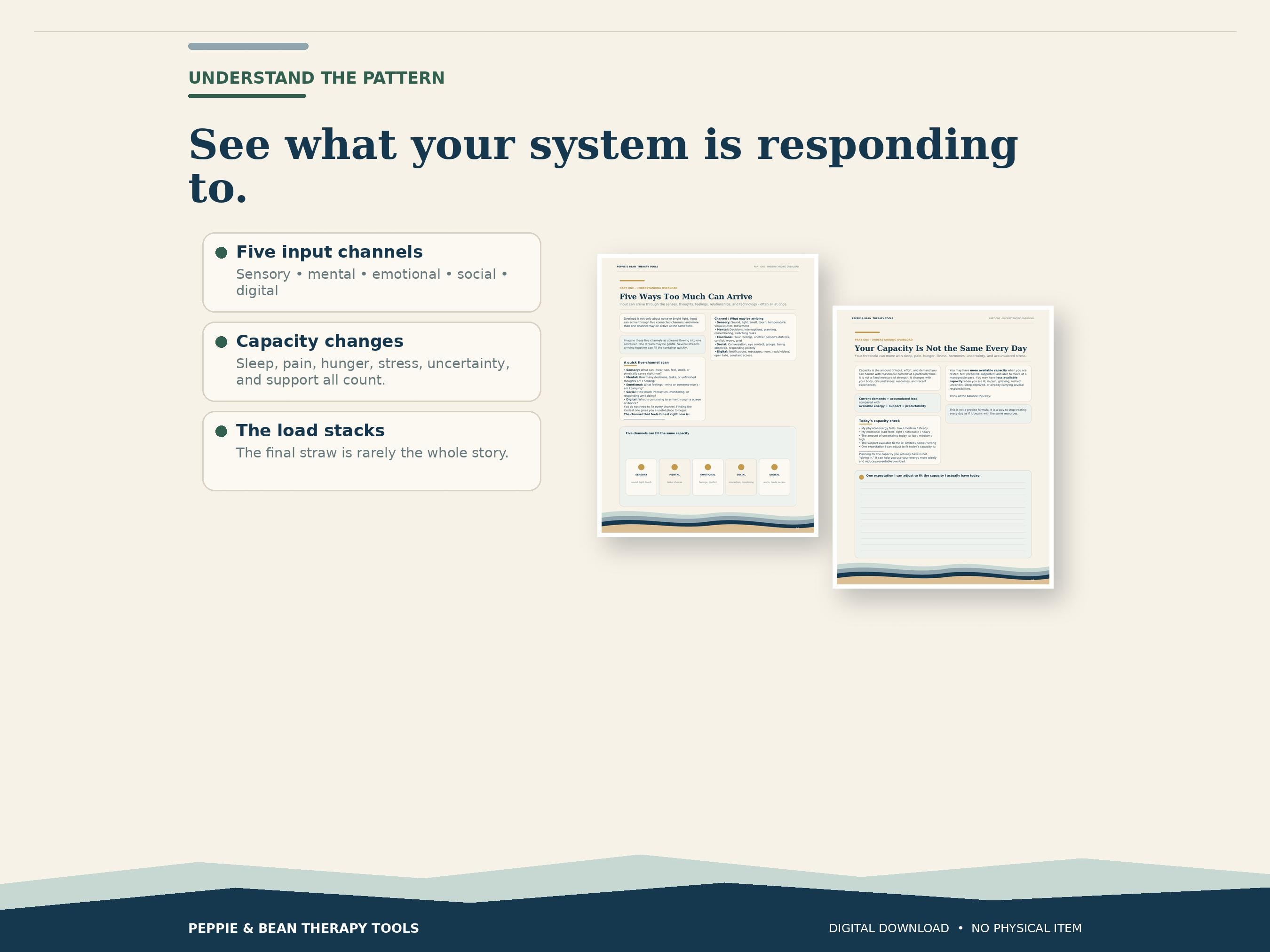
When everything feels too loud, too bright, too busy - or like one more request may push you past your limit - you are not failing. Your system may be carrying more sensory, emotional, mental, social, or digital input than it can comfortably process.
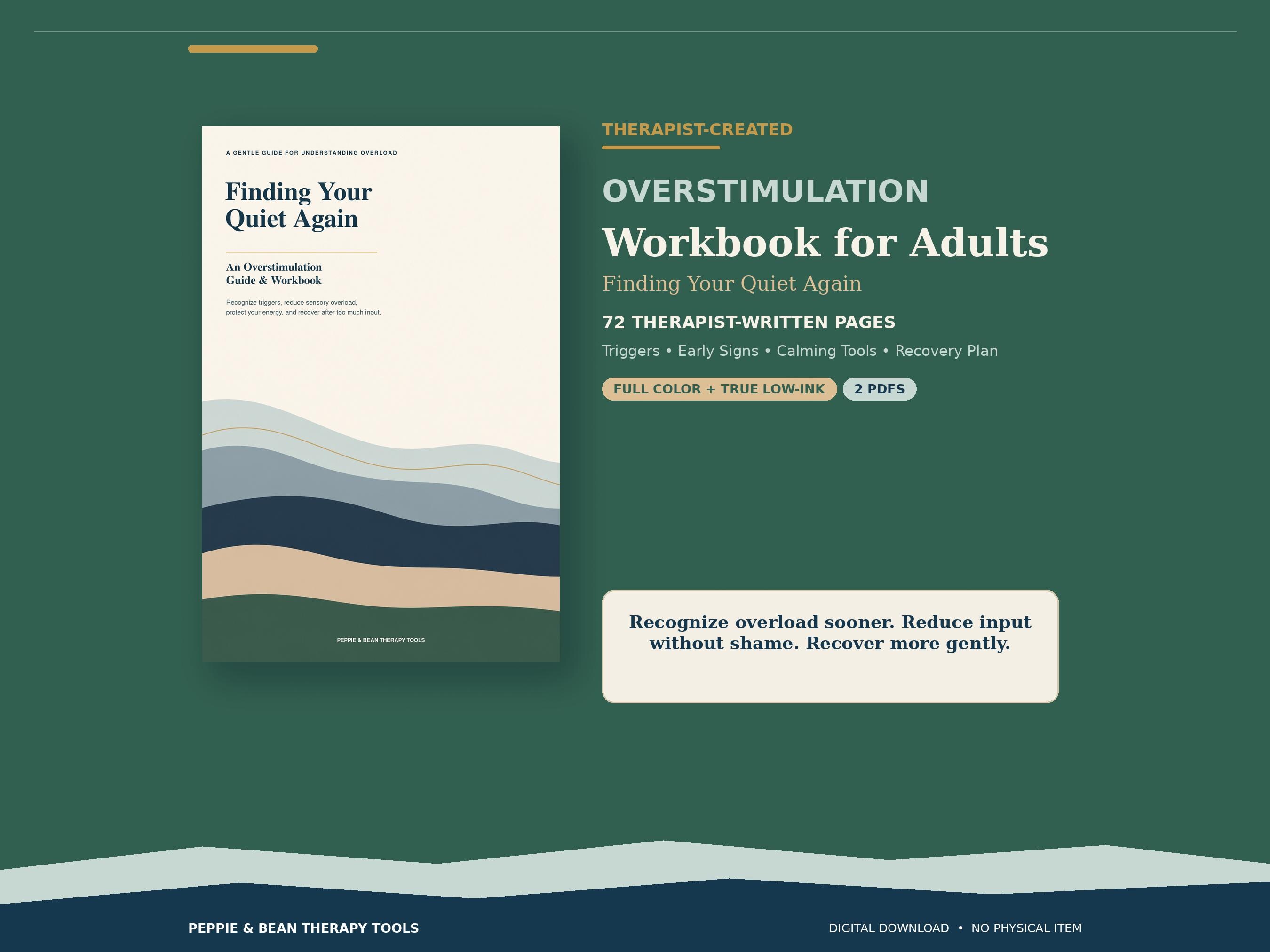
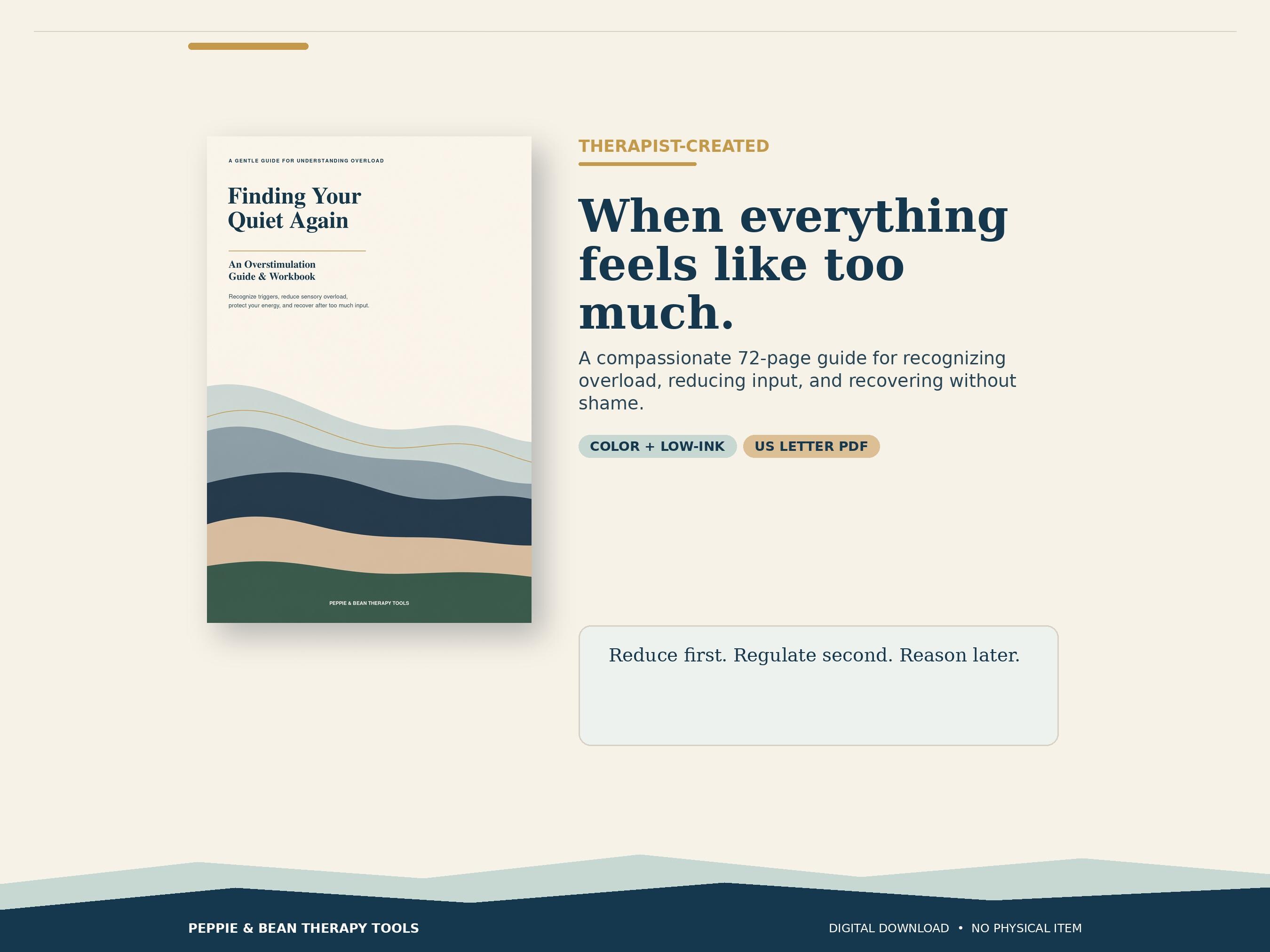
Finding Your Quiet Again: An Overstimulation Guide & Workbook is a warm, therapist-created resource for adults who want to understand overstimulation, notice it earlier, and respond with practical support instead of shame.
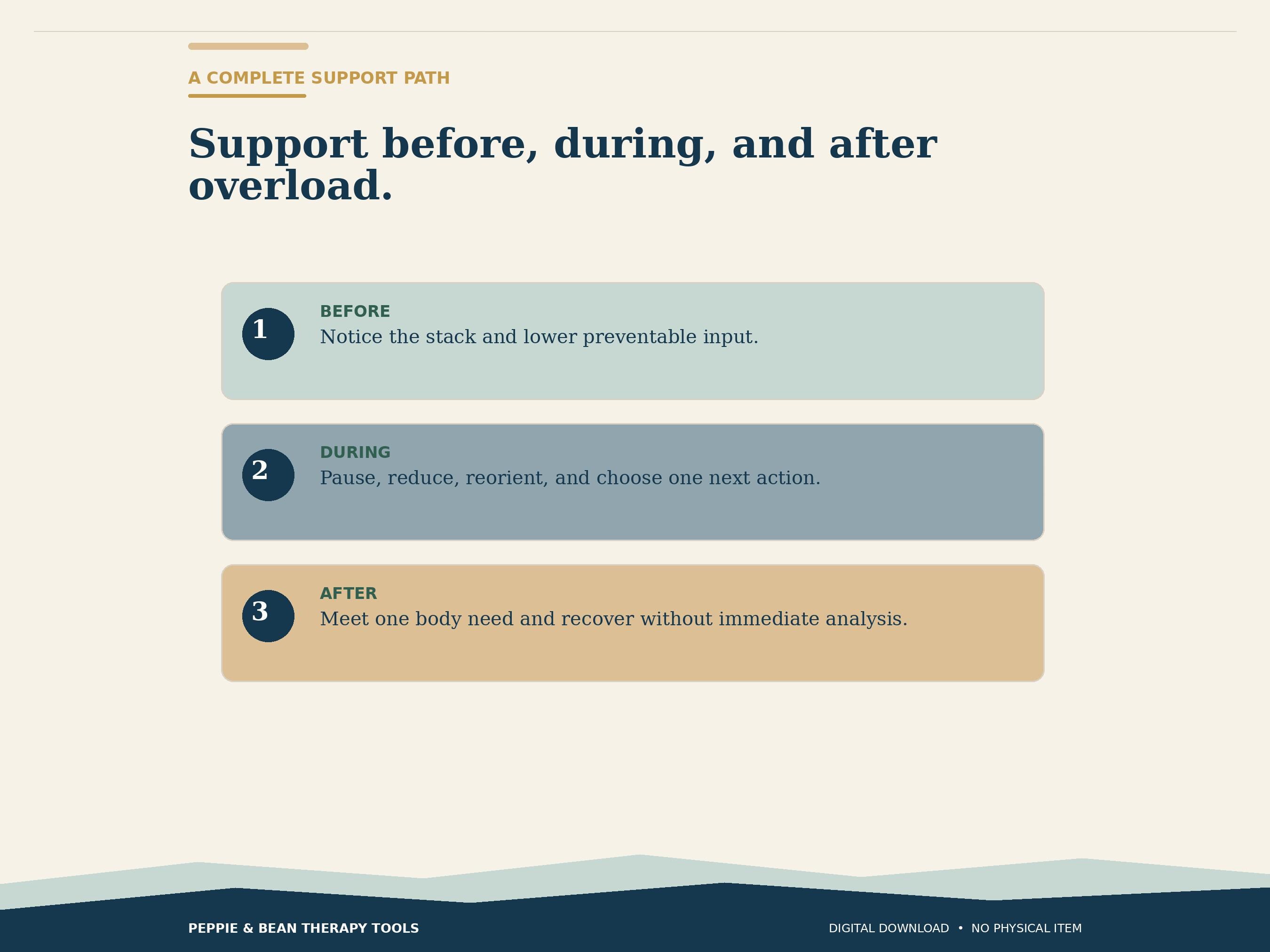
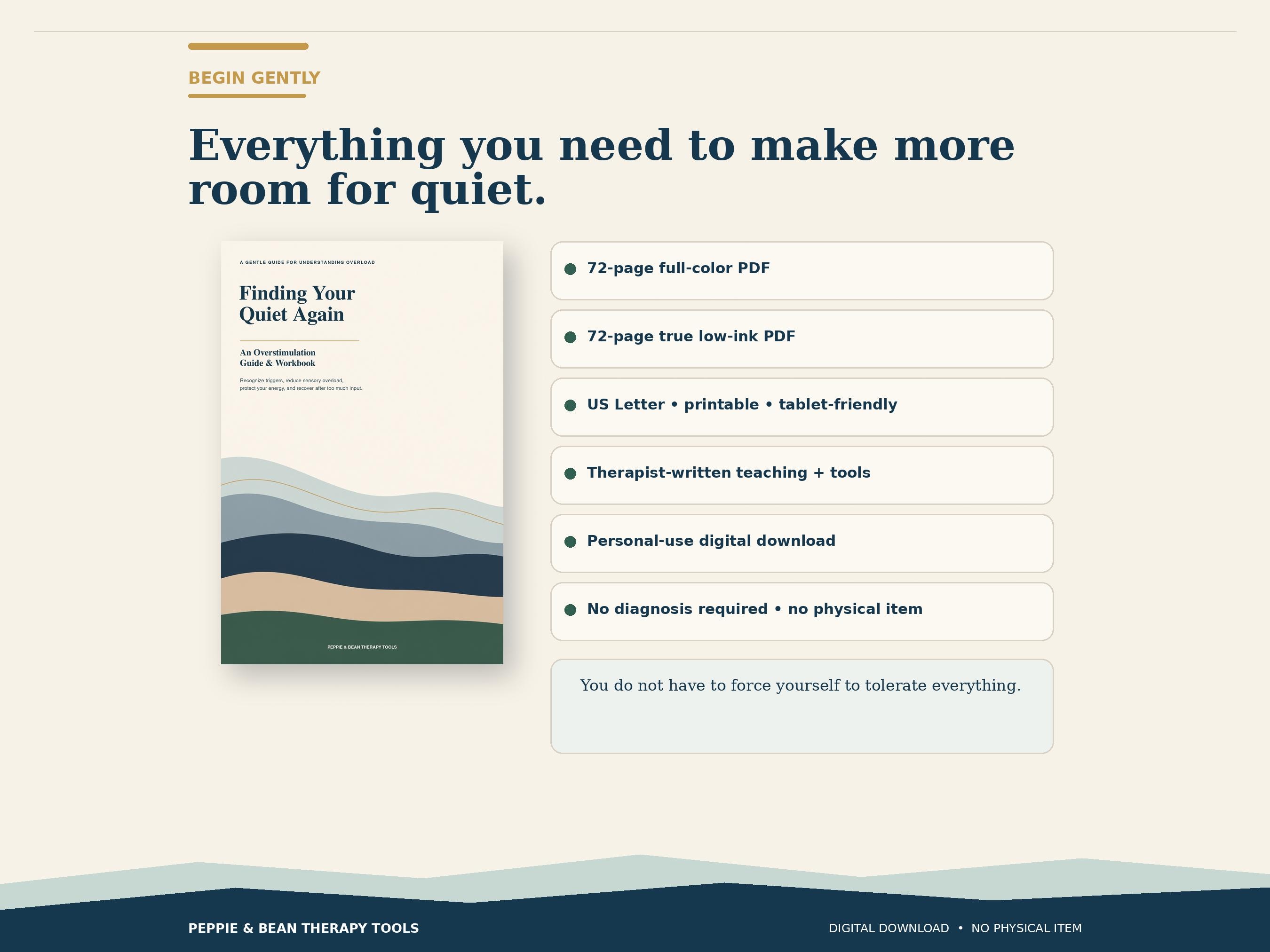
This is more than a collection of generic calming tips. The 72-page guide and workbook helps you explore what contributes to overload, recognize your own early warning signals, reduce input before it peaks, communicate your needs, recover after difficult moments, and build a personal plan that fits real life.
THIS WORKBOOK MAY HELP YOU:
- Understand sensory, emotional, cognitive, social, and digital overstimulation
- Recognize how sleep, hunger, pain, stress, time pressure, and competing demands can lower capacity
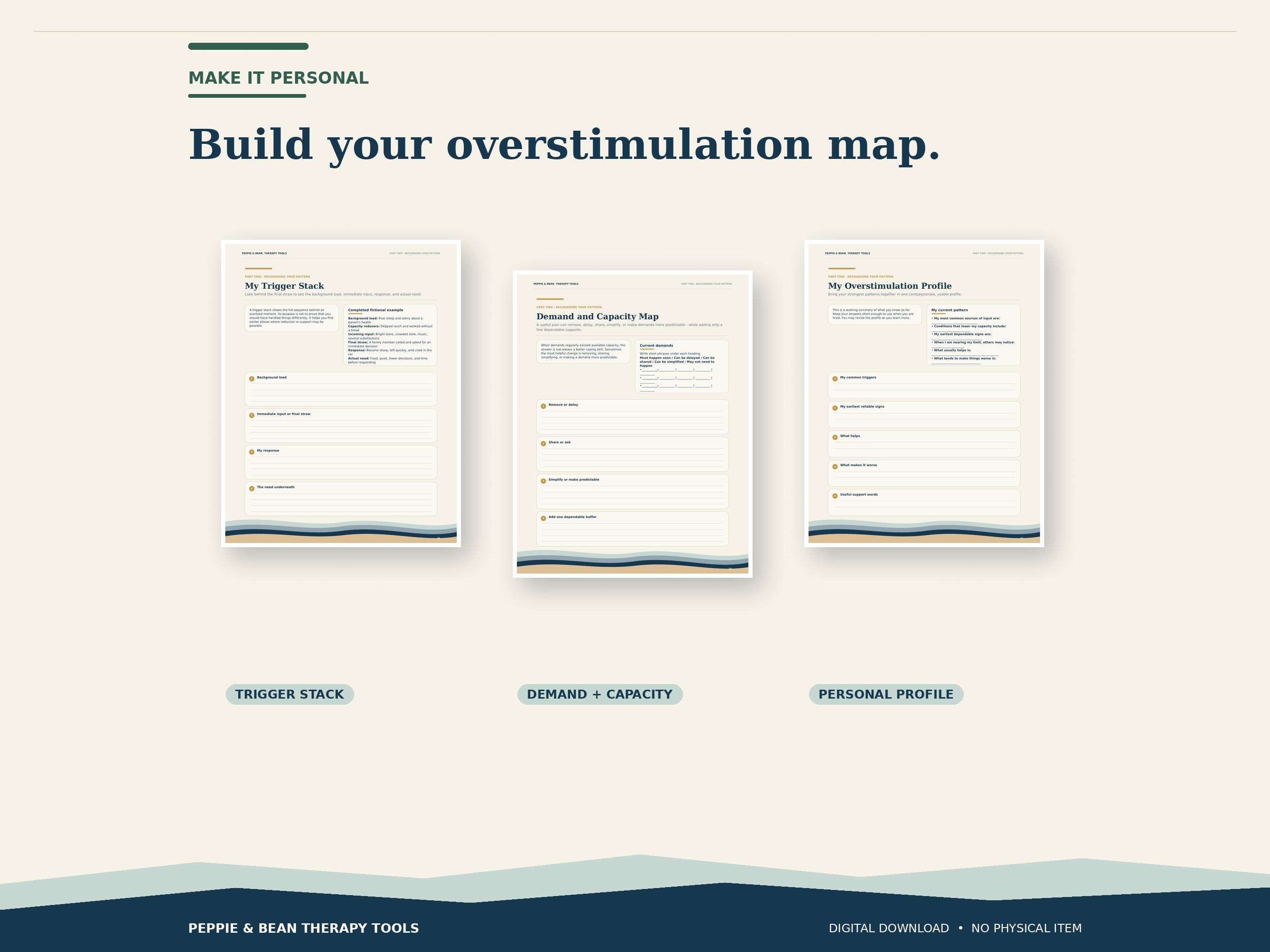
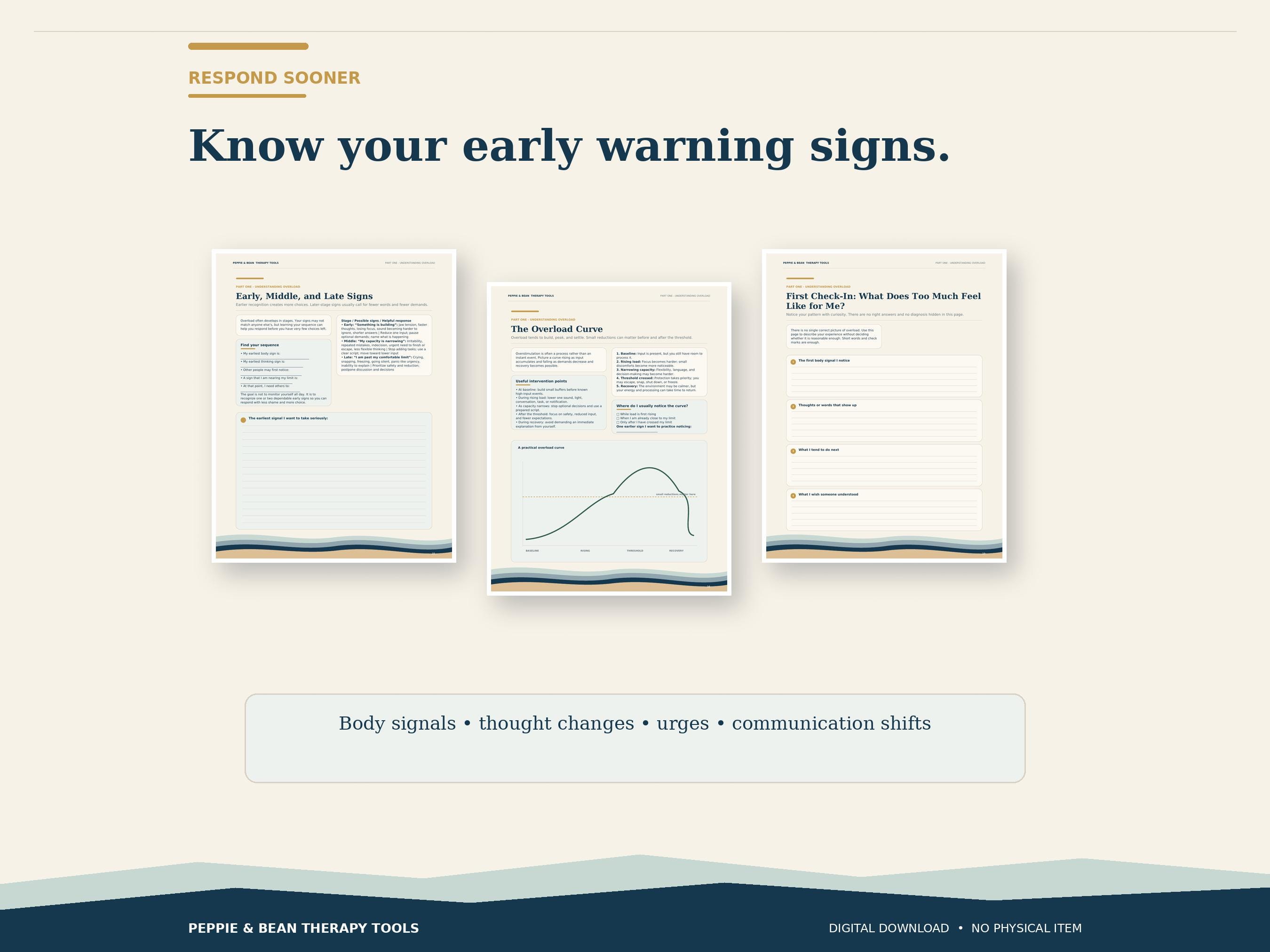
- Identify personal triggers, load multipliers, body signals, and overload patterns
- Notice the difference between workable capacity, rising overload, and red-level depletion
- Create realistic plans for home, relationships, work, learning, errands, and social situations
- Use simple one-minute, five-minute, and twenty-minute quiet options
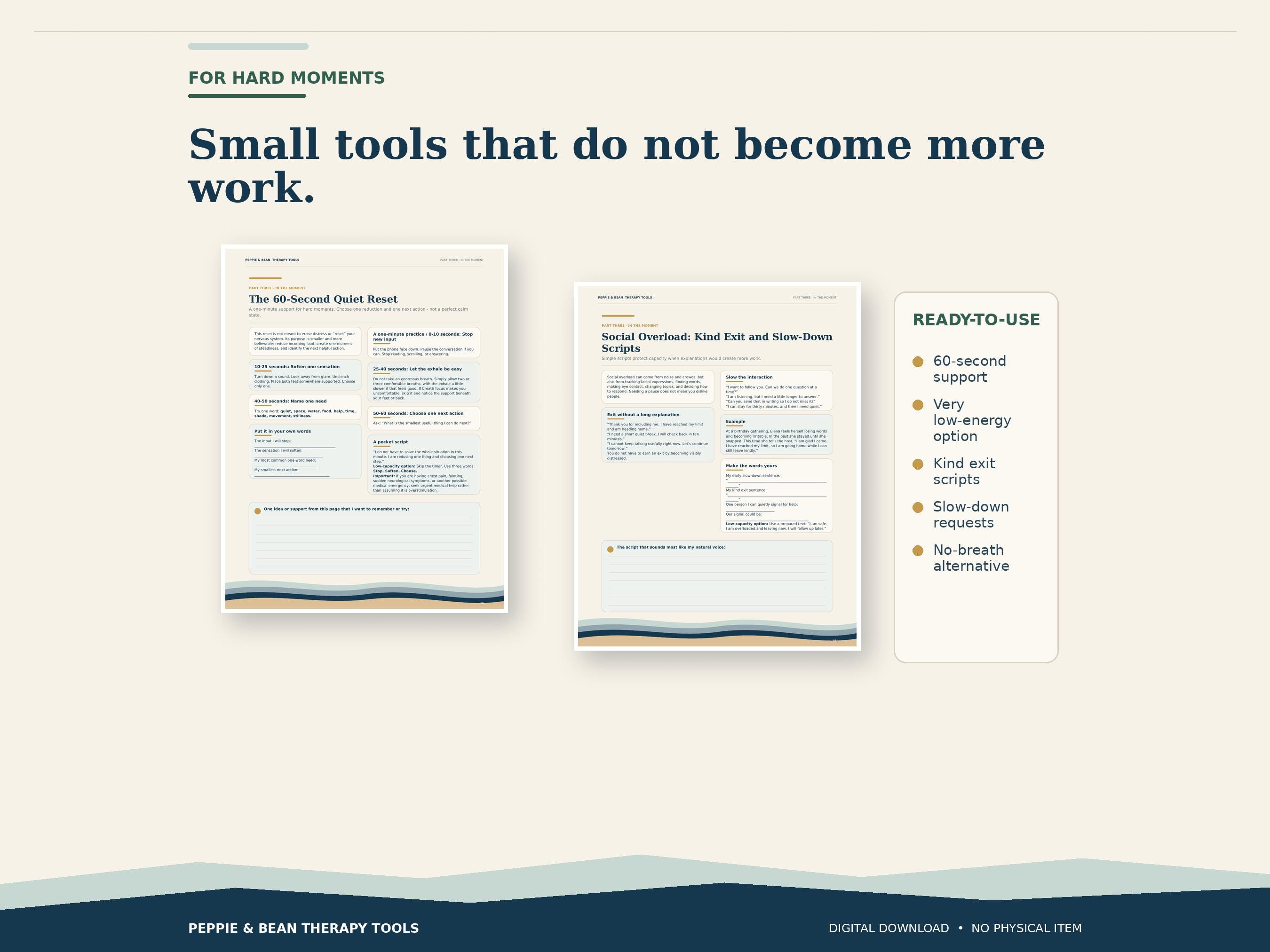
- Communicate with boundary, pause, and exit scripts
- Recover after overload without turning the experience into a reason for self-criticism
- Measure progress without expecting yourself to become unaffected by every difficult environment
INSIDE THE 72-PAGE WORKBOOK:
- Clear, compassionate psychoeducation written in everyday language
- Sensory, emotional, cognitive, social, and digital load mapping
- Personal capacity and cumulative-load exercises
- Trigger, body-signal, thought, feeling, and behavior trackers
- A green, amber, and red response plan
- A one-minute, five-minute, and twenty-minute Quiet Menu
- A portable overload support card
- Grounding and input-reduction options that can be personalized
- Home and relationship agreements
- Workplace and learning-support planning
- Scripts for pauses, boundaries, written instructions, and re-entry
- Fictional examples showing how overload can build across an ordinary day
- A seven-day capacity experiment
- Recovery-buffer planning
- A decision path for times when the first strategy is not helping
- Guidance about when additional professional or medical support may be useful
- Therapist-written encouragement and a personal next-step plan
WHO IT IS FOR:
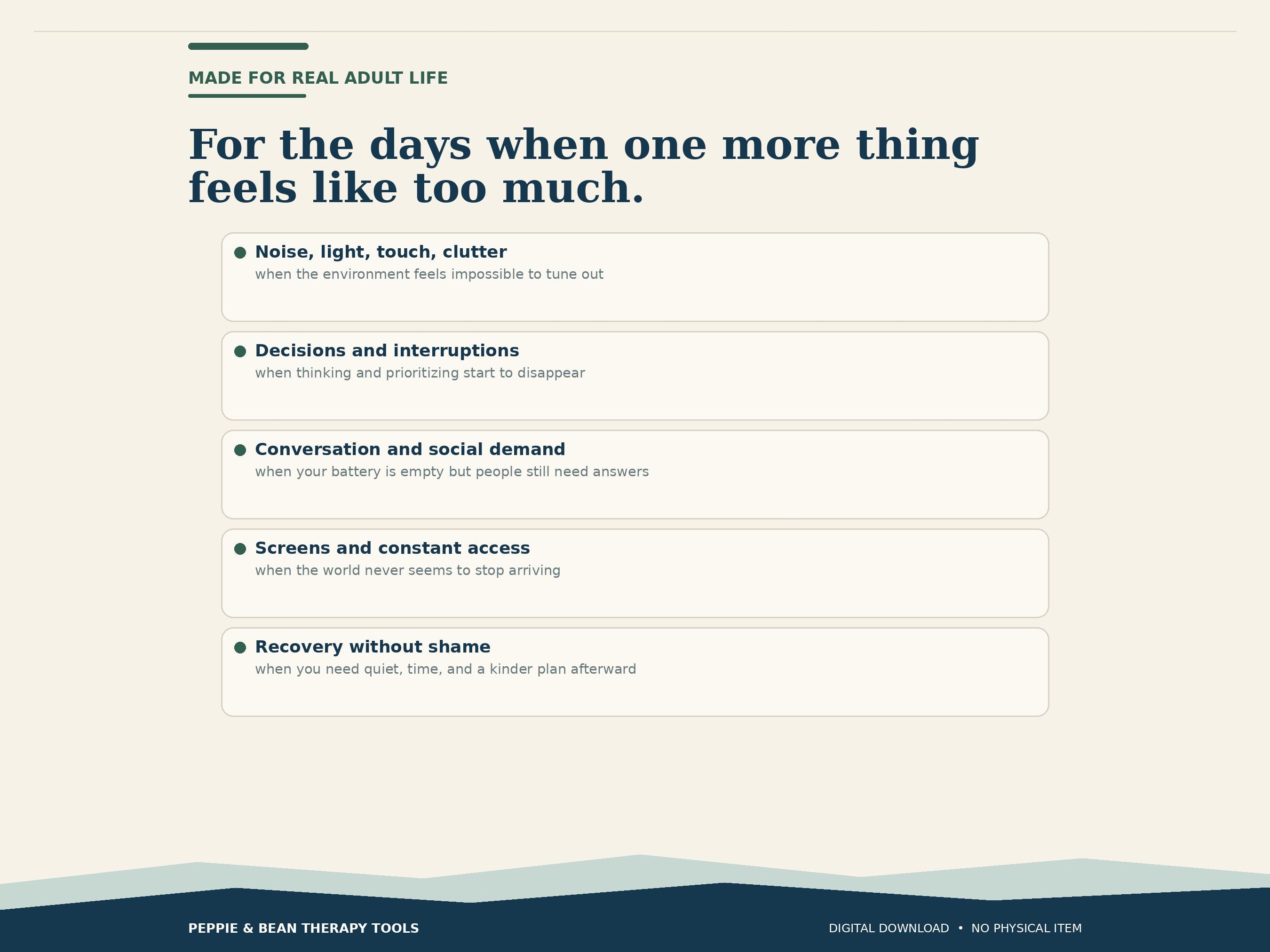
This workbook was created for adults who feel overloaded by noise, lighting, screens, clutter, touch, conversation, crowds, decisions, interruptions, time pressure, or too many demands arriving at once.
It may especially resonate with highly sensitive, introverted, stressed, burned-out, ADHD, autistic, or AuDHD adults, but no diagnosis is required. Overstimulation is treated as an experience - not as a diagnosis or a personal flaw.
A REALISTIC, SHAME-FREE APPROACH
The goal is not a perfectly quiet life or zero overload. The goal is earlier recognition, safer and kinder responses, clearer communication, better recovery, and more honest planning around your available capacity.
You may work through the pages in order, begin with the section that matches today's need, or print individual tools for repeated use. The workbook is designed to remain useful even when you have only a few minutes or very little energy.
WHAT YOU WILL RECEIVE:
- 1 full-color 72-page PDF workbook
- 1 true low-ink black-and-white 72-page PDF workbook
- US Letter size: 8.5 x 11 inches
- Instant digital download
- Personal-use license
The two PDFs contain the same workbook content in two coordinated printing options. No physical item will be mailed. You may print the workbook at home or through a professional print service, or use it with a PDF annotation app on a compatible tablet. It is not advertised as a fillable PDF.
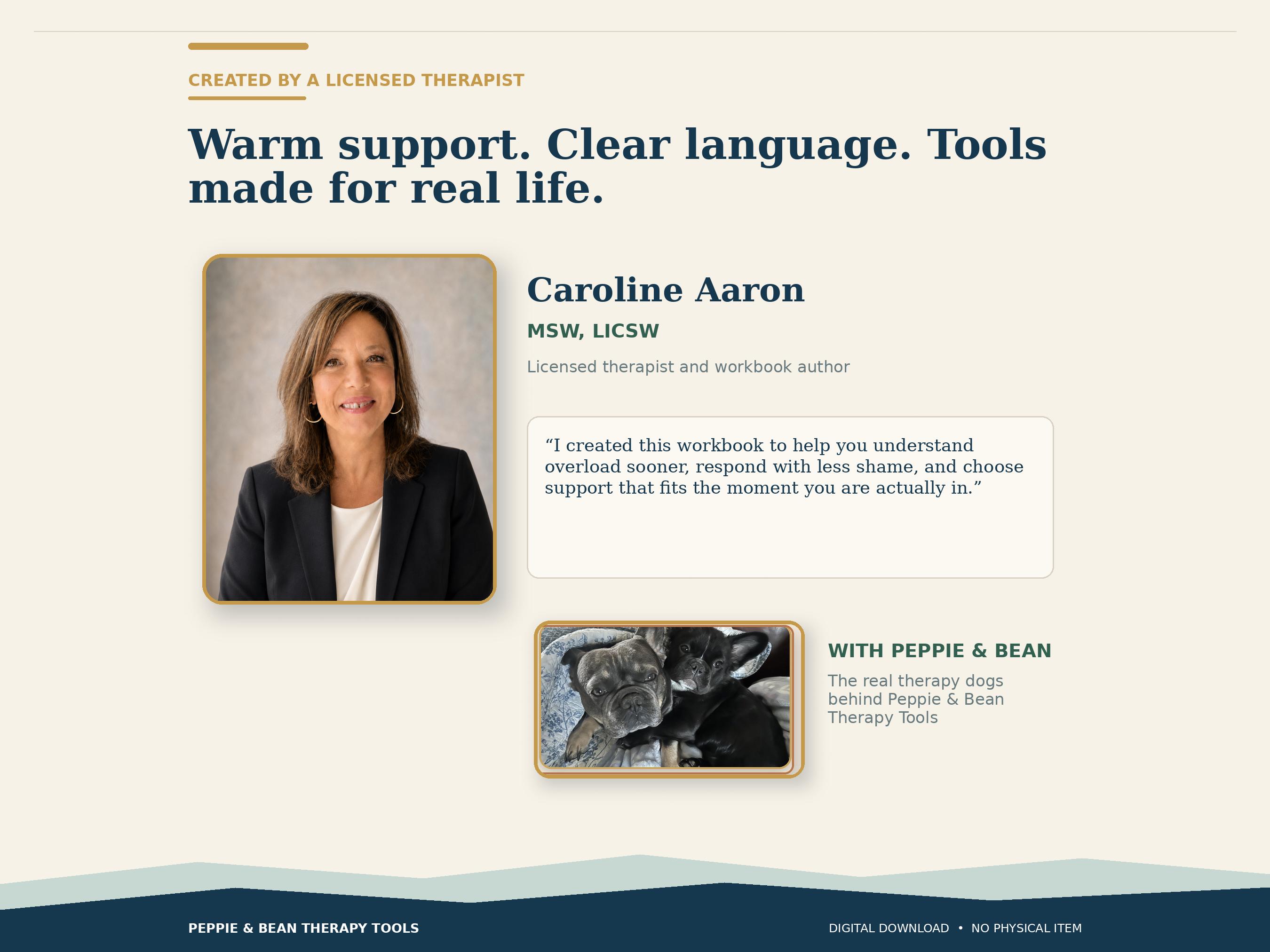
CREATED BY A LICENSED THERAPIST
Created by Caroline Aaron, MSW, LICSW, a licensed therapist who believes mental-health education should feel compassionate, understandable, clinically responsible, and genuinely useful in everyday life - with the help of Peppie & Bean, Therapy Dogs.
IMPORTANT INFORMATION
This workbook is an educational self-help resource. It is not therapy, diagnosis, medical advice, crisis care, or a substitute for individualized treatment from a qualified professional. Please pause any exercise that feels unhelpful or overly activating and seek appropriate support when needed.
If you are in immediate danger or cannot keep yourself or someone else safe, contact local emergency services. In the United States and its territories, call or text 988 for free, confidential support from the 988 Suicide & Crisis Lifeline.
Digital items are for the purchaser's personal use only. Files may not be shared, resold, redistributed, copied for clients or groups, or used commercially without separate written permission.
You do not have to force yourself to tolerate everything. Learning what your system needs - and responding before you are completely depleted - is a meaningful form of self-respect.
Digital downloads
Your files will be available to download once payment is confirmed.
0 items in your cart