Panic Attack Recovery Guide and Workbook: Therapist-Written Coping Tools, Printable PDF
$7.99
Panic can feel like an emergency.
Your heart may pound. Breathing may feel difficult. The room may seem unreal. You may feel dizzy, nauseated, shaky, trapped or convinced that something terrible is seconds away. Even after the strongest sensations change, fear may continue through body monitoring, checking, reassurance seeking, avoidance, exhaustion and worry about the next attack.
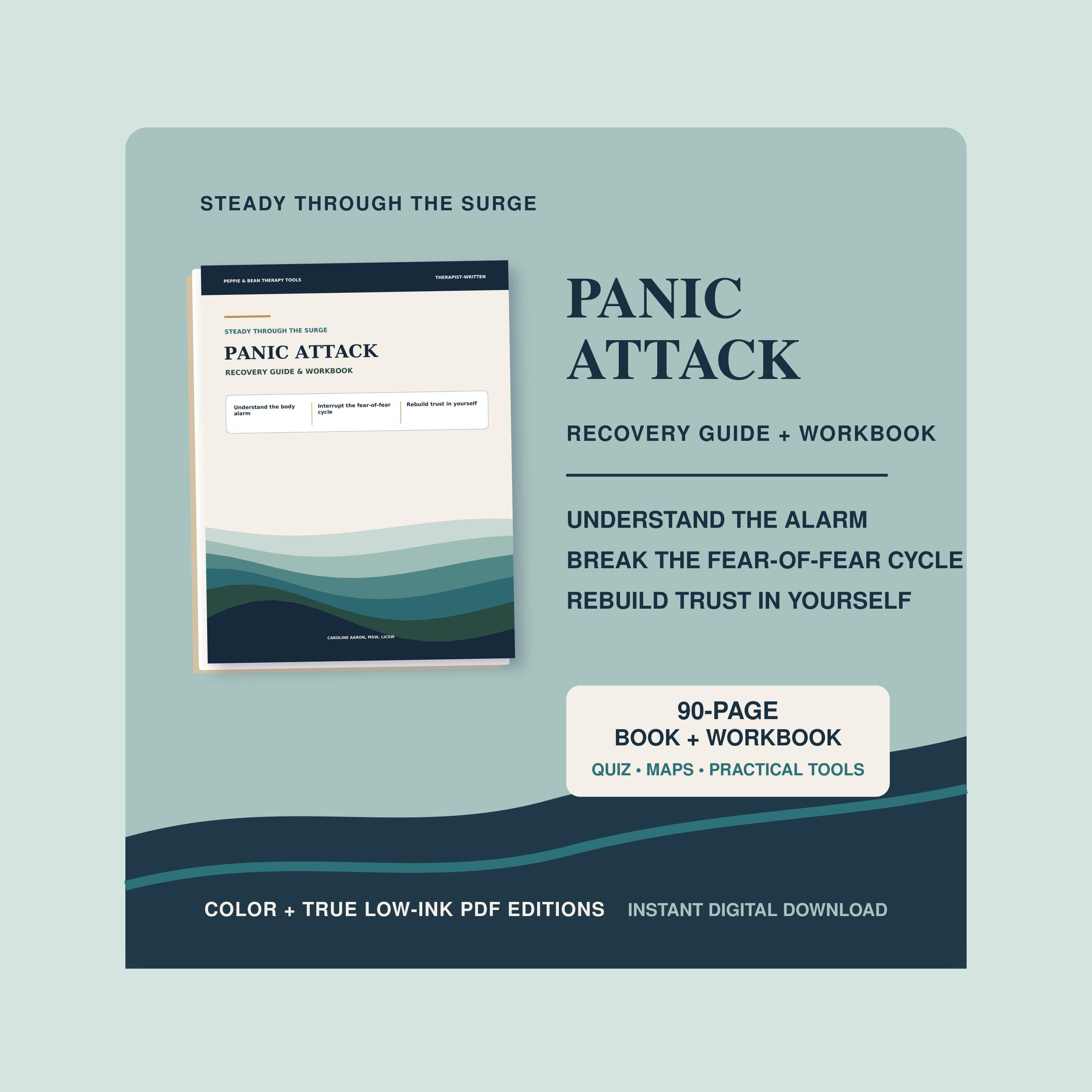
Steady Through the Surge is a compassionate 90-page educational guide and workbook written by Caroline Aaron, MSW, LICSW. It was created for adults who want to understand panic more clearly, respond to medical uncertainty wisely, recognize the fear-of-fear cycle and develop practical ways of moving through a surge without shame.
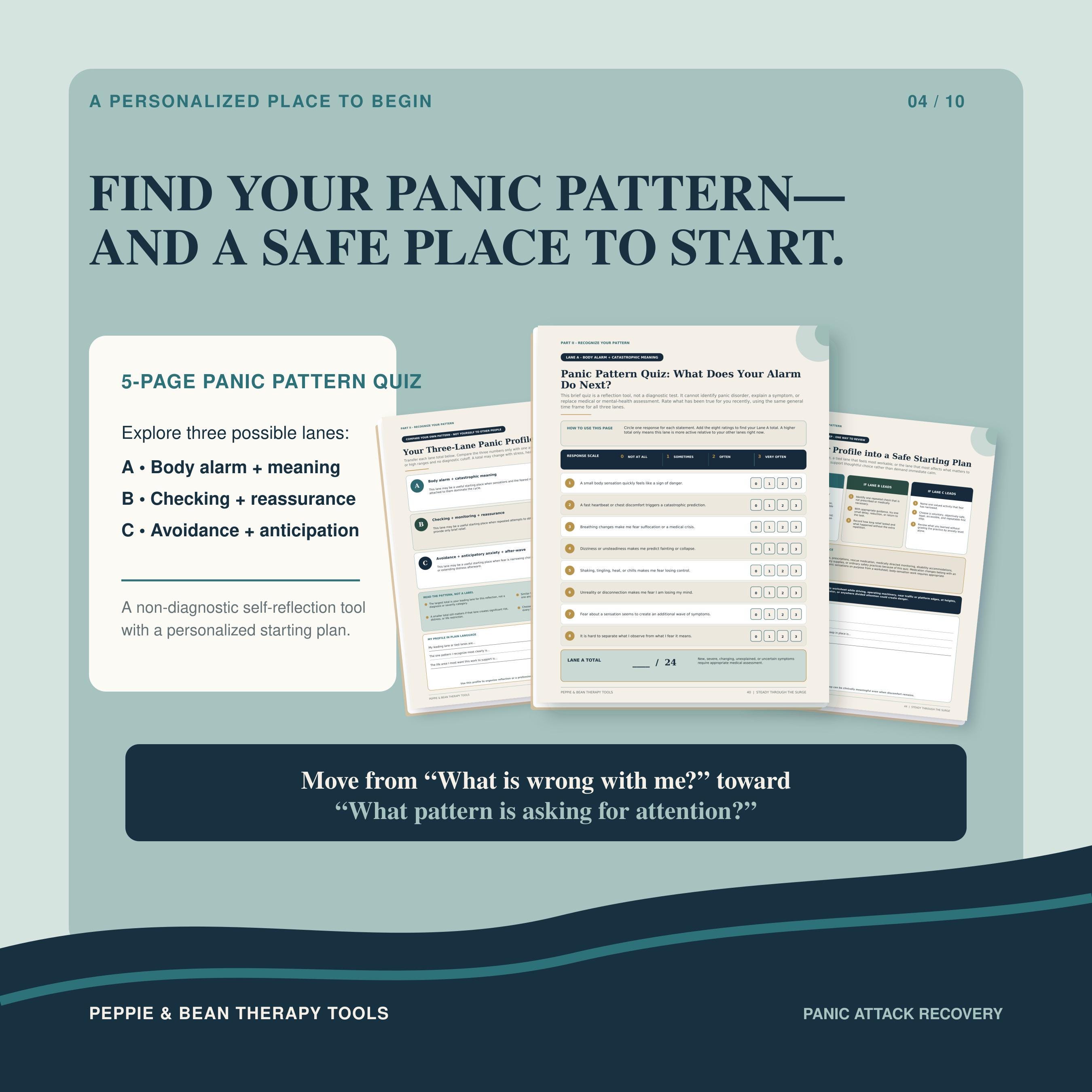
This edition includes a five-page Panic Pattern Quiz that helps readers recognize which current pattern appears most active:
• Catastrophic meanings attached to body sensations
• Checking, monitoring and reassurance seeking
• Avoidance, anticipatory anxiety and after-panic review
The quiz then guides readers toward a personalized starting plan based on the pattern they recognize. It is a self-reflection tool—not a diagnosis, clinical score, treatment recommendation or medical determination.
This workbook does not tell you to “just calm down,” demand that you force uncomfortable sensations away or promise that you will never panic again. Instead, it offers a compassionate, evidence-informed path toward less fear of fear, less life organized around preventing panic, more confidence in your next safe step and a gradual return to what matters.
YOU MAY FIND THIS WORKBOOK HELPFUL IF YOU:
• Have experienced panic attacks or frightening panic-like episodes
• Worry about when another surge may happen or what the symptoms may mean
• Monitor your heartbeat, breathing, balance, stomach, temperature or other sensations
• Seek repeated reassurance, check symptoms, scan for exits or arrange life around feeling safe
• Avoid errands, crowds, waiting, travel, work, school, meetings, appointments, driving or being away from familiar support
• Experience panic during sleep or wake suddenly with intense body-alarm sensations
• Feel ashamed, exhausted, watchful or discouraged after an episode
• Want more than a few disconnected worksheets or generic calming tips
• Prefer a warm, therapist-written guide with education, completed examples, practical tools and structured reflection
• Want a resource you can use independently or bring to an appropriate medical or mental-health professional
You do not need a diagnosis to use this educational resource. A panic attack is not automatically panic disorder. Only an appropriately qualified professional can diagnose a mental-health condition after considering medical, medication-related, substance-related and other possible explanations.
WHAT YOU WILL EXPLORE:
UNDERSTANDING THE ALARM
• Plain-language differences among a panic attack, panic disorder and agoraphobia
• How panic may affect the body, thoughts, perception, attention and action urges
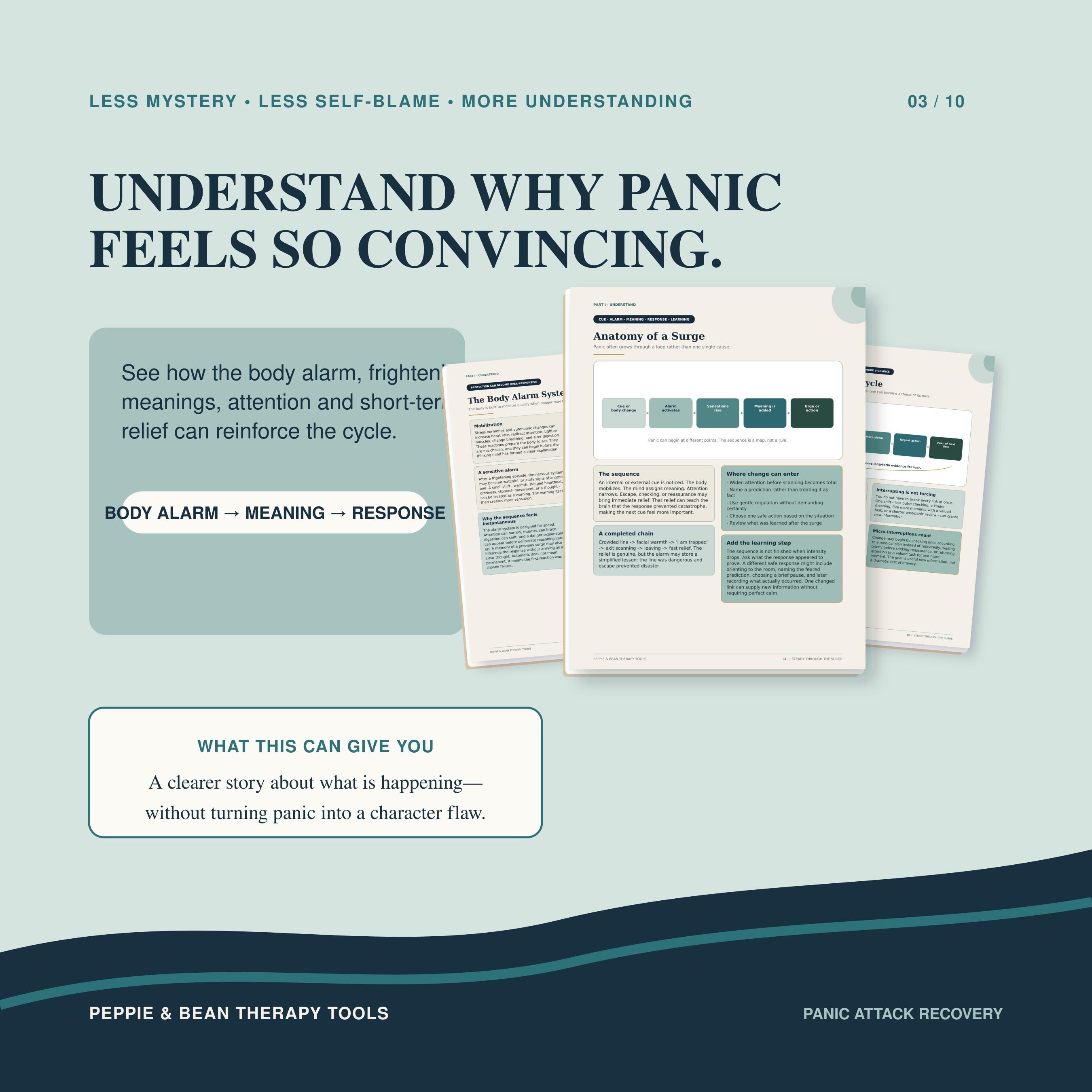
• The body-alarm system and why a protective response can become highly sensitive
• The anatomy of a surge: cue, alarm, meaning, response and learning
• Why a surge can rise, remain intense, change and leave an after-wave
• Why “false alarm” never means fake distress
• How catastrophic meaning can turn up the volume on real sensations
• The fear-of-fear cycle and attention spotlight
• Breathing changes, air hunger and overbreathing
• Why avoidance, reassurance, checking and safety behaviors may feel helpful in the short term while strengthening fear over time
• Expected, unexpected, situational and nocturnal panic
RECOGNIZING YOUR PERSONAL PATTERN
• Fictional composite examples showing different panic experiences
• A compassionate starting-point review that is not a diagnosis or score
• A five-page Panic Pattern Quiz
• Three clear reflection lanes: catastrophic meaning; checking and reassurance; and avoidance, anticipation and after-wave review
• A personalized starting plan based on the reader’s reflection
• A Life-Impact Compass for seeing what fear has been changing
• One panic surge mapped from beginning to after-wave
• A Body-Alarm Map for sensations, feared meanings, urges, actions and learning
• Internal and external cues
• Context and vulnerability factors without blame
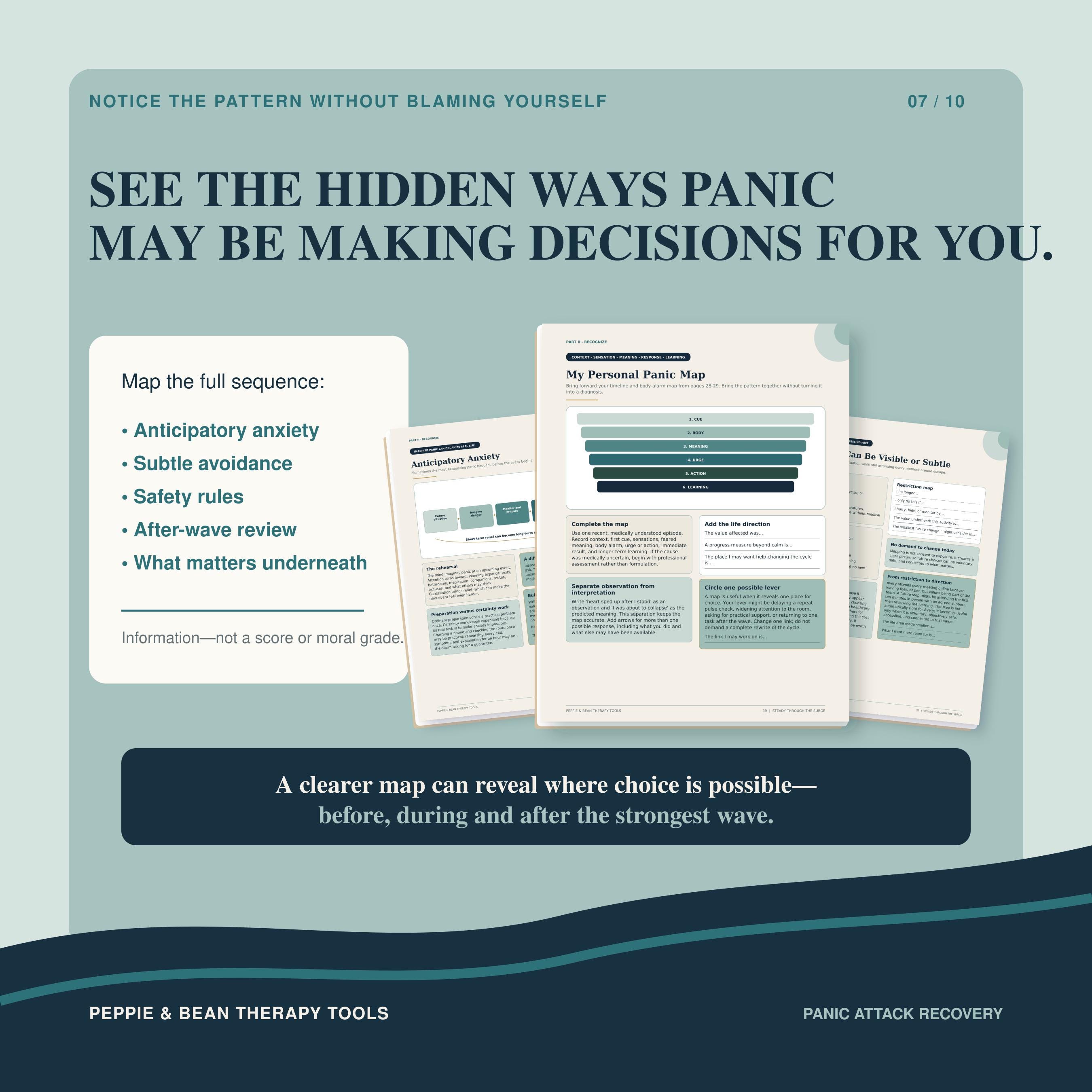
• Anticipatory anxiety
• The reassurance and checking loop
• Visible and subtle avoidance
• What may happen emotionally and physically after panic
• A Personal Panic Map that brings the full cycle together
STEADYING THROUGH THE SURGE
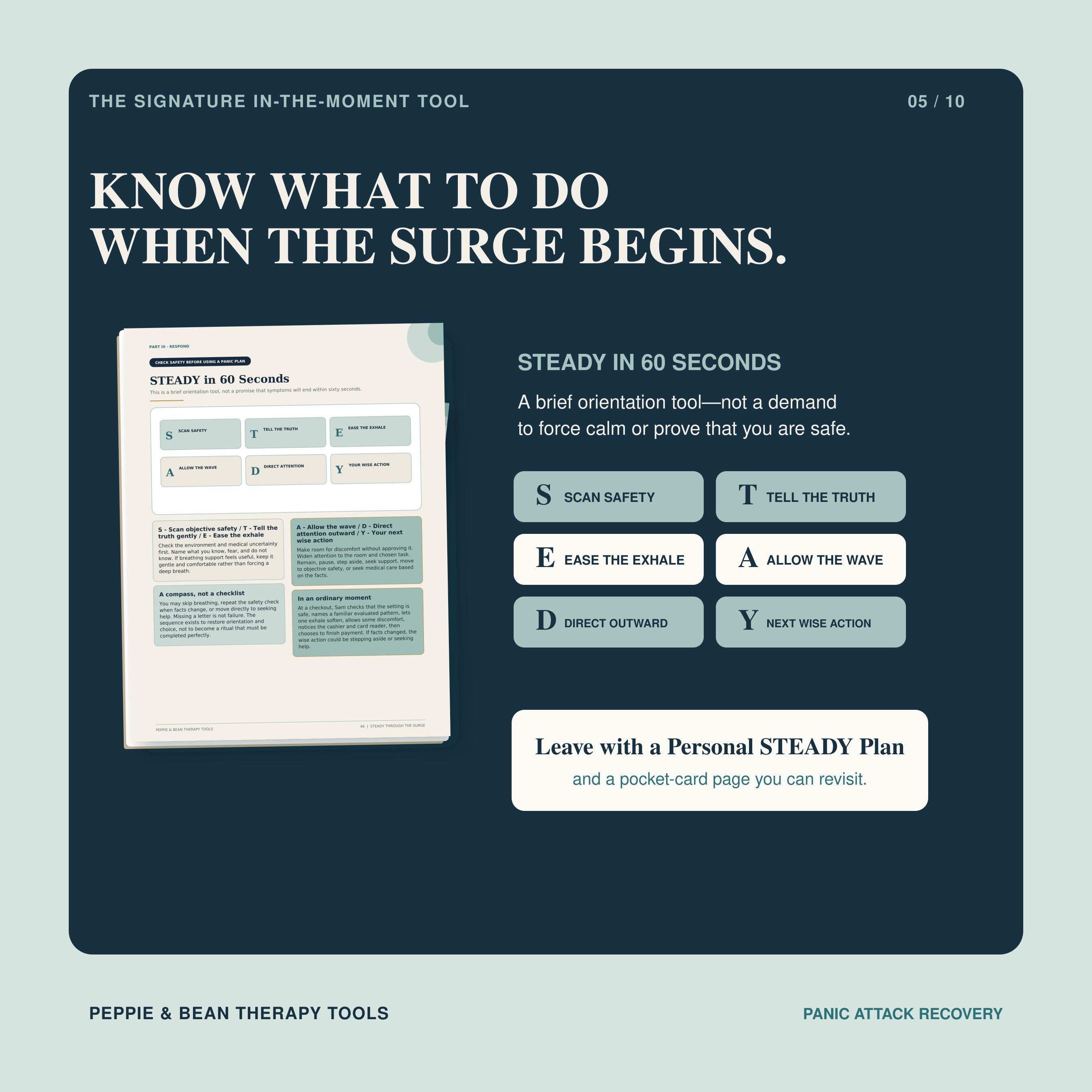
• The signature STEADY in 60 Seconds practice
• S + T: Scan Safety and Tell the Truth
• E: Ease the Exhale
• A: Allow the Wave
• D: Direct Attention Outward
• Y: Your Next Wise Action
• Guidance for choosing among staying, stepping away and escaping without turning the decision into a moral test
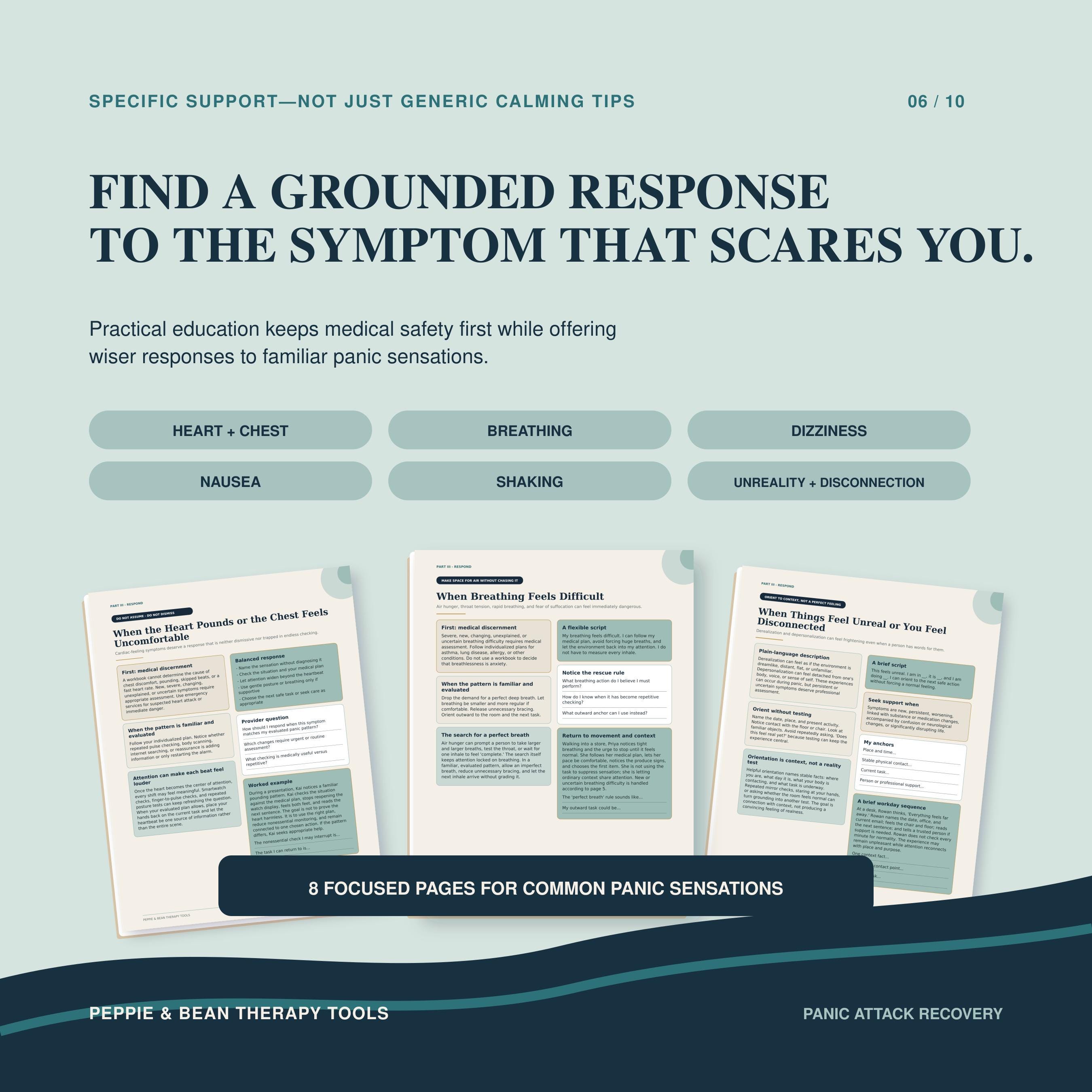
• Grounded words for a loud body
• Symptom-specific education for heart pounding, chest discomfort, breathing difficulty, dizziness, faintness, unsteadiness, nausea, bathroom urgency, shaking, tingling, heat, chills, unreality and disconnection
• Support when the feared outcome is death, losing control or public humiliation
• After-panic care that does not become an “autopsy” of every sensation
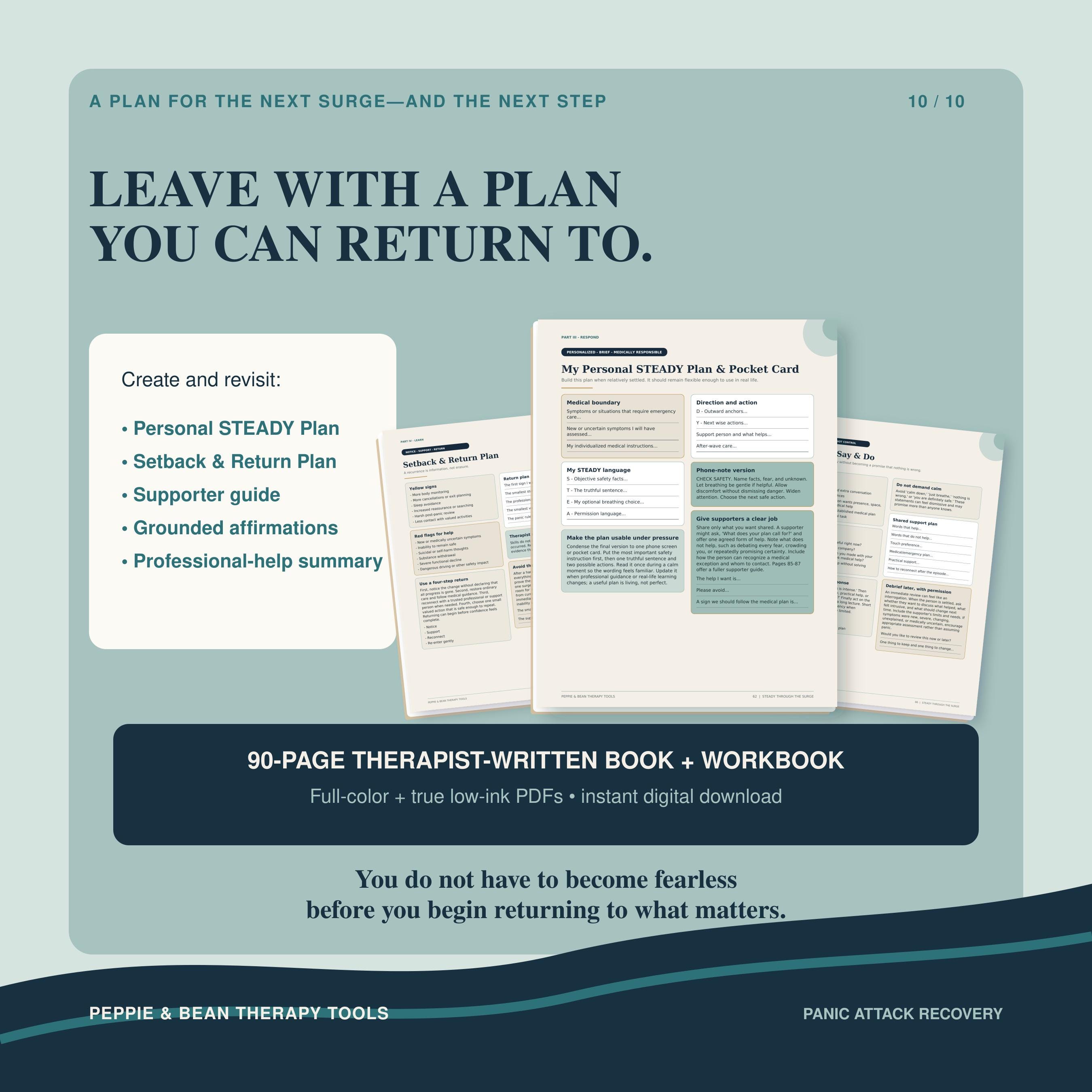
• A Personal STEADY Plan and pocket-card page
CHANGING THE CYCLE GENTLY
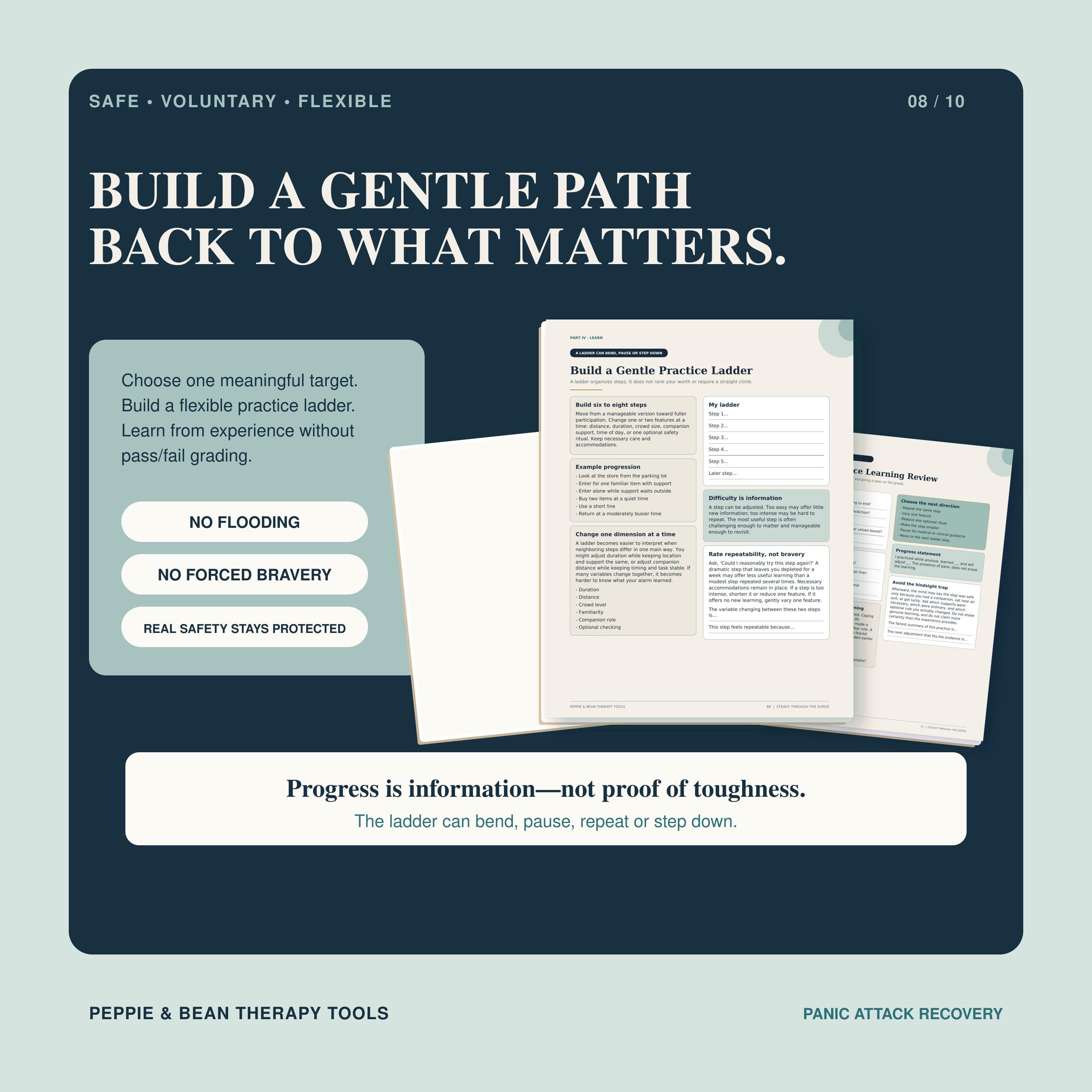
• Why gradual learning is not flooding, coercion or a test of toughness
• Clear guidance about when self-guided practice should pause
• Identifying what fear has been taking—and what you want back
• Choosing one meaningful learning target
• Building a gentle practice ladder
• Distinguishing wise support from a fear-driven rule
• Writing a prediction and useful learning question
• Before-, during- and after-practice planning
• A completed fictional example showing how learning can unfold
• Deciding whether to repeat, vary, adjust or step down a practice
• Body-sensation fear and when clinician-guided learning is the safer choice
• A Setback and Return Plan
REAL-LIFE SUPPORT
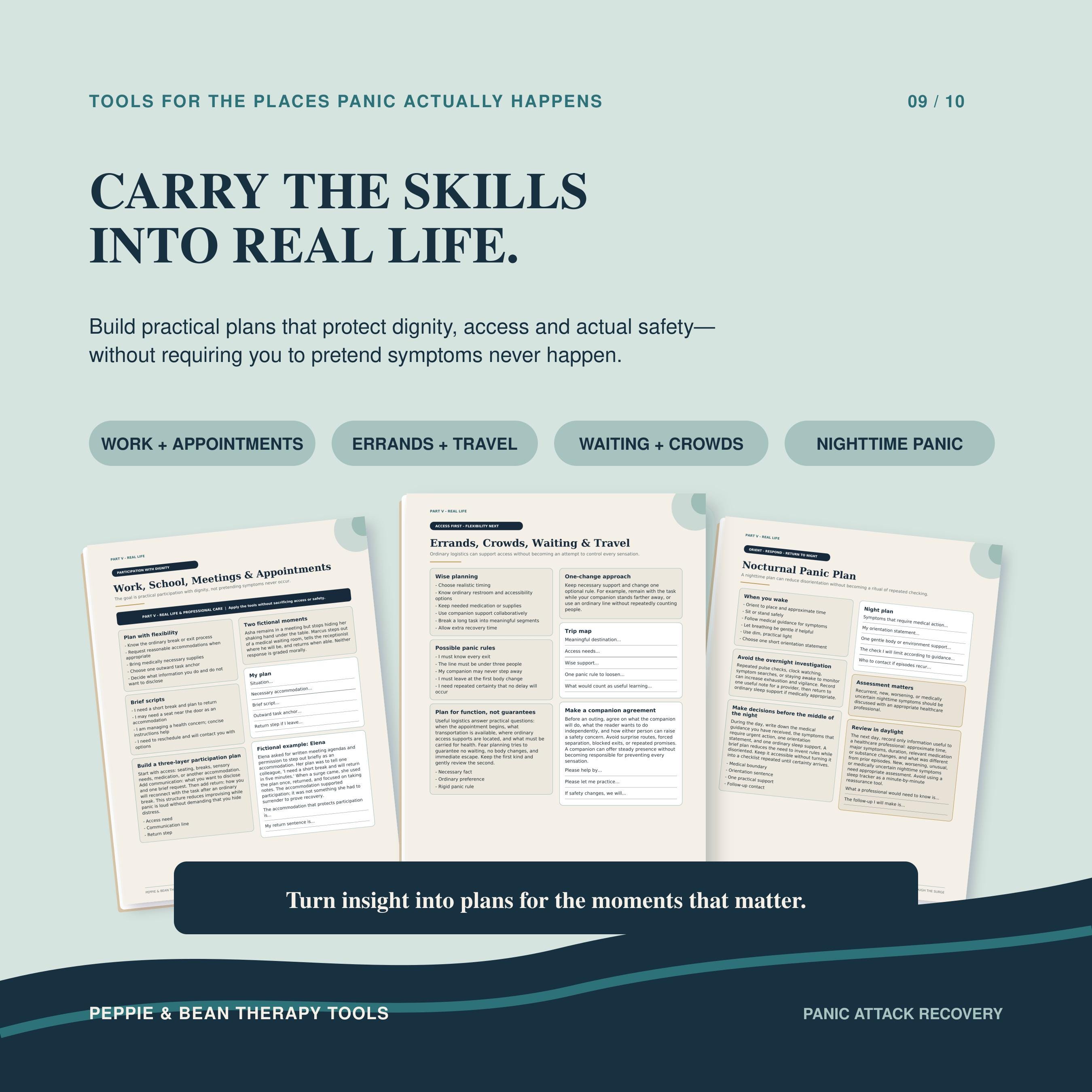
• Work, school, meetings and appointments
• Errands, crowds, waiting and travel
• Driving and transportation safety
• A nocturnal panic plan
• Daily foundations without blame
• Why treatment, medication, accommodations and appropriate support are not failures
• Preparing for professional help
• A dedicated supporter guide
• What supporters can say and do
• What may unintentionally keep fear stuck
• Evidence foundations and further-support resources
• Grounded therapist-written affirmations
• A compassionate closing letter from Caroline
THREE FLEXIBLE WAYS TO USE THE GUIDE:
1. THE COMPLETE LEARNING PATH
Move from understanding panic, to recognizing your personal cycle, to building an in-the-moment plan, to practicing safe and gradual new learning.
2. THE HARD-DAY ROUTE
Go directly to Medical Safety, STEADY in 60 Seconds, After the Surge and My Personal STEADY Plan. Reading only is allowed. Writing is never required for a skill to count.
3. THE CLINICIAN-SUPPORTED ROUTE
Bring selected maps, plans, practice questions and professional-help pages to an appropriately qualified medical or mental-health professional. Guided support may be especially important when symptoms are severe, persistent, medically uncertain or significantly limiting daily life.
WHAT YOU WILL RECEIVE:
• One complete 90-page full-color PDF
• One complete 90-page true low-ink black-and-white PDF
• The same complete content, page order and pagination in both editions
• US Letter size: 8.5 × 11 inches
• Printable static PDF files
• Immediate digital download
• No physical product will be mailed
The full-color edition uses a warm ivory, sea-glass, deep teal, forest and midnight-navy design. The low-ink edition is purpose-designed for clear, economical home printing rather than simply being a desaturated copy.
HOW TO PRINT OR USE DIGITALLY:
Print the entire workbook, select only the pages useful to you or open the files in a compatible PDF annotation app.
For home printing, choose “Actual Size,” “100%” or “Fit to Printable Area,” depending on your printer. Printed colors may vary slightly according to your screen, printer, ink and paper.
These are static PDF files. They are not advertised as editable or fillable forms.
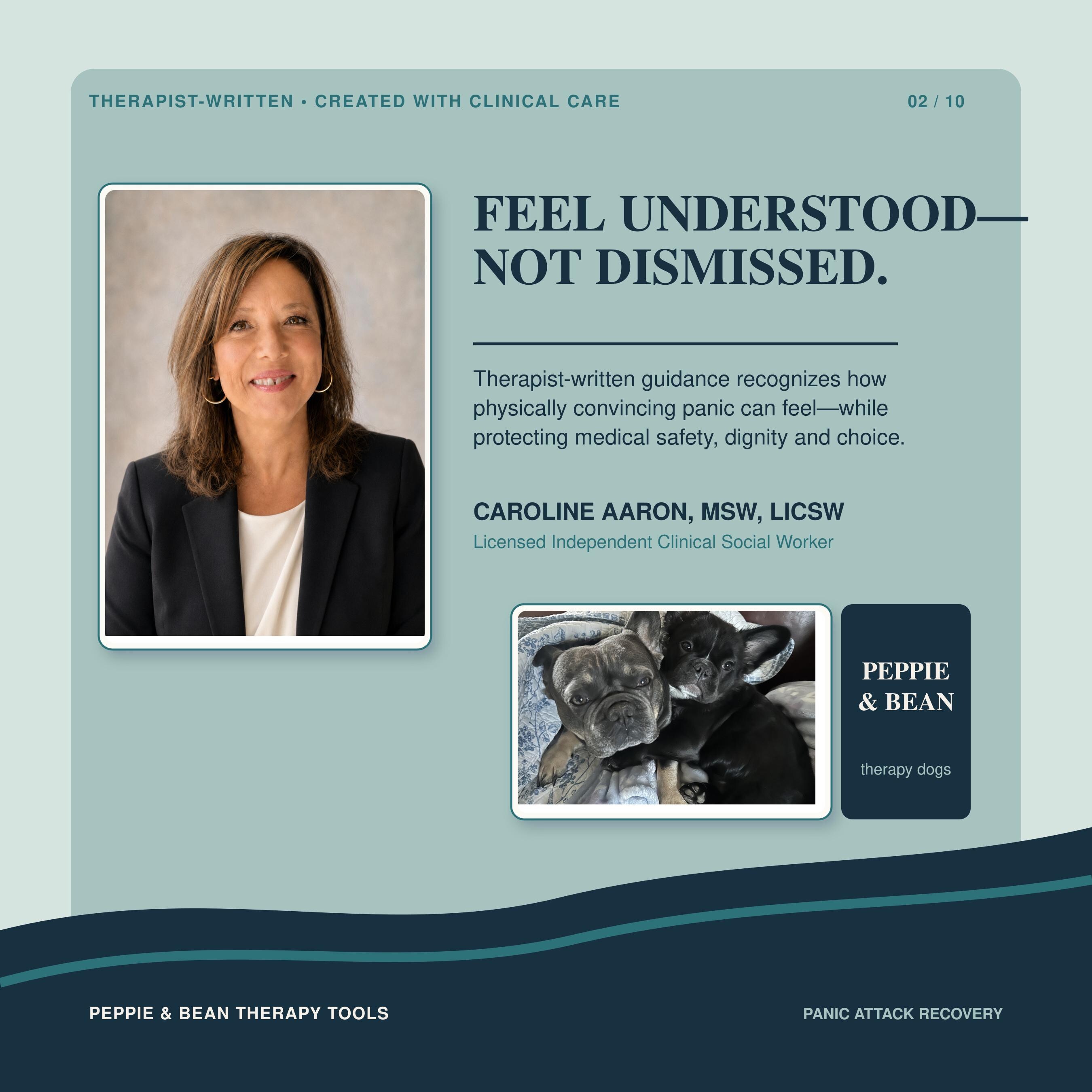
CREATED BY A LICENSED THERAPIST
Written by Caroline Aaron, MSW, LICSW
With the help of Peppie & Bean, Therapy Dogs
Peppie & Bean Therapy Tools
Copyright 2026 Sylacauga Counseling Services, LLC
IMPORTANT INFORMATION:
This guide is an educational self-help resource for adults. It is not psychotherapy, diagnosis, medical advice, crisis care, driving instruction or an individualized treatment plan. Purchasing or using it does not create a therapist-client relationship with Caroline Aaron, Sylacauga Counseling Services, LLC or Peppie & Bean Therapy Tools.
Panic symptoms can overlap with medical conditions and emergencies. New, severe, changing, unexplained, unusual or medically uncertain symptoms require appropriate medical assessment—even if you have experienced panic before. Do not use a symptom list in this workbook to rule out a medical emergency.
Call 911 for a suspected heart attack or stroke, severe breathing difficulty, loss of consciousness, seizure, immediate physical danger or another medical emergency. Outside the United States, use the emergency services available where you live.
If you may act on thoughts of suicide or self-harm, cannot remain safe or are experiencing a behavioral-health crisis, call or text 988 in the United States. Outside the United States, use your local crisis service.
Do not read, write, use a phone exercise, count breaths or divide your attention while driving, operating machinery, near traffic or platform edges, at heights, in water or anywhere panic-driven movement could create danger.
Do not start, stop, taper, replace or change a prescription or supplement because of this guide. Medication decisions belong with an authorized prescriber. Prescribed medication, rescue medication, medical supplies, mobility aids, service animals and disability accommodations are not failures or crutches.
Gradual practice in this workbook is always framed as voluntary, objectively safe, legal, accessible and connected to the reader’s values. The guide does not recommend flooding, surprise exposure, blocked exits, coercion or removing medically necessary care and support.
USAGE LICENSE:
The original purchaser may print this resource for personal use.
An individual clinician may print copies reasonably needed for that clinician’s own clients or personally facilitated groups. Each clinician must purchase a separate license. Digital files may not be shared with clients or colleagues.
The files may not be copied, forwarded, posted online, resold, redistributed, rebranded or altered for resale.
Panic may be loud, but it is not the whole of you. You do not have to become fearless before you begin returning to your life. One honest, supported step can still be a meaningful step.
Digital downloads
Your files will be available to download once payment is confirmed.
0 items in your cart