Social Anxiety Workbook for Teens 13–17 | Conversation Skills, Fear of Judgment & School Confidence | Therapist-Written Printable PDF
$7.99
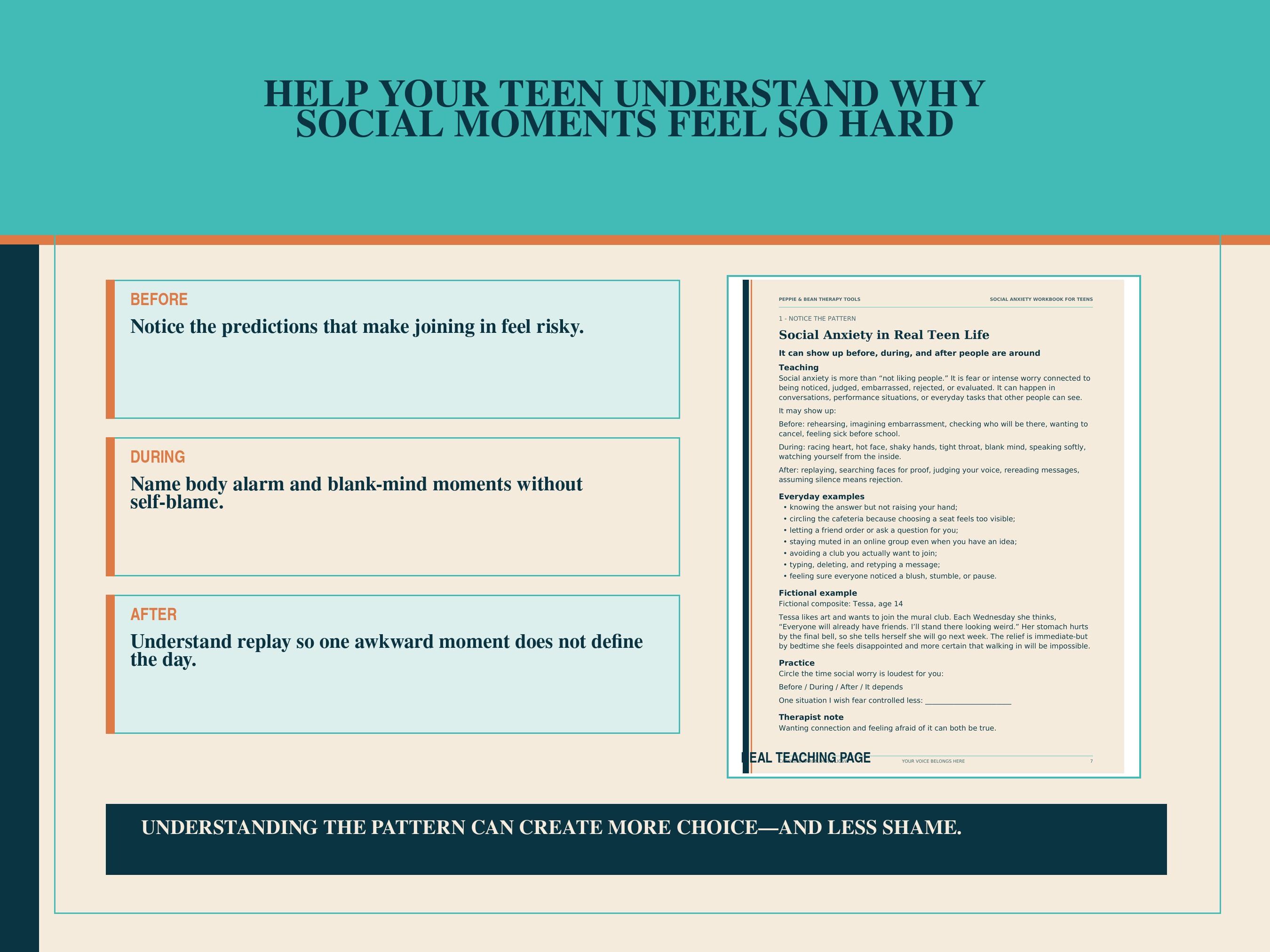
Social anxiety can make ordinary teen moments feel high-stakes: walking into the lunchroom, answering in class, joining a group, sending a message, or trying to speak after the mind goes blank. A teen may have ideas and want connection while fear of judgment keeps them quiet, overprepared, avoiding, or replaying every word afterward.
That does not mean the teen lacks personality, effort, or social ability. Staying silent, rehearsing, hiding behind a phone, checking a message again, or leaving early can all begin as understandable attempts to feel safer. This workbook helps teens understand the pattern without shame, steady the body alarm enough to have choices, find realistic words for difficult moments, and practice manageable next steps at their own pace.
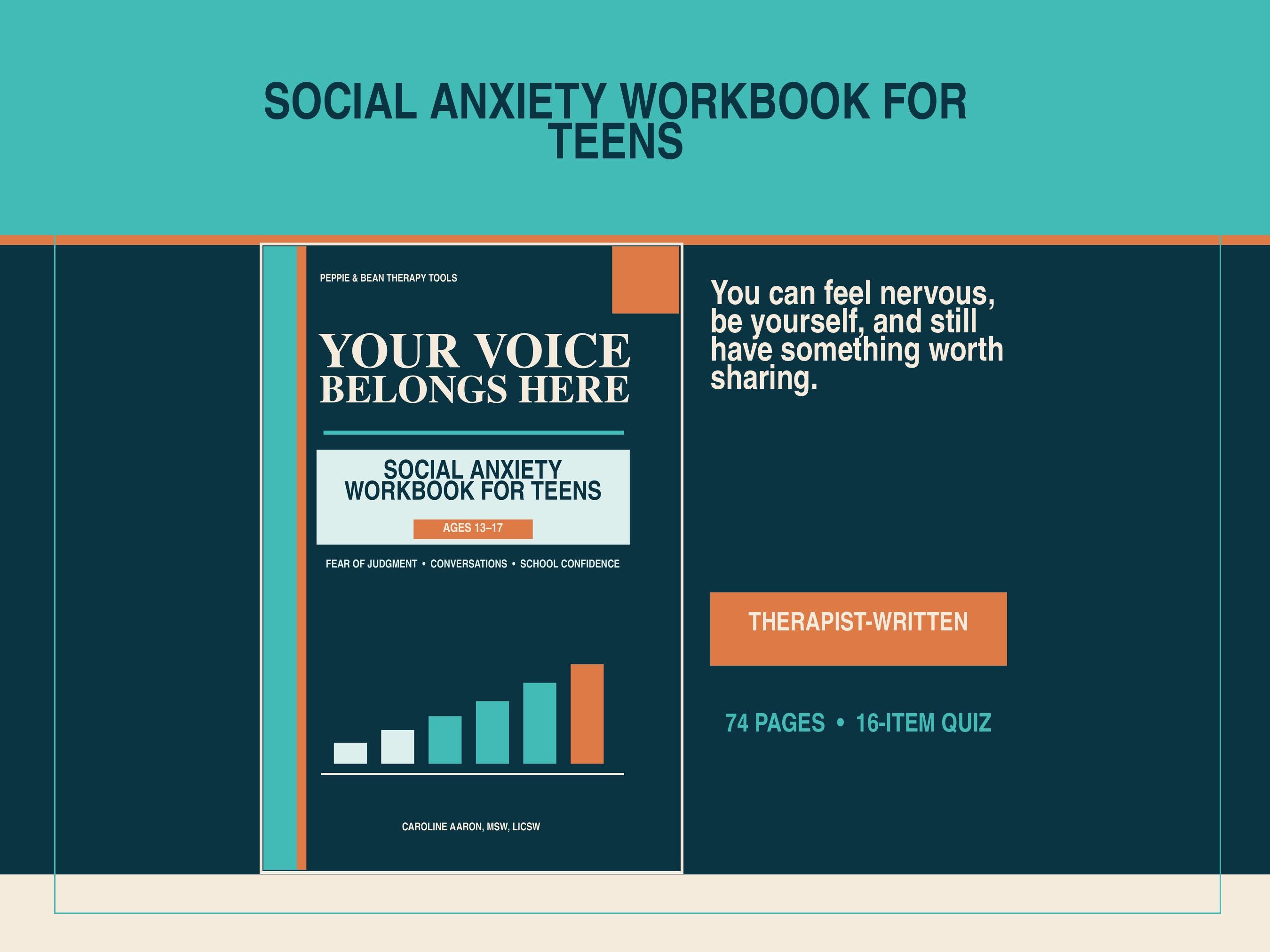
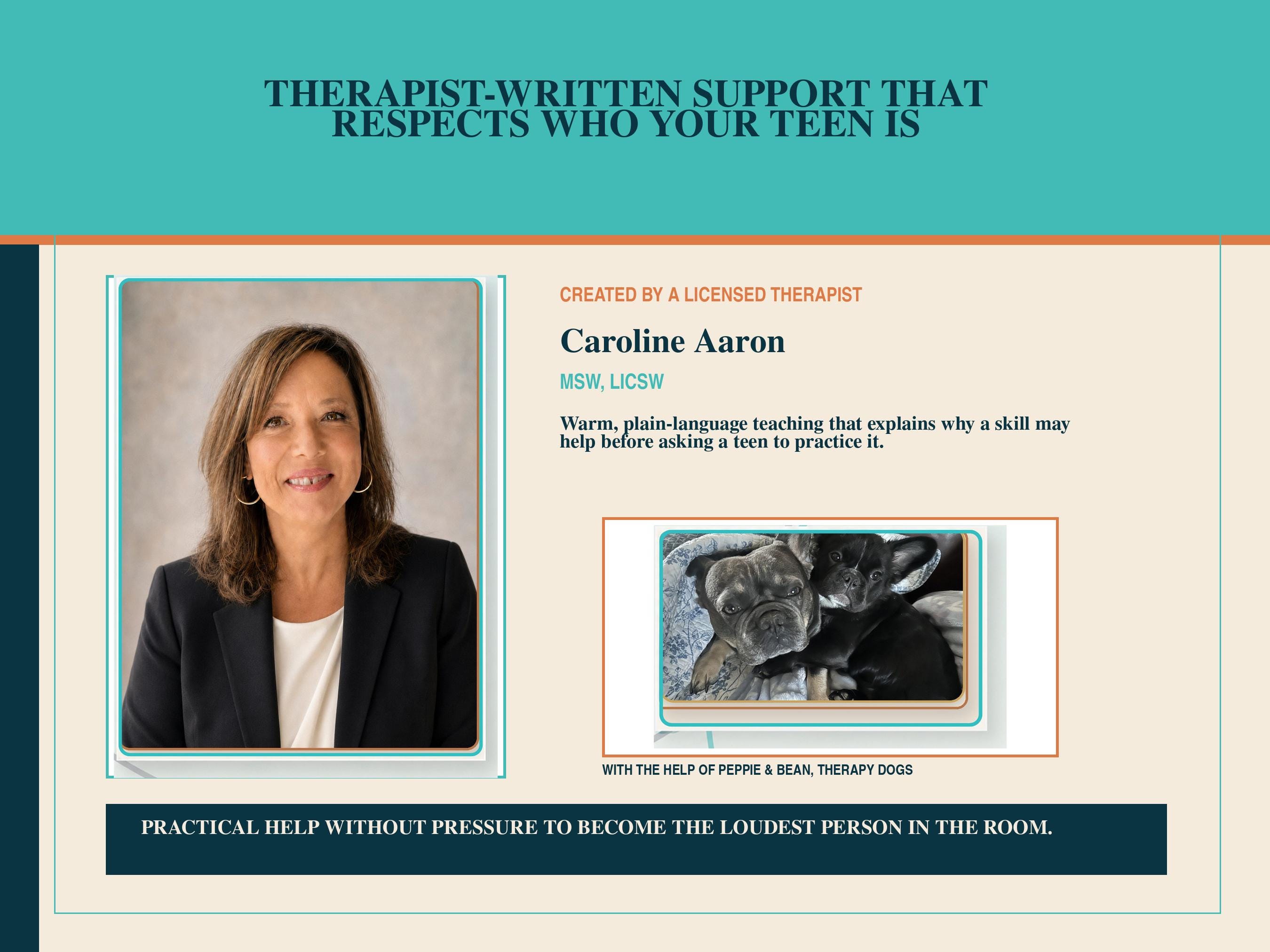
Written by Caroline Aaron, MSW, LICSW, this therapist-written Peppie & Bean Therapy Tools workbook was created for teens ages 13–17. It uses warm, straightforward language and teaches each idea before asking the reader to practice it. Realistic fictional teen examples, diagrams, and worked examples help make the skills easier to understand and use.
Inside, teens will learn how to:
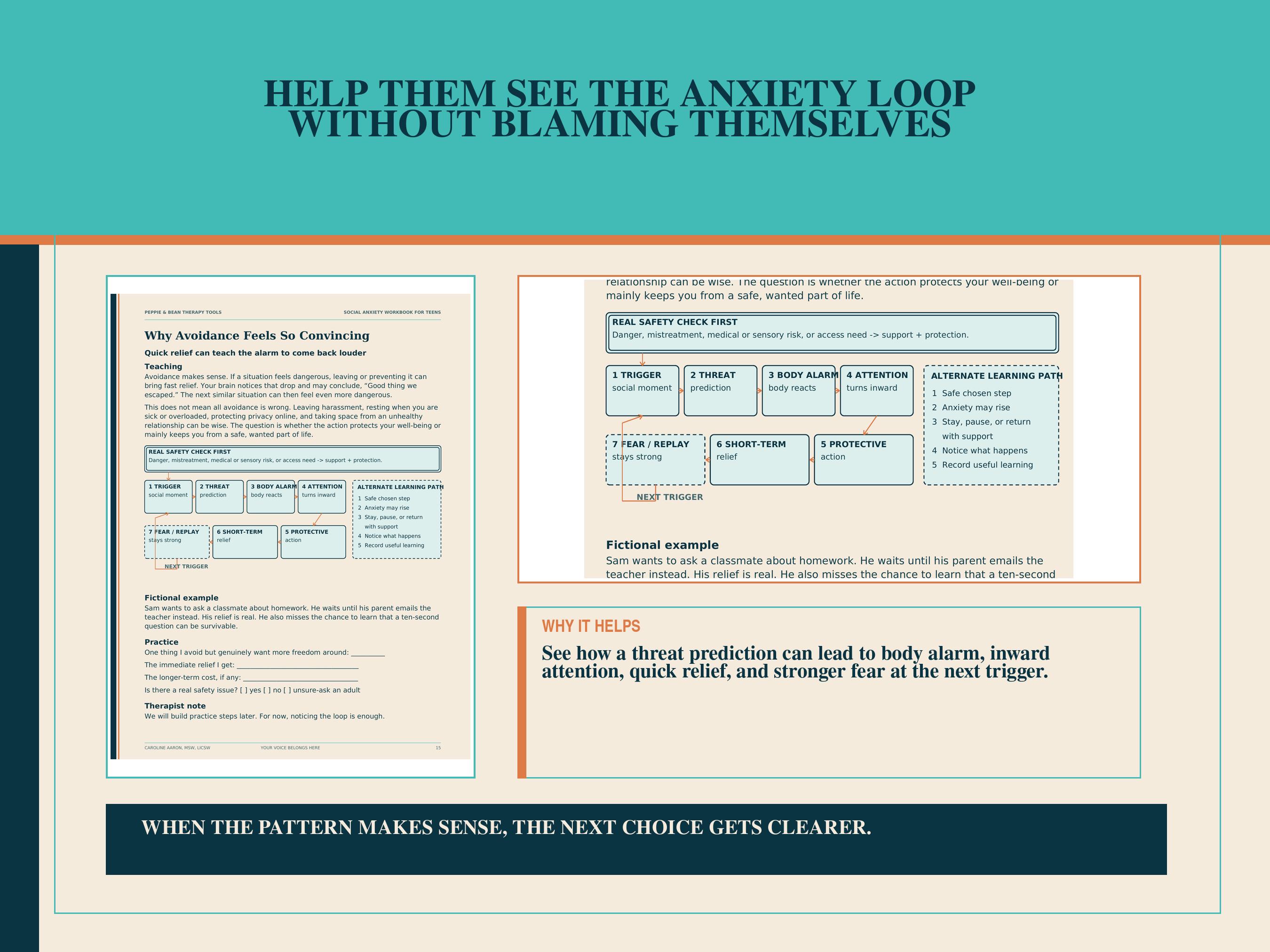
• Understand the before, during, and after cycle of social anxiety, including fear of judgment, body alarm, avoidance, protective habits, and conversation replay
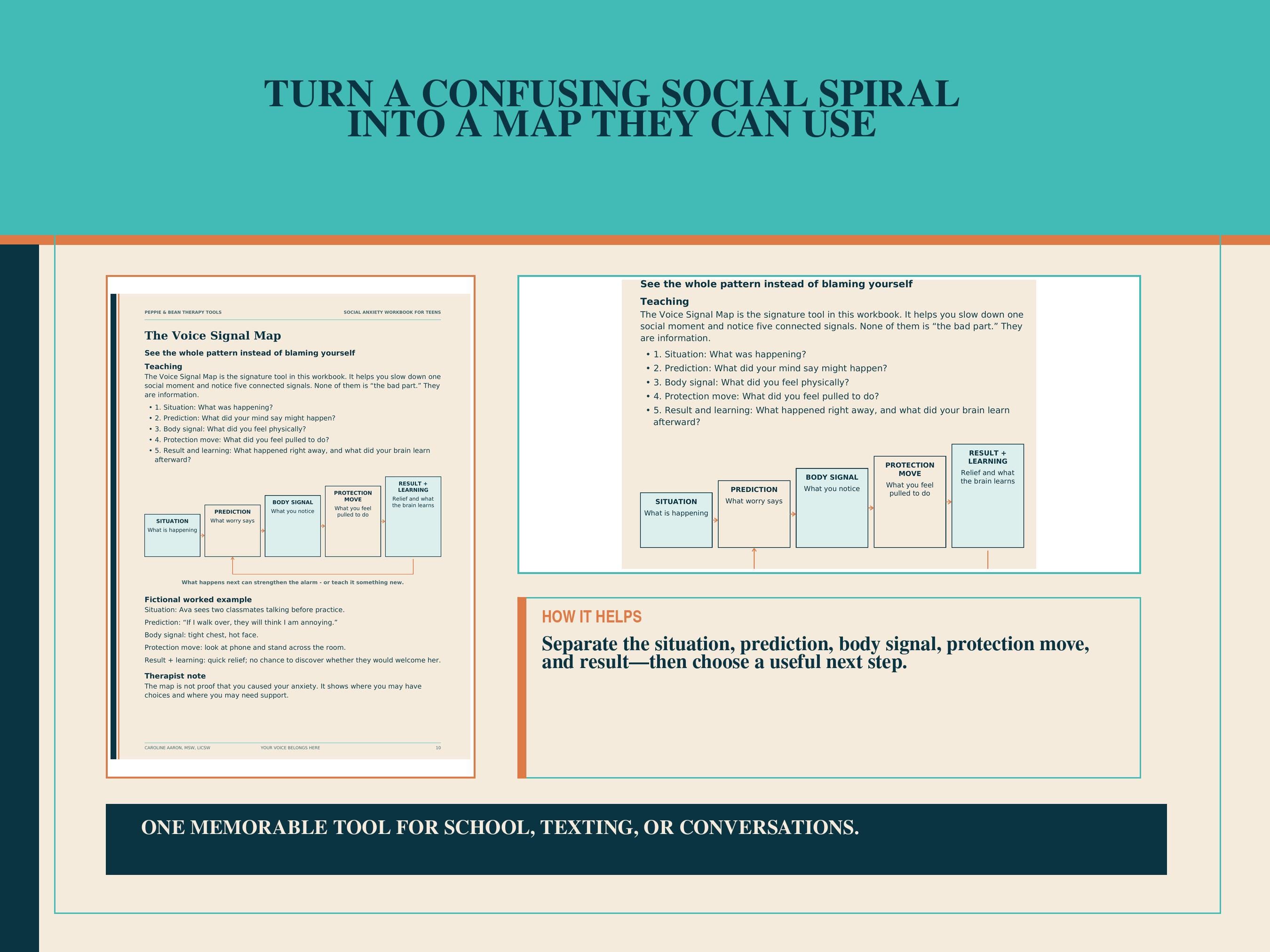
• Use the Voice Signal Map to connect a social situation, anxious prediction, body signal, protection move, and result or learning
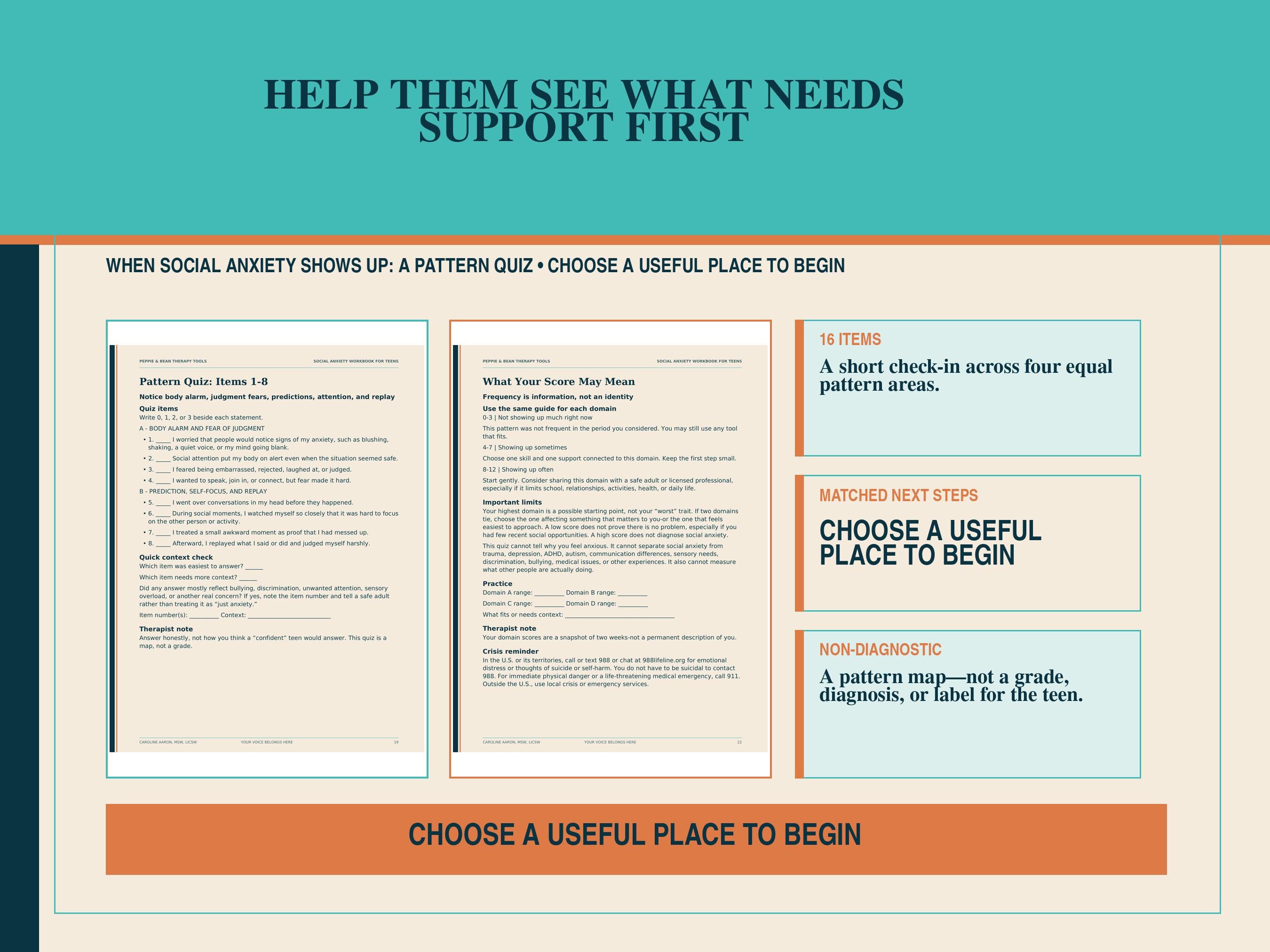
• Notice where support may help first with the complete 16-item When Social Anxiety Shows Up: A Pattern Quiz, including four domain scores, plain-language interpretation, and practical next steps
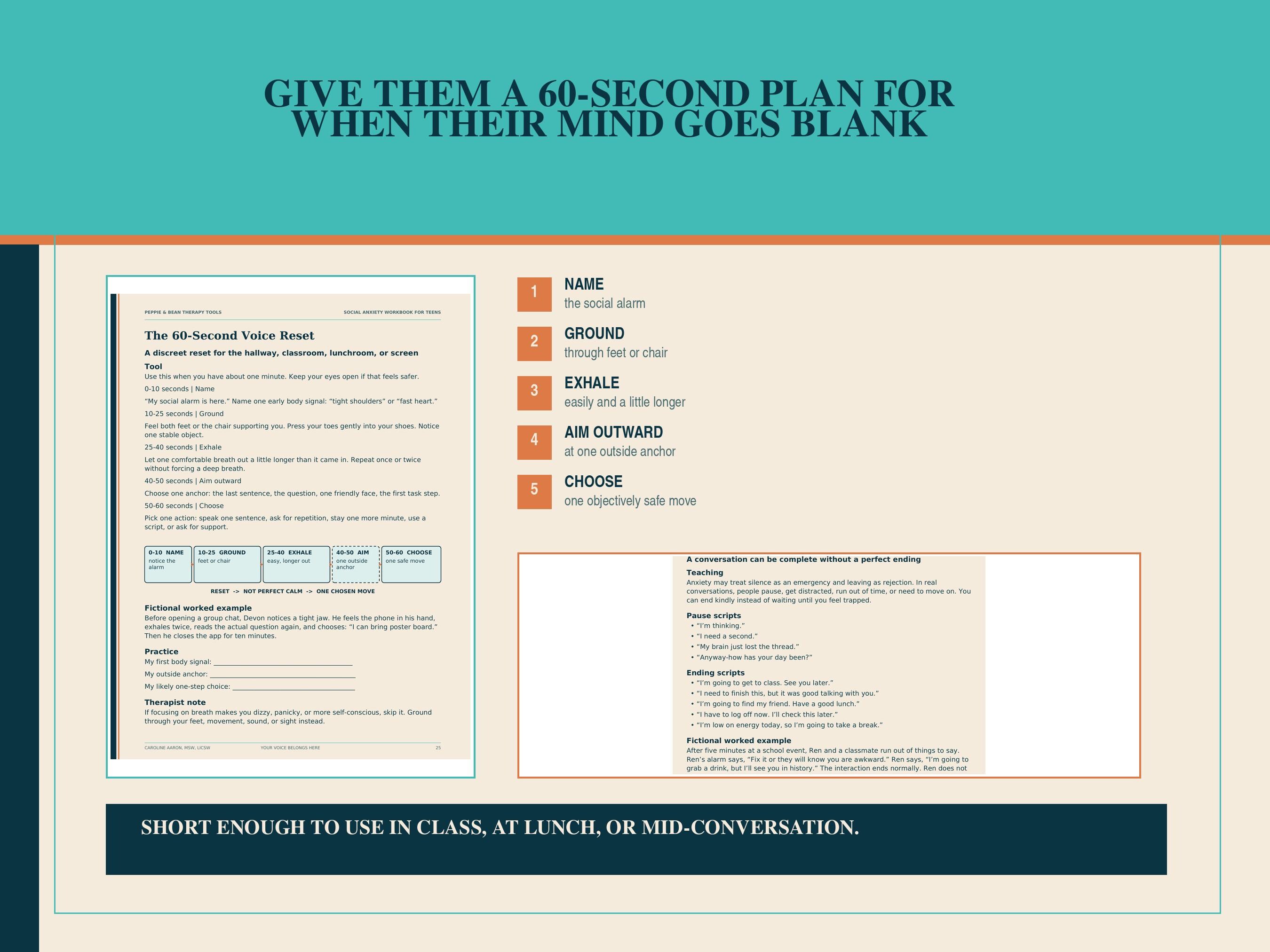
• Use the 60-Second Voice Reset when the body alarm feels loud or the mind goes blank in class, at lunch, during a conversation, or on a screen
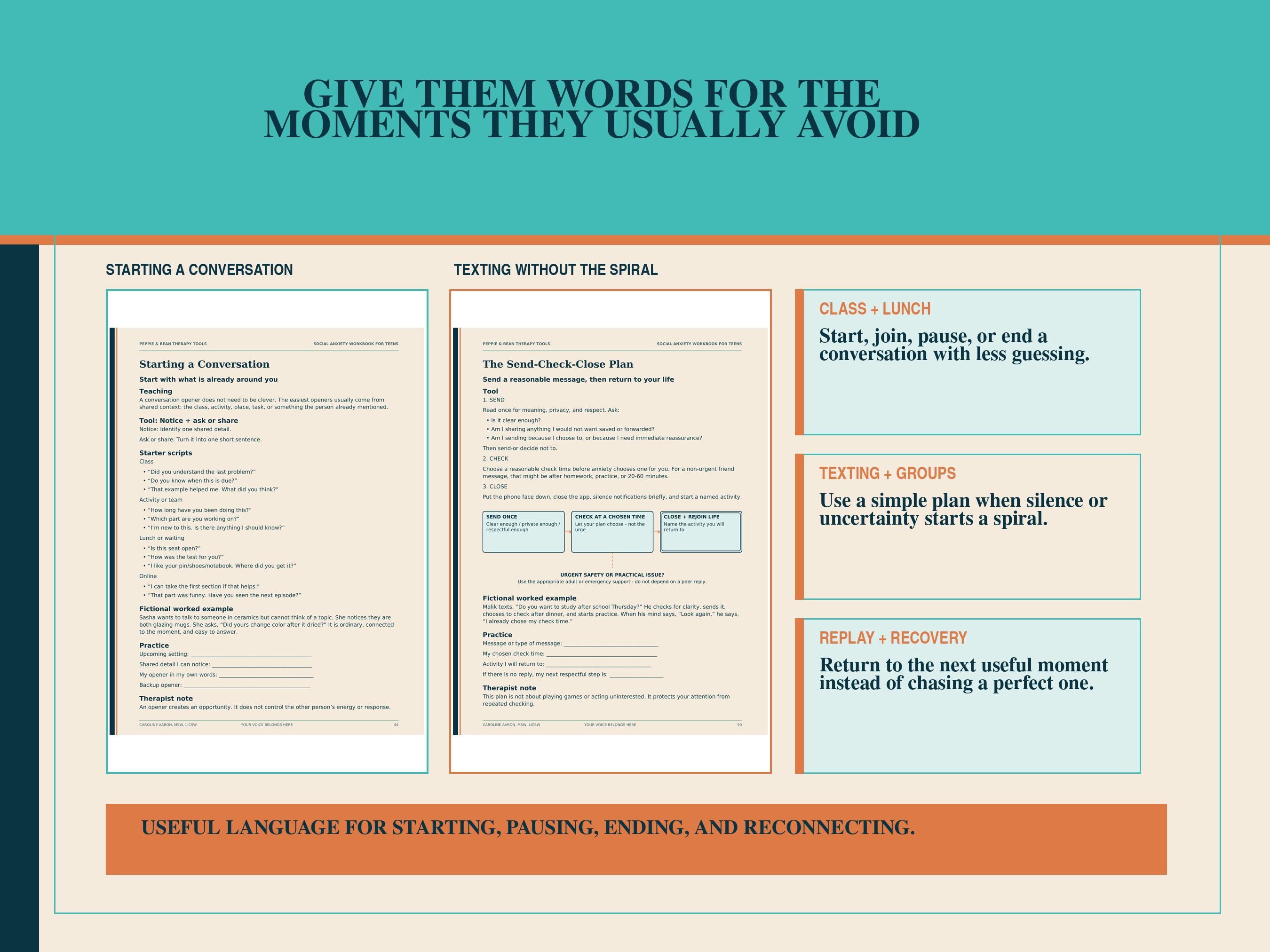
• Find words through conversation starters, bridge phrases, pause and ending scripts, group-entry language, and ways to ask an adult for support
• Handle texting uncertainty with the Send–Check–Close Plan instead of letting repeated checking take over their attention
• Check anxious predictions, respond more kindly after an awkward moment, and keep one conversation from becoming hours of replay
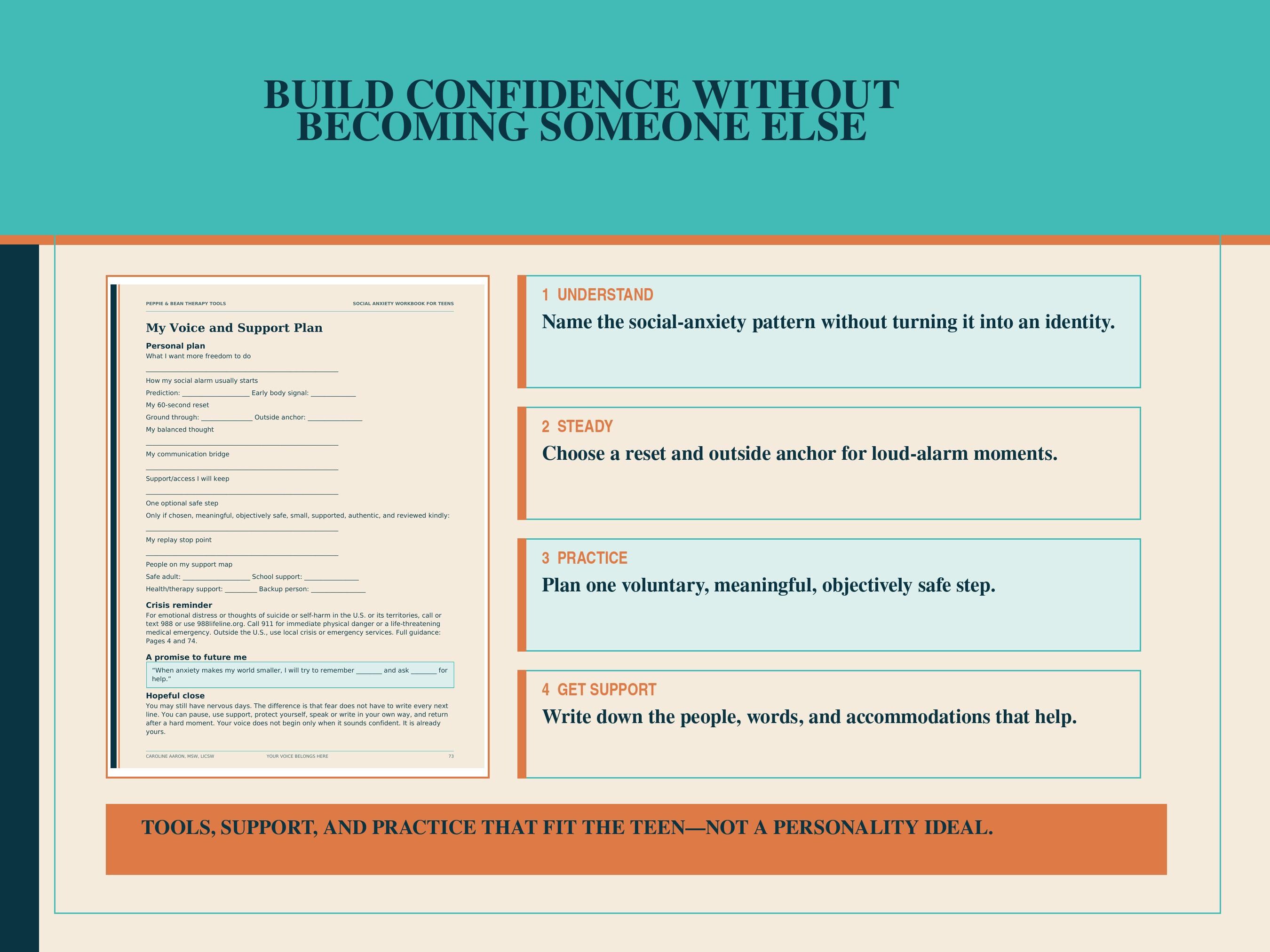
• Plan small, voluntary, objectively safe practice steps without pressure to become fearless or outgoing
• Build a personal social-confidence plan that brings together useful tools, communication choices, support people, and one realistic next step
The quiz helps a teen notice whether body alarm and fear of judgment, prediction and replay, avoidance and protective habits, or impact on daily life and connection may need attention first. It is a starting map, not a diagnosis or a grade. The workbook then points the reader toward relevant tools and chapters, so they do not have to guess where to begin.
This resource is not about changing a quiet personality or making a teen become the loudest person in the room. It is designed to offer more choices: speak or write, pause, ask for more time, join in, leave respectfully, use support, or try again later. Progress can be small and still matter.
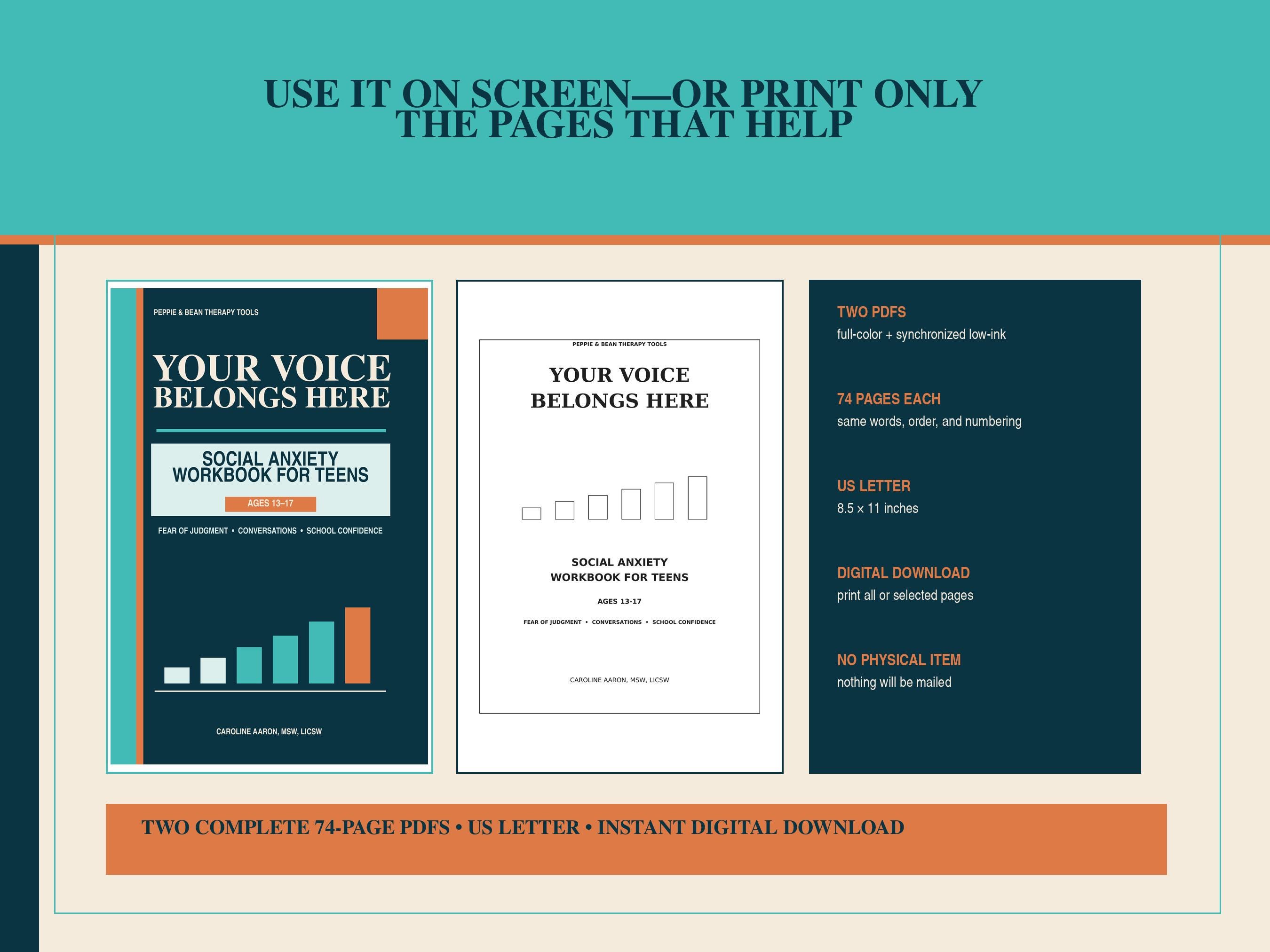
You will receive two PDF files:
• One 74-page full-color edition
• One synchronized 74-page low-ink black-and-white edition
• US Letter size, 8.5 × 11 inches
• The same wording, exercises, page order, and page numbers in both editions
This workbook is for educational purposes and does not provide diagnosis, treatment, or crisis care. It is not a substitute for support from a qualified professional. Social practice should be voluntary, supported when needed, and limited to objectively safe situations. If a teen may be in immediate danger, call local emergency services. In the United States and its territories, call or text 988 for the 988 Suicide & Crisis Lifeline. A teen who feels unsafe or overwhelmed should tell a trusted adult as soon as possible.
Copyright © 2026 Caroline Aaron. The purchaser may print copies for personal use. One individual therapist, counselor, or helping professional may also print paper copies for clients or groups they personally serve; each professional needs a separate license. Do not share the digital files, resell them, post them, or distribute them outside this license.
Digital downloads
Your files will be available to download once payment is confirmed.
0 items in your cart